


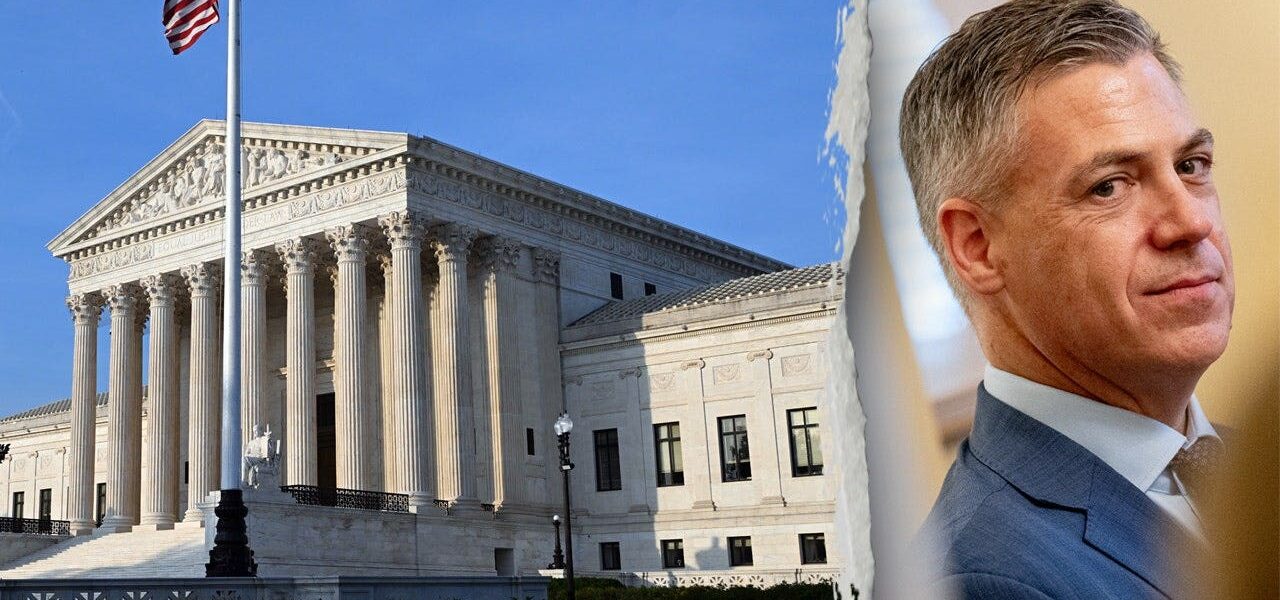
Shadow Games: Birthright, Bluster, and the High Court’s Unseen Hand
POLICY WIRE — Washington, D.C. — Washington’s familiar political theater often pulls back its curtains on predictable dramas, yet sometimes, a scene unfolds with an unexpected player stepping...

POLICY WIRE — Washington, D.C. — Washington’s familiar political theater often pulls back its curtains on predictable dramas, yet sometimes, a scene unfolds with an unexpected player stepping into the spotlight. That’s what’s happening right now with the perennial — some would say stubborn — ‘birthright citizenship’ squabble, not because a new bill’s hit the floor, but because an old ambition, turbocharged by fresh judicial precedent, has just muscled its way back to center stage.
It isn’t about some fresh policy draft or bipartisan handshake, no. Instead, it’s about former President Trump, with all the subtlety of a bull in a china shop, tossing raw meat into an already simmering pot. His recent declarations on birthright citizenship aren’t merely campaign rhetoric; they’re a direct reaction, a strategic maneuver, following what folks around the Beltway are now quietly calling the ‘Kavanaugh roadmap’. This isn’t just about tweaking immigration policy; it’s about fundamentally reshaping who belongs and, more importantly, who doesn’t. He’s talking tough, very tough, about people as [QUOTE_PLACEHOLDER] a word that grabs headlines and, let’s be honest, scares a certain segment of the populace.
And when a political heavyweight like Trump uses language so stark, particularly when discussing individuals he labels as [QUOTE_PLACEHOLDER] – a direct echo of phrases from the original discourse – you’ve gotta sit up and take notice. This isn’t a theoretical debate for academics. It’s a very real, very public gauntlet thrown at the Constitution itself. The U.S. Census Bureau’s 2023 data indicated approximately 13.6% of the U.S. population is foreign-born, illustrating the sheer scale of the population group often subjected to such political framing.
But the true artifice here, the strategic sleight of hand, points directly to a nuanced legal landscape carved out recently. The U.S. Supreme Court has, bit by bit, through various rulings and dissenting opinions, been—how shall we put it—clarifying (or maybe muddying, depending on your perspective) the boundaries of executive power. This creates the wiggle room, the legislative loopholes, for such executive action to even be conceived, let alone pushed so aggressively. It’s an interesting dance, this interaction between judicial restraint — and executive ambition. It suggests that even without congressional approval, the presidency could wield immense power over fundamental citizenship tenets.
This isn’t some abstract argument far removed from the geopolitical chess board. In South Asia, particularly in nations like Pakistan, discussions around national identity and citizenship are already fraught. Imagine, for a moment, the potential ripple effects of a unilateral move by the U.S. to redefine birthright. It’s not just about what happens at the Rio Grande; it’s about how countries interpret their own sovereignty and how they treat minority populations within their borders, some of whom may find their traditional protections questioned. Such a precedent from a global superpower could embolden nationalist factions elsewhere, encouraging them to consider similar, potentially discriminatory, revisions to their own citizenship laws. You’re not just talking about changing laws in one country; you’re changing the narrative globally.
📄 POLICY WIRE WHITEPAPER PUBLISHED: PAKISTAN'S NATIONAL SECURITY POLICY PRIORITIES
👉 READ BY CLICKING HEREWhat This Means
This escalating rhetoric around birthright citizenship isn’t simply a political dog whistle; it’s a strategic overture with profound legal and diplomatic implications. Politically, it galvanizes Trump’s base, affirming his anti-immigration stance and his readiness to challenge established norms—or even bedrock constitutional interpretations. It sets up a high-stakes confrontation with progressive elements and likely federal courts, consuming significant public discourse in the lead-up to elections. Economically, uncertainty surrounding immigration status creates a climate of instability. Businesses reliant on immigrant labor, both skilled and unskilled—from agriculture to tech startups—could face unprecedented labor challenges, impacting supply chains and domestic growth. the long-term demographic shift — and potential brain drain could suppress innovation and tax revenues. It’s an issue that isn’t just about who gets to be a citizen, but about who gets to be an American in the twenty-first century.
And let’s not overlook the international implications. Nations in the Muslim world and South Asia, already navigating complex diaspora relations and identity politics, will watch this development closely. Changes in U.S. policy have always had a magnifying effect, whether it’s security doctrines or economic shifts. For countries like Pakistan, with significant migrant populations in Western nations, such U.S. policy changes might force a re-evaluation of their own citizen protection strategies or, worse, ignite internal debates about who counts as a ‘true’ citizen based on origins, echoing similar sentiments we hear emanating from Washington.
The ‘Kavanaugh roadmap,’ as some are calling it, has effectively provided the intellectual and perhaps judicial cover for these radical proposals to once again surge into mainstream discussion. It suggests an administration—should Trump win—would possess significant latitude to bypass conventional legislative hurdles and move straight to executive actions. Because, frankly, the Supreme Court hasn’t always been the brick wall it once was. This is no longer just idle campaign bluster; it’s a preview of a genuine assault on fundamental constitutional interpretation, fueled by political ambition and, let’s face it, a carefully laid legal foundation.