


Redrawing Lines in the Sand: Trump’s Monument Cuts Spark Political Wildfire
POLICY WIRE — Salt Lake City, Utah — Turns out, even ancient canyons aren’t sacred ground when there’s a political score to settle. Former President Donald Trump, in what many observers...

POLICY WIRE — Salt Lake City, Utah — Turns out, even ancient canyons aren’t sacred ground when there’s a political score to settle. Former President Donald Trump, in what many observers still dub a brazen maneuver, opted to significantly pare down two sprawling national monuments in Utah. This wasn’t some quiet administrative tweak, no sir—it was a full-on sledgehammer to environmental legacy and a stark declaration of Republican intent for America’s vast public lands.
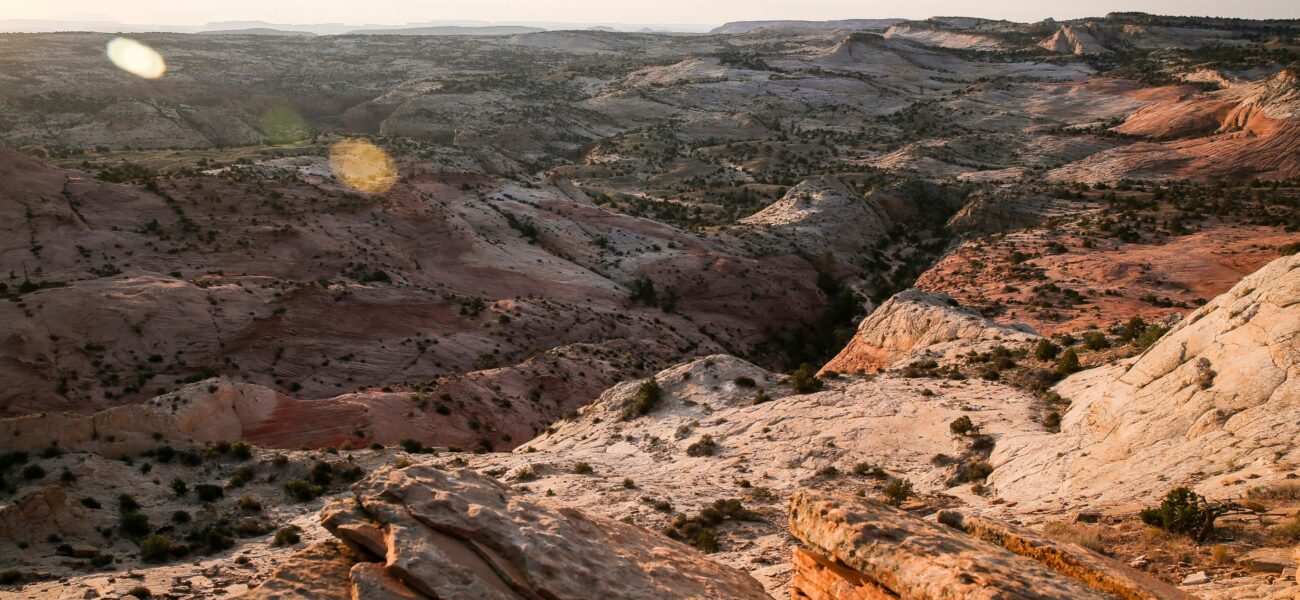
It was a decision that essentially chopped away millions of acres from Bears Ears — and Grand Staircase-Escalante. You see, these aren’t just pretty rocks; they’re sacred ancestral lands for numerous Native American tribes, loaded with archaeological sites—irreplaceable stuff, really. And they’d been protected for ages, Grand Staircase since Bill Clinton’s tenure, Bears Ears a newer designation by Barack Obama.
But the Trump administration—it seemed keen to unspool as much of the prior presidency’s work as humanly possible, public lands included. They’ve long held this stance, a desire to unlock natural resources they claim are stifled under federal protections. And here, in the vast, quiet expanse of Utah’s canyon country, that philosophical battle played out in high definition.
The President, on a whirlwind visit, publicly stated that the land reductions were about returning control to the people of Utah—a narrative frequently deployed to justify such actions. [QUOTE_PLACEHOLDER], he asserted, hinting at a sense of bureaucratic overreach. Yet, critics, especially tribal groups and conservationists, saw it as a transparent gift to the extractive industries—think mining, oil, and gas—that salivated over what lay beneath those ancient landscapes. One could argue it was a strategic move, aligning with a specific voter base even if it ruffled the feathers of literally everybody else who cared about nature.
The Department of Interior, under Secretary Ryan Zinke at the time, certainly championed the changes. They conducted a review of monuments across the country, making noises about modernizing boundaries. What actually happened, though, felt more like a concerted effort to scale back federal protections. The result? Bears Ears National Monument, initially 1.35 million acres, shrunk to a mere 200,000 acres—a breathtaking 85% cut. Grand Staircase-Escalante fared only slightly better, dropping from 1.9 million acres to roughly a million. But still, it’s a huge bite.
These actions, unsurprisingly, triggered a flurry of lawsuits—a veritable legal wildfire. Environmental groups, Native American tribes, even outdoor recreation businesses all rushed to court, arguing that presidents lack the legal authority to revoke or reduce monument designations made under the Antiquities Act. That’s because the Act itself provides for creation, but it doesn’t actually give presidents the power to undo them. But then again, the prior administration seemed intent on pushing legal boundaries anyway. It was messy. Really messy.
And it’s a classic Republican playbook: Less federal control, more local input—or at least, that’s the public-facing argument. Private companies often see these designations as economic hindrances, a blocker to potential profits. This isn’t just an American phenomenon; governments in places like Pakistan and other parts of South Asia often grapple with similar tensions between conservation and economic development. Resource-rich areas, whether it’s mineral deposits in Balochistan or gas reserves in Sindh, frequently spark debates about whose land it really is and who gets to benefit from its bounty. It’s an age-old conundrum that cuts across continents and cultures, demonstrating a universal struggle over national assets and perceived indigenous rights. You can see parallels everywhere, if you look close enough.
📄 POLICY WIRE WHITEPAPER PUBLISHED: PAKISTAN'S NATIONAL SECURITY POLICY PRIORITIES
👉 READ BY CLICKING HEREAccording to the National Park Service, national parks and monuments collectively generate billions in economic output annually through tourism. Specifically, in 2022, national park visitors spent an estimated $23.6 billion in gateway communities, supporting 378,000 jobs. But that statistic—it apparently didn’t weigh as heavily as the promise of drilling or mining permits in this particular instance. And that’s telling, isn’t it? The short-term extractive gain over long-term environmental protection — and sustainable tourism? That’s a calculation some folks make pretty regularly.
Because ultimately, this wasn’t just about rocks — and old bones in Utah. It was a test of presidential power. It was a statement about how much sway the federal government truly holds over vast tracts of American wilderness. It signaled a new, aggressive approach to land management, one that prioritized a specific kind of economic development above almost all else. But it also reignited a conversation about conservation — and the very idea of national patrimony.
What This Means
This aggressive reshaping of national monuments during the Trump presidency sent ripples far beyond the crimson landscapes of Utah. Politically, it cemented a distinct ideological battle line between environmental stewardship and resource extraction, a fissure that continues to define electoral contests in many Western states. For Republicans, it’s often a dog whistle about federal overreach and empowering local economies; for Democrats, it’s about safeguarding irreplaceable natural and cultural heritage from corporate avarice. The sheer scale of the reductions meant that the issue wouldn’t just fade—it guaranteed sustained legal wrangling for years. Economically, the move aimed to open up swathes of land to drilling, mining, and grazing, potentially creating short-term jobs and revenue for specific industries. However, it simultaneously threatened the burgeoning outdoor recreation economy—think tourism dollars from hikers, climbers, and photographers—that had thrived around these protected areas. The very uncertainty caused by these legal battles could deter long-term investment in both conservation and resource development. The enduring legal challenge suggests that future administrations, regardless of political stripe, might hesitate before such drastic measures, knowing the political and judicial quagmire they invite. It’s complicated, it always is, when the land is this valuable.
And now, with the Biden administration back in the White House, we’ve seen efforts to reverse some of these actions, restoring the monuments to their original sizes. But that doesn’t erase the precedent set or the deep-seated political divisions laid bare. It really hammered home just how fluid protections for our natural spaces can be, subject to the whims of each new occupant of the Oval Office. It’s a reminder that political ideology—not always scientific consensus or public sentiment—often dictates the fate of millions of acres of land, a notion that should worry us all.