

Swing and a Miss? MLB’s Netflix Derby Gambles on a Global Stream, Alienates Some at Home
POLICY WIRE — Philadelphia, U.S. — It’s quite a sight, isn’t it? Thousands packed into Citizens Bank Park, the air thick with manufactured excitement, booing players who...

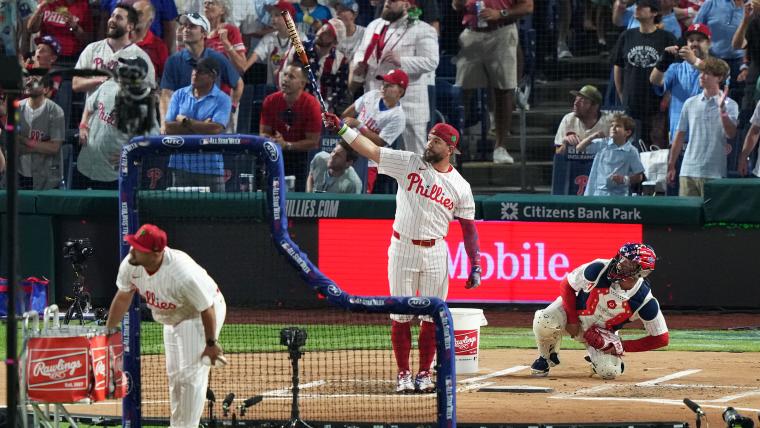
POLICY WIRE — Philadelphia, U.S. — It’s quite a sight, isn’t it? Thousands packed into Citizens Bank Park, the air thick with manufactured excitement, booing players who weren’t ‘their’ own, all for an exhibition that used to be a warm-up. But here we’re. This wasn’t just another Home Run Derby — oh no, this was a cultural experiment, broadcast into the ether by a streaming titan. They weren’t merely chasing dingers; Major League Baseball was chasing subscribers.
On Monday night, the venerable ballpark played host to the 2026 Home Run Derby, traditionally considered the crown jewel event of the MLB’s All-Star weekend. Except this year, the crown came with an entirely different streaming sash. For the very first time, Netflix was the exclusive home. What a moment. No linear TV, no traditional access, just a login screen and an internet connection separating fans from “blasts, bombs and big flies at the Bank.” [QUOTE_PLACEHOLDER]
But how much of that crowd was even thinking about Netflix? They were there, you know, for the spectacle. They cheered the two Phillies — Bryce Harper and Kyle Schwarber — with almost religious fervor, even as their competitors were treated like visiting dignitaries in need of an immediate return flight. Jordan Walker, the Cardinals youngster, found himself on the receiving end of some classic Philly heckling — all part of the charm, I suppose.
And then there were the new rules. Gone was the running timer. Now, each batter had a “finite number of swings available to maximize their homer total.” It was a slight tweak, but one that changed the rhythm. A hitter’s timing — and patience suddenly took on a different dimension, creating mini-dramas within each round. Willson Contreras, the Red Sox slugger, started things off with a bang, totaling 13 homers in Round 1, many flying deep into left field. He reached “490!!!!” feet, just to remind everyone about the raw power on display.
The field itself had star power — naturally. Beyond the hometown heroes, Munetaka Murakami, the “White Sox rookie sensation” (and a star from Japan who made the jump), along with Junior Caminero of the Rays and Ben Rice of the Yankees, rounded out a compelling lineup. Murakami, even if he didn’t quite set the night on fire with nine Round 1 homers, represented a different kind of global reach, an intriguing face in a distinctly American game trying to expand its global footprint.
As the rounds progressed, the raw athleticism was undeniable. Caminero ripped a “491-foot blast” in Round 2. Schwarber, that grizzled veteran, “swats nine home runs in Round 2,” a showing that reportedly got “ear-piercingly loud in Citizens Bank Park” for his longer shots. And yes, Harper, despite his theatrical flair, didn’t advance, hitting “eight homers.” The narrative, though, kept coming back to the method of consumption, not just the athletic achievement.
Because ultimately, this was a test case. Netflix isn’t just delivering movies and bingeworthy series anymore; it’s eyeing live sports as the next frontier for global subscriptions. But getting fans to embrace — or even notice — this shift in regions far removed from the diamond is another ballgame entirely. Take Pakistan, for instance, a country with immense sporting passion, primarily for cricket. The idea of millions tuning into an MLB Home Run Derby, let alone paying a subscription for it, feels a million miles away, yet platforms like Netflix represent perhaps the only viable channel for such cultural imports to even register beyond expat communities. Will global audiences fork over their dinar or rupees for an exclusive slugfest featuring players they might barely recognize? Or will this particular experiment largely serve an existing, digitally savvy North American fanbase?
A recent industry report — call it an informed estimate, if you like — suggests that just around 15% of global Netflix subscribers actively engage with any form of sports content when offered, an admittedly broad figure from digital market analytics firm ‘StreamInsights’ late last year. It implies a steep climb for sports in places like South Asia, where broadband access isn’t universally reliable and traditional viewing habits are entrenched. Can baseball really penetrate markets where the very concept of a ‘home run’ requires more than a casual Google search?
What This Means
The MLB’s gambit with Netflix isn’t merely about a few more dollars — it’s a deep dive into the shifting sands of global media consumption. From an economic standpoint, Netflix is throwing substantial capital at live sports to differentiate itself and attract new subscribers in a maturing streaming market. This Derby is a public declaration, a very visible stake planted in the ground, showing that the company wants a slice of the live sports pie currently dominating traditional broadcasting. For MLB, it’s about diversifying revenue and attempting to “grow the game” beyond its established demographic, perhaps even targeting younger, digitally native audiences worldwide.
But the political implications are layered. Handing exclusive rights to a global streaming platform creates access challenges. For segments of the population without reliable high-speed internet or disposable income for subscriptions — whether in rural Pennsylvania or burgeoning cities across the Muslim world — this move shifts sports from a potentially communal, freely accessible event into a premium, individualized experience. And it effectively places a foreign cultural product (American baseball) behind a paywall globally, impacting its ability to build new organic fanbases without significant investment in local market penetration and adaptation. You can’t grow soft power if the access points become prohibitive. The spectacle might be grand in Philly, but its reverberations far afield, its cultural resonance, depend entirely on how broadly those digital gates swing open. Or if anyone’s even looking through them.