


Beyond the Cheers: Unpacking the Quiet Strategy Behind a New Mexico MLB Draft Pick
POLICY WIRE — ALBUQUERQUE, N.M. — The roar of a stadium is a distant promise when a young man and his family hash out career options over the kitchen table. But for La Cueva High School grad Dylan...

POLICY WIRE — ALBUQUERQUE, N.M. — The roar of a stadium is a distant promise when a young man and his family hash out career options over the kitchen table. But for La Cueva High School grad Dylan Blomker, that very quiet calculus—negotiating away a collegiate future for an immediate professional one—just cemented his path into Major League Baseball. He wasn’t simply *drafted*; he made a choice, a calculated wager, months in the making. And honestly, it wasn’t all spontaneous public elation.
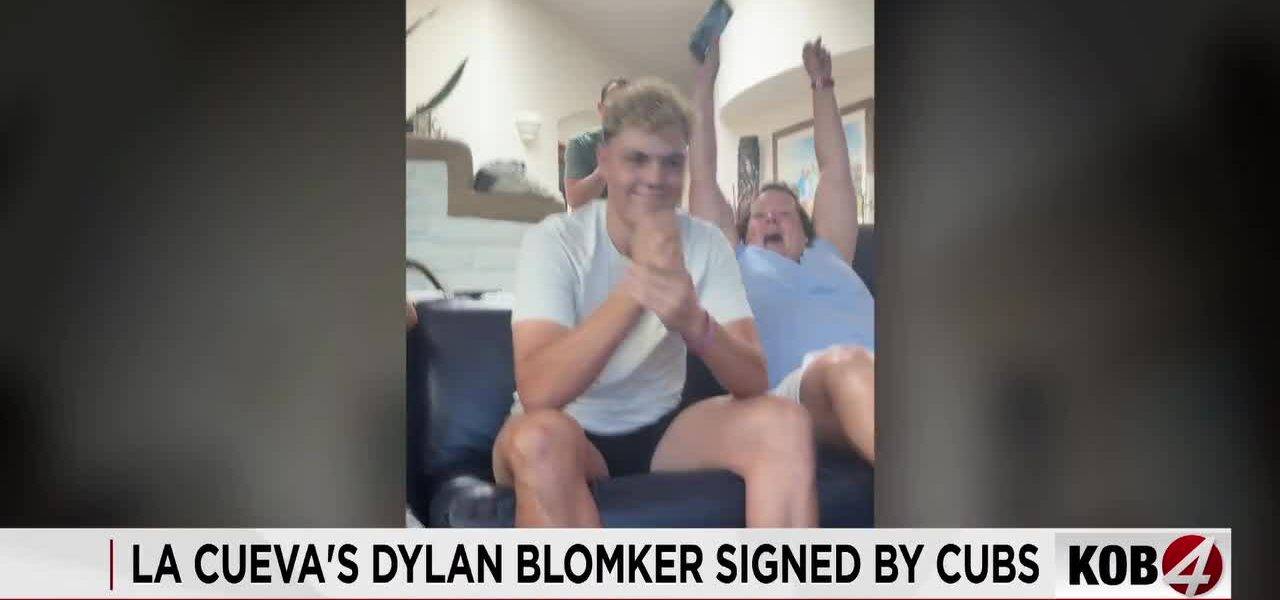
It turns out, the theatrical moment of hearing your name called, for Blomker anyway, was less an ambush of destiny and more a planned reveal. An hour before the Chicago Cubs officially tagged him in the fifth round of the MLB Draft, he already knew. It was pretty crazy. I found out about an hour before the draft I got the news that I was going, I got picked to the Cubs
, Blomker reportedly said. That’s a good chunk of time—almost an eternity, really—to absorb a life-altering truth before the public announcement, giving him and his close circle a chance to process the initial shock privately. Talk about managing the narrative. And managing the emotion, of course. So I had a little to process it
, he added. A moment of silence before the frenzy. That’s shrewd, isn’t it? [QUOTE_PLACEHOLDER]
Only his folks and a single friend, camera-ready, were clued in to the precise moment his name would flash across screens. Everyone else got to experience it in real-time, just like the rest of America. I let the moment kind of happen organically, me and my parents knew and I told one of my friends so he could record it, but that was it
, he mused. Those were the only people that knew, everyone else was in the dark and then they found out when they heard it.
You gotta appreciate the quiet strategizing. The illusion of a complete surprise, carefully maintained for the sake of an authentic, unspoiled group reaction. It’s a delicate dance, balancing genuine celebration with an informed decision.
He was the 159th name plucked off the board on the draft’s second day. For a New Mexico kid, that’s not just a personal victory; it’s a regional boast, an acknowledgment of the state’s often-overlooked talent pipeline. When the name finally came, that’s what all went through my mind, went through my head, was all those hours with ABA that I’ve poured into there, and then also all the coaches that have poured everything they had into me to get me there
, Blomker stated, acknowledging the unseen armies that support a rising athlete.
But the biggest decision wasn’t simply saying ‘yes’ to the Cubs. It was saying ‘no’ to Louisiana State University—LSU. LSU, a traditional baseball powerhouse, had been his ‘dream school forever’. That’s a tough phone call, a difficult conversation, you bet it’s. And one that speaks volumes about the pragmatic realities of professional sports. The financial implications alone are staggering. The average slot value for a fifth-round pick, like Blomker’s, often hovers around roughly $400,000
, according to MLB Pipeline data for the 2023 draft, a sum that’s hard for most university scholarships to match. But at the end I think me and my parents were pretty decisive that we thought the Cubs were the best place for me to go, that was a good organization for me to go to to develop
, he confirmed. Development, in this context, translates directly to maximized future earnings. The pathway matters, and a quick trip through the minor leagues to the big show can dwarf even a blue-chip college education, at least financially.
He’ll start his journey, naturally, in the Arizona Complex League and then likely navigate the minor league system as a right-handed pitcher. It’s a grind, not a glamorous immediate leap. But it’s the proven path, — and a lucrative one, if you make it work.
📄 POLICY WIRE WHITEPAPER PUBLISHED: PAKISTAN'S NATIONAL SECURITY POLICY PRIORITIES
👉 READ BY CLICKING HEREAnd consider the economic forces at play here, for young men not just in Albuquerque but across the globe. Professional sports, for all its idealism, is a fiercely competitive global marketplace. Young athletes in burgeoning markets, from Karachi to Casablanca, stare down similarly long odds chasing a different dream—perhaps cricket in the Pakistan Super League, or soccer in Europe’s sprawling academies. The resources and structured pathways in regions like New Mexico, while not uniformly distributed, represent a well-oiled machine compared to the more nascent or challenging routes available in, say, Bangladesh, where the fight against climate change often overshadows athletic development. The annual struggles in regions facing deltaic distress highlight the vastly different opportunity landscapes around the world. Here, it’s about choosing between elite universities and professional teams; elsewhere, it’s about fundamental survival, which impacts the trajectory of all dreams. But the fundamental drive for economic mobility through exceptional talent, it’s universal.
What This Means
Blomker’s decision isn’t just about baseball; it’s a window into the ever-evolving economics of youth sports and the cold, hard logic behind pursuing a professional contract over a collegiate scholarship. The sheer amount of money associated with a five-figure—or even six-figure—signing bonus changes the game, literally and figuratively. It offers a quicker route to professional development and potential earnings, sidestepping the uncertainties of collegiate eligibility or injuries before reaching the pros.
From a broader policy standpoint, the rise of specialized youth sports—think travel ball, elite coaching, advanced academies like ABA mentioned by Blomker—has created an often inaccessible track for many, regardless of raw talent. It requires substantial familial investment, time, — and money. It’s an economy unto itself, shaping not just careers but potentially generations. And for developing economies, it’s a lesson: for all the individual talent, you really can’t get to the top tiers of a professional sport without significant, structural investment. It’s the difference between hope and opportunity, or even a local celebrity like Blomker and a symbol of true Western status.
So, as Blomker embarks on his new journey with the Cubs, remember this: the moment of public jubilation is just the tip of the iceberg. Beneath that sparkling surface lies a deep, intricate network of personal choices, family sacrifices, financial calculations, and — most definitely — quiet strategizing.