

Rural Lifelines Fray: New Mexico’s Emergency Overhaul Reflects Global Service Scrutiny
POLICY WIRE — CUBA, N.M. — It happens quietly, doesn’t it? One day, a community’s only ambulance service is simply gone—a financial casualty of an unforgiving landscape where budgets meet...

POLICY WIRE — CUBA, N.M. — It happens quietly, doesn’t it? One day, a community’s only ambulance service is simply gone—a financial casualty of an unforgiving landscape where budgets meet critical need and often, they don’t quite mesh. Here in the high desert of New Mexico, residents of Cuba and its scattered outposts just lost their long-standing emergency medical services, not with a bang, but with a calculated exit from Presbyterian Medical Services, a decision born of hard fiscal realities familiar far beyond this dusty corner of the American Southwest.
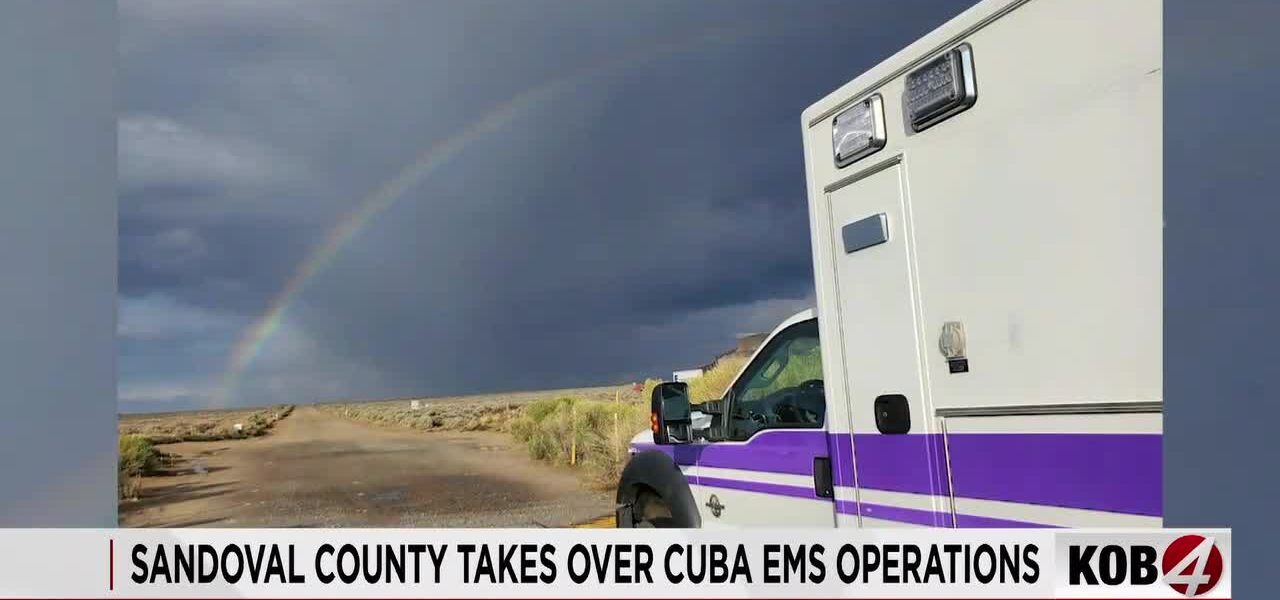
For decades, Presbyterian Medical Services held the line, providing that essential lifeline across roughly 60 miles of U.S. 550, through areas as sparse as La Jara — and Regina, and extending to parts of the vast Navajo Nation. But the balance sheet eventually screamed louder than any siren. About eighteen months back, Presbyterian officials approached Sandoval County, a quiet conversation that ended, inevitably, in a handshake of surrender. Christopher Bagley, the Sandoval County Fire Chief, laid it out plain: [QUOTE_PLACEHOLDER] It wasn’t really about possibilities, though, was it? It was about necessity, about plugging a gaping hole in rural safety.
And plug it the county did, by pouring money and muscle into a new system. This wasn’t some minor upgrade. The county dropped $2.4 million into a brand-spanking-new station, right there at the Sandoval County Fairgrounds. That’s a significant chunk of change for a region often overlooked by major public spending. But you gotta spend it somewhere, particularly when human lives hang in the balance. It ensures folks in this one-third of Sandoval County—what Bagley refers to as, “It is a station for Northwest Sandoval County. It’s about a third of our county,”—can still get help when disaster strikes.
Twelve paid staff now man the posts, 24/7. And this isn’t just about ambulance rides anymore. The mandate has swollen, transforming a basic transport service into an all-encompassing emergency outfit. “24/7 fire suppression, wildland fire response, hazmat response, any kind of technical rescue response, vehicle extrication,” Bagley reeled off the list. It’s a full-spectrum deployment, tackling everything from a fender-bender on a forgotten highway to wildfires that plague this parched land, and it even offers mutual aid to neighboring Rio Arriba County. For many, it’s a breath of fresh air; for others, a flicker of apprehension at the newness of it all. Bagley conceded that residents have shown [QUOTE_PLACEHOLDER] Change is always a trick, isn’t it?
Consider Mary Lucero, a veteran who clocked in 30 years and six months with Cuba EMS before she ran her last call in December. “We were their their lifeline, and it’s kind of some of the folks I consider family are those little communities sometimes,” she recalled. Think about that longevity, that embeddedness in a community. Then imagine it just… stopping. It makes you wonder how many similar quiet departures occur in remote regions across the globe. You hear tales of collapsing infrastructure in parts of rural Sindh in Pakistan, for instance, where an emergency vehicle could take hours to reach, or may not exist at all, making such an immediate, comprehensive service a luxury unimaginable.
Because the issues here—rising costs, worker shortages—they’re not unique to New Mexico. A spokesperson for Presbyterian Medical Services openly admitted, “However, like many rural providers, PMS has faced growing challenges sustaining around-the-clock EMS coverage due to rising costs and ongoing workforce shortages.” This isn’t an isolated problem. It echoes in the mountainous regions of Afghanistan, the sprawling villages of rural Bangladesh, and even within economically strained pockets of Turkey, where governments or aid agencies wrestle with how to provide rudimentary emergency services against overwhelming odds. It’s a universal battle to keep public services solvent and responsive, particularly for those communities without dense populations or ample tax bases.
📄 POLICY WIRE WHITEPAPER PUBLISHED: PAKISTAN'S NATIONAL SECURITY POLICY PRIORITIES
👉 READ BY CLICKING HEREAnd here’s a hard truth: public sector wage growth has consistently lagged behind private sector growth for most of the past two decades across many Western economies, according to analysis by the OECD. This discrepancy exacerbates workforce shortages in public service, making it tough to staff critical roles like EMS personnel, particularly in remote areas where specialists are already hard to attract. Sandoval County had 18 calls to handle in the new crew’s first nine days. That’s more than two calls a day, a quiet hum of ongoing emergencies that someone’s got to answer. You can’t just let that kind of work go undone.
What This Means
This local crisis, and its county-led resolution, throws a harsh light on a few undeniable political and economic truths. First, it demonstrates the creeping erosion of privately-funded, mission-driven services in economically fragile regions. When organizations like PMS, even with their clinical services intact, find it impossible to sustain ambulance operations, it points to a systemic failure in funding models for vital public goods. There isn’t an appetite, generally speaking, for allowing the most vulnerable segments of our population—those in isolated areas—to simply go without emergency care. So the county, per usual, is forced to step in, acting as the ultimate guarantor.
Secondly, the $2.4 million investment represents not just a stopgap, but a significant expansion of the state’s footprint in community safety. It’s a good example of how necessity, driven by market failure, inevitably pushes governments into roles previously handled by other entities. This trend, if it continues nationwide, could mean increased tax burdens, but also potentially more coordinated, holistic emergency responses—fire, rescue, and medical under one umbrella, a sort of centralized efficiency. And this move, a county providing critical care, echoes the enduring question of state responsibility in less developed nations like Pakistan, where communities often rely on patchwork solutions, local philanthropy, or international aid for what many Americans take for granted.
Ultimately, this isn’t just about Sandoval County, or even New Mexico. It’s about how any modern society—from the deserts of the American Southwest to the rural plains of the Muslim world—grapples with ensuring everyone has access to basic, life-saving services, even when the financial ledger argues against it. It’s a problem that asks governments, and the taxpayers they represent, to weigh fiscal prudence against an almost unquantifiable social contract: that no one should die because an ambulance couldn’t get there.