


Nepal Floods Highlight Urgent Need for Resilient Hydropower Infrastructure
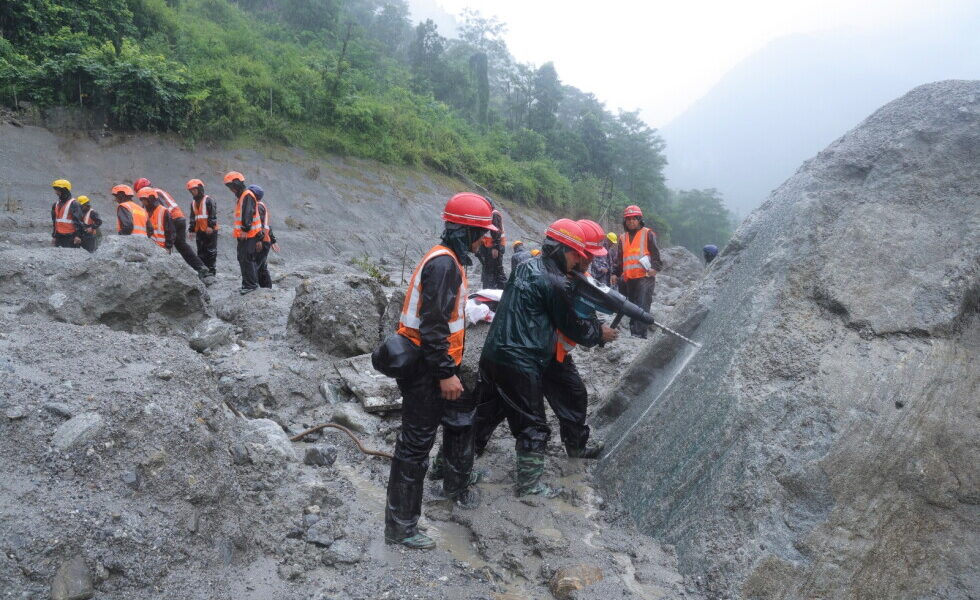
POLICY WIRE — Dhading, Nepal — Workers in central Nepal are laboring to clear thick mud from a flood-damaged power station, aiming to restore electricity to over 20,000 residents. Amid the cleanup,...

POLICY WIRE — Dhading, Nepal — Workers in central Nepal are laboring to clear thick mud from a flood-damaged power station, aiming to restore electricity to over 20,000 residents. Amid the cleanup, there is a growing hope that the plant will not be reconstructed in its original, vulnerable location beside the river.
The Independent Power Producers’ Association, Nepal, reports that up to 900 workers remain unaccounted for across a dozen hydropower projects, with hundreds believed to be trapped in tunnels. The combined death toll in Nepal and China has surpassed 900, with 4,700 individuals still missing.
The flooding has taken approximately 700 megawatts of hydropower capacity offline, representing about 10% of Nepal’s total power capacity. As authorities address the immediate disaster aftermath, the focus should shift to restoring essential services without replicating previous vulnerabilities, according to disaster experts.
Jakob Steiner, a geoscientist at the University of Graz, emphasized the need for Nepalese authorities to reconsider the locations and designs of future hydropower projects. Steiner highlighted the importance of early warning systems, especially given the rapid movement of the flood from its source at the China-Nepal border.
Hydropower projects in the districts of Rasuwa, Nuwakot, and Dhading were either fully or partially destroyed. Many workers sought refuge in tunnels but remain stranded, awaiting rescue. These tunnels, designed for accessing hydropower infrastructure and diverting water, are large enough for trucks to pass through.
Beyond hydropower, the floods have devastated roads, bridges, and critical buildings such as schools and hospitals. Ramraj Narasimhan, a senior director with the Coalition for Disaster Resilient Infrastructure, advocates for rebuilding with a focus on service continuity rather than indestructible structures.
📄 POLICY WIRE WHITEPAPER PUBLISHED: PAKISTAN’S NATIONAL SECURITY POLICY PRIORITIES
Narasimhan suggests incorporating redundancy into the system, such as choosing better construction locations, establishing alternate routes, securing backup power, and implementing improved early warning and financial tools like insurance to expedite recovery. His organization estimates that $124 billion worth of Nepal’s infrastructure is at risk from climate-driven disasters, with annual losses potentially reaching hundreds of millions of dollars.
Climate scientists warn that the Himalayan region, warming at a faster rate than many other parts of the world, is increasingly vulnerable to the impacts of human-caused climate change. The flooding underscores the need for infrastructure planning in the Himalayas to account for escalating disaster risks.
Himanshu Thakkar, coordinator of the South Asia Network on Dams, Rivers and People, calls for more rigorous environmental, social, and disaster-risk assessments for future projects, tailored to the specific landscapes and past hazards of each valley. Thakkar also suggests considering decentralized solar power as part of Nepal’s broader energy strategy.
Reporting by Policy-Wire (PW)