

After Lindy’s Fall: Albuquerque Battles Over a Crack, a Diner’s Ghost, and City Accountability
POLICY WIRE — Albuquerque, N.M. — It’s funny, isn’t it, how a city’s grand visions often boil down to a simple crack. Not in its master plan, mind you, but in an...

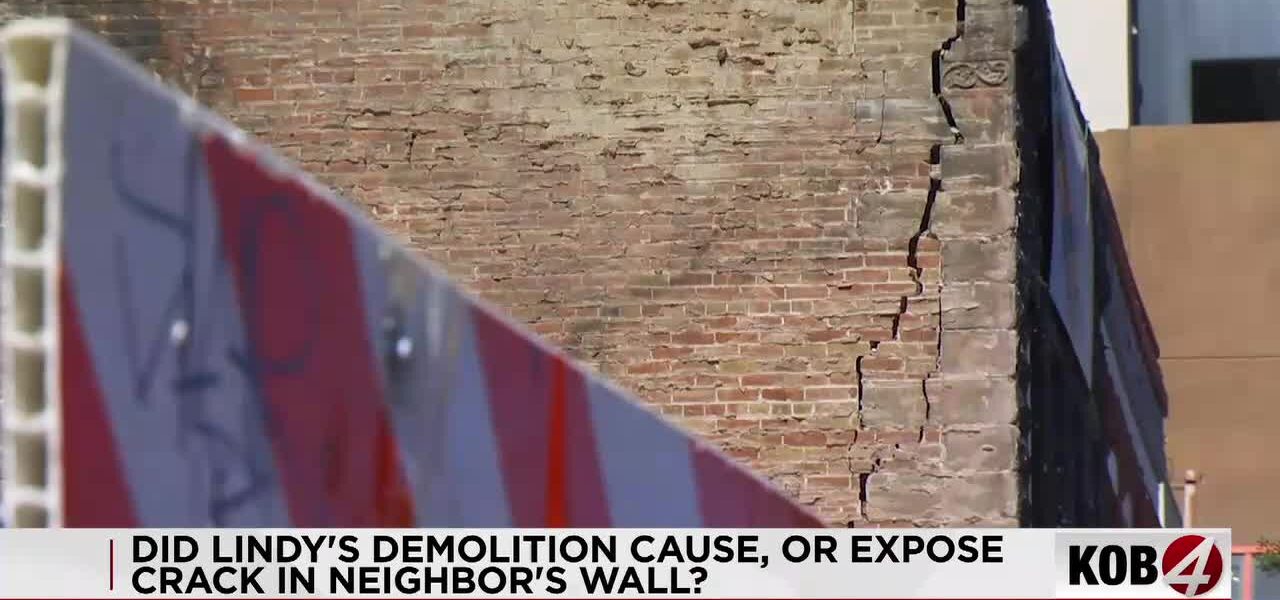
POLICY WIRE — Albuquerque, N.M. — It’s funny, isn’t it, how a city’s grand visions often boil down to a simple crack. Not in its master plan, mind you, but in an actual brick-and-mortar wall, splitting open the delicate balance between progress and neglect. That’s precisely what’s happening here in Albuquerque, where the recent, unceremonious exit of Lindy’s Diner from the urban landscape has left behind more than just a dusty vacant lot. It’s left a raw, gaping fissure along the flank of Flamenco Works, the long-standing cultural heart of this neighborhood, triggering a very New Mexican standoff between concerned citizens and an ever-present, occasionally bewildering municipal apparatus.
Jesus Muñoz, the Executive Director over at Flamenco Works, isn’t just seeing daylight where an adjacent diner once stood; he’s staring right through a fresh crack on his second story. And it’s not just a peek of sunlight. "There was another building here on the other side of Flamenco Works, which was Lindy’s, right? And I couldn’t see daylight then. I can see daylight now," Muñoz lamented, his voice a blend of incredulity — and simmering frustration. It’s a statement that encapsulates the whole sorry mess, suggesting an abrupt architectural intimacy nobody asked for, certainly not an exposed wall to the whims of desert weather. But beyond the immediate structural woes, you’ve got to wonder what else is truly coming undone in our civic planning.
The city, of course, isn’t quite seeing it Muñoz’s way. They’ve deployed their go-to contractor, Grancor Enterprises—licensed, bonded, all the assurances money can buy—to "carefully take down by hand" the Lindy’s wall. Very particular about that "by hand" detail, aren’t they? Because it certainly conjures an image of painstaking surgical removal, not the seismic rumblings some residents describe. And that crack? Pre-existing, they contend. Oh, and the clincher? Mouse droppings. Apparently, those little vermin are reliable arbiters of structural chronology. As a City of Albuquerque spokesperson put it, with a hint of thinly veiled exasperation, "The City strongly encourages downtown building owners and all owners of old buildings to inspect and maintain them properly to ensure their structures are sound." Because clearly, the mice knew before anyone else. This argument doesn’t just pass the buck; it hands it a shovel — and points it towards your foundation.
But Muñoz, bless his patient soul, isn’t really fussed about whose fault it’s. "Whether the crack existed or not is really kind of irrelevant for me," he states with almost Zen-like resignation. His focus remains fixed on the practicalities: an exposed wall now open to elements, a snapped electrical pole, a shredded gutter. "Our electrical pole has been broken off. The gutter on the back has been torn off. So it’s not just this. Everything’s been detached. Nothing was reattached. There’s been no communication." And that’s the bitter pill, isn’t it? Not the big boom, but the lingering silence after it. No follow-up, no reassurances, just a mess.
It’s a scenario that, frankly, plays out in metropolises far beyond the Land of Enchantment. Consider Karachi, Pakistan, where heritage buildings crumble not just from neglect, but sometimes from the unchecked ambition of adjacent new construction, with owners often battling city development authorities for decades over structural damage or loss of historic fabric. They don’t typically bother with careful, by-hand demolitions; often, it’s just ‘demolition by neglect’ until gravity finishes the job. This local incident, though seemingly small, spotlights the universal friction between urban decay, developer interests, and city government’s capacity—or will—to manage change responsibly. It underscores a persistent urban dilemma: who pays when a ghost of the past crashes into your present?
📄 POLICY WIRE WHITEPAPER PUBLISHED: PAKISTAN'S NATIONAL SECURITY POLICY PRIORITIES
👉 READ BY CLICKING HERECity Planning Director Alan Varela did eventually get on the horn with Muñoz, and by all accounts, that particular conversation was "positive." One wonders if positive here means, "We talked and no one yelled." But dialogue is only ever a first step. Concrete actions—and perhaps, concrete patch-ups—are what’s desperately needed. Because at this point, the burden of proof, and perhaps the burden of repair, still hangs squarely over the head of Flamenco Works. This isn’t just about a broken building; it’s about a broken expectation of civic duty.
What This Means
This episode exposes a familiar vulnerability in municipal governance — and urban development. Politically, the city’s initial defensive stance—blaming pre-existing conditions and advocating for better private maintenance—doesn’t foster public trust. It paints a picture of a bureaucracy quick to absolve itself rather than immediately address a visibly impacted community asset. Economically, such disputes inevitably lead to higher costs down the line, either through litigation, protracted repair delays, or, in Flamenco Works’ case, potentially out-of-pocket expenses for a cultural institution that already operates on tight margins. A quick glance at urban infrastructure statistics confirms this isn’t an isolated problem: the average age of non-residential buildings in the United States, as of 2018 according to the U.S. Energy Information Administration (EIA), was approximately 53 years, many predating modern building codes. That means aging structures frequently butt up against newer developments or demolition projects, increasing the likelihood of structural complications.
the incident subtly shifts focus from responsible demolition practices to the general state of privately owned historical buildings. While property owners do bear maintenance responsibility, the city’s role in overseeing large-scale demolition that affects adjacent properties is arguably more immediate and critical. A clear, well-communicated protocol for damage assessment and repair post-demolition is essential, lest other valuable urban institutions find themselves in similar predicaments. It’s a recurring drama in many rapidly changing urban cores, often boiling down to whom the city values more: its heritage or its contractors. This particular bureaucratic fumble does little to inspire confidence. It’s also why so many cities struggle to preserve their unique identities, opting instead for a cycle of demolition and rebuilding that rarely benefits those who called the older structures home. In the arid heart of New Mexico, like much of America’s older towns, keeping these bones intact demands more than just well-meaning words.