Atlanta’s Midnight Surge: Blaney Rewrites NASCAR Script, Scrambling Championship Outlook
POLICY WIRE — Hampton, Ga. — NASCAR, that venerable spectacle of speed and exhaust fumes, rarely pauses for poetic moments. But after a rain-soaked, predawn finish in Atlanta, something close to it...

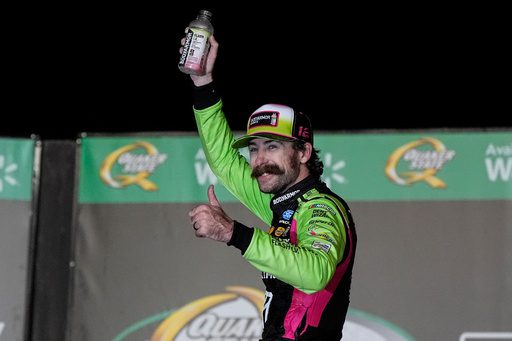
POLICY WIRE — Hampton, Ga. — NASCAR, that venerable spectacle of speed and exhaust fumes, rarely pauses for poetic moments. But after a rain-soaked, predawn finish in Atlanta, something close to it unfolded. It wasn’t merely a race won; it was a championship narrative, heretofore seemingly set, suddenly tossed into a shredder. Ryan Blaney, driver of the No. 12 Team Penske Ford, didn’t just cross the finish line first—he detonated the points standings. The sport, ever prone to high-drama turns, delivered.
It was a proper beatdown, the kind that rattles assumptions. And Blaney, bless his heart, seemed genuinely surprised by the fallout. “Really?” he’s quoted asking when informed he was a mere 65 points behind the leader. He hadn’t just won; he’d vaulted. Weeks of quiet accumulation, those incremental gains, were upended in one brutal, dominant weekend. The man practically owned the track. He grabbed the pole. He bagged both stages. Then he won the whole damn thing.
Team Penske must’ve felt like they’d hit the lottery, especially after that prolonged, dreary weather delay. Three hours and nine minutes of waiting. The lights of the Speedway, by then, burning against a sky that had long since surrendered to Monday. But when the green flag finally dropped, Blaney’s car — an undeniably potent piece of machinery — carved through the field with surgical precision. It was an exhibition of sheer mechanical advantage married to sharp driving, making his competitors look, frankly, a bit flat-footed. He wasn’t just fast; he was strategically unflappable. “I couldn’t ask for a better weekend,” Blaney understated later, an almost dismissive nod to his virtuoso performance. “My car was incredibly fast, leading. I could defend moves without having to throw, like, low-percentage blocks.” It’s that blend of power and understated confidence that catches the eye. Because he simply didn’t have to push the envelope that often.
His crew chief, Jonathan Hassler, played a gamble that paid off like a slot machine jackpot. Blaney brushed the wall—a minor heart attack moment for any team. But Hassler, a man whose job demands nerves of steel and an encyclopedic knowledge of racecar physics, made the call to stay out. No pits. No fresh tires. Just trust in his driver — and the car’s integrity. “We were able to get some pictures really quick, see that the damage wasn’t too bad,” Hassler told reporters, a cool-headed retrospective of a split-second decision that secured victory. He wasn’t wrong. Blaney shook off the minor contact, defended challenges from Bubba Wallace and Christopher Bell — Wallace later penalized, adding another layer to the chaotic finish — and held on for the win.
This kind of outright domination, leading 171 laps, hasn’t been seen on a drafting-style track since the legendary Richard Petty logged 184 laps at Daytona back in 1964, according to NASCAR’s official records. That’s good company. But what does it truly signify? A turning point? A one-off surge? The field, after all, is brutally tight. Tyler Reddick — and points leader Denny Hamlin aren’t exactly parking their Toyotas on the sidelines. They’ll be gunning for him, you bet they will.
“The relentless nature of modern NASCAR means a single race, no matter how spectacular, is but a fleeting moment in a much larger, fiscally complex war,” observed longtime motorsports analyst Dr. Alistair Finch, weighing in on the implications. “While Blaney’s win energizes his team and sponsors, the economic pressures across the circuit — from logistics to talent acquisition — remain an unrelenting current. They’ve gained momentum, but the stream is still turbulent.”
What This Means
Blaney’s dramatic ascent into the championship fray isn’t just about trophies; it’s a financial jolt for Team Penske and its myriad sponsors. Dominant performances mean more airtime, more eyeballs, and — for better or worse — more bargaining power. Driver contracts, endorsement deals, the whole financial engine of a racing team gets a significant boost. Because in the cutthroat world of professional sports, where the stakes are stratospheric and every dollar counts, narratives like this fuel the machine. It’s an American story, yes, but the global impact of such competitive excellence echoes far beyond U.S. borders. Brand recognition for automotive giants, many of whom have significant manufacturing or sales presence in burgeoning markets across South Asia and the Muslim world, gets an intangible lift from triumphs on the track. For the global audience — a segment of which now actively follows diverse sports, not just their local favorites — these performances provide an accessible drama, a universally understood struggle for supremacy. And the more captivating the struggle, the greater the viewership, feeding into the ever-expanding global sports economy, where even a win in Atlanta can inadvertently buoy an automaker’s standing in Karachi or Kuala Lumpur, similar to the multi-billion dollar stakes seen in global football tournaments. But this sudden shift also creates palpable anxiety among Blaney’s rivals, who now must re-evaluate their own championship strategies and, critically, their financial outlays for optimal performance. You can bet there’s some tense strategizing happening in boardrooms right now, not just pit lanes.
So, as the circuit heads to North Wilkesboro, expect more than just roaring engines. Expect palpable tension. Expect strategic gambits. Because a 65-point gap isn’t insurmountable; it’s an invitation to a dogfight. Blaney himself put it simply: “Just keep doing what we’re doing.” Easy to say, significantly harder to execute when every competitor is suddenly watching your rearview mirror. The chase is on, — and it just got a hell of a lot more interesting.