


Gridiron Futures: The Million-Dollar Whispers Guiding LSU’s High-Stakes 2026 Gamble
POLICY WIRE — Baton Rouge, Louisiana — Before the first whistle blows, before cleats even touch the autumn turf, the 2026 college football season has already ignited a ferocious skirmish—not on the...

POLICY WIRE — Baton Rouge, Louisiana — Before the first whistle blows, before cleats even touch the autumn turf, the 2026 college football season has already ignited a ferocious skirmish—not on the field, but in the sterile, high-stakes realm of predictive finance. It’s an economic forecast delivered not by market analysts, but by algorithms chewing on a decade’s worth of gridiron data, spit out as fractional betting lines that will nonetheless dictate narratives, inflate egos, and apply relentless pressure to coaching staffs nationwide.
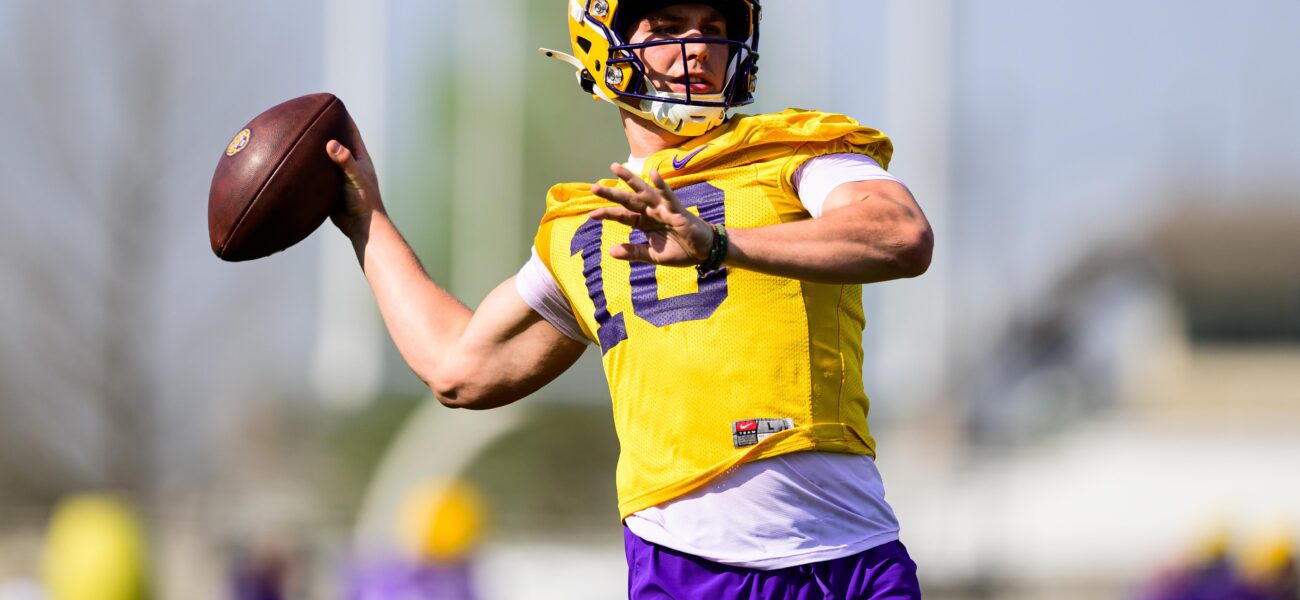
Down in Baton Rouge, at the shimmering LSU Football Practice Facility, Coach Lane Kiffin’s Tigers—a team laden with an undeniable gravitational pull of star power like Sam Leavitt—are finding themselves positioned squarely at the center of this burgeoning financial maelstrom. Their 2026 schedule reads like a murderer’s row: Alabama, Texas, Clemson, Ole Miss. Not a casual stroll through the SEC, is it? And the oddsmakers, those shadowy arbiters of sporting fate, have already rendered their initial verdict.
DraftKings, one of the behemoths in the booming sports betting industry, just dropped its early lines for several of LSU’s marquee matchups. These aren’t just parlor bets; they’re calculated appraisals of institutional strength, coaching prowess, and roster depth. The Tigers are favored in four of the six early games posted, underdogs in only two. This isn’t simply about who wins a game; it’s about the implied economic strength, the media buzz, the booster donations, and the recruiting advantages that cascade from these initial projections.
But what really raises eyebrows is LSU opening as an 11.5-point home favorite against Clemson. That’s a seismic statement, a brazen vote of confidence in Kiffin’s revamped program within the cauldron of Death Valley. You don’t often see such a lopsided projection against a perennial ACC powerhouse. If Kiffin’s crew can stomp Clemson by more than two touchdowns, well, that’s not just a win—it’s a manifesto, a declaration to the college football universe that a new, dominant era has dawned in Louisiana.
“We don’t pay much mind to these early whispers from Vegas,” LSU Head Coach Lane Kiffin reportedly quipped during a closed-door booster event last week, ever the master of playing mind games with the media (and probably himself). “But they do show the caliber of competition we’ve meticulously assembled. We’re building a contender, plain and simple, not just playing to a spread.” A classic Kiffin deflection, suggesting disinterest while simultaneously acknowledging the powerful psychological impact these lines inflict.
Consider the matchup against Ole Miss, Kiffin’s former haunt. LSU is a 2.5-point underdog on the road in Oxford. That tiny spread suggests oddsmakers are essentially baking in a standard home-field advantage for the Rebels. Similarly, at home against Texas A&M, LSU’s 3-point favorite status screams, “Death Valley swings it for the Tigers.” It’s a nuanced dance, these early numbers, reflecting perceived environmental factors as much as raw talent.
And then there’s Alabama, that perennial leviathan. LSU a 4-point favorite at home against the Tide feels… right. Maybe a little generous given Alabama’s enduring mystique, even in a post-Saban landscape. There’s optimism swirling around Tuscaloosa, but also an inescapable air of uncertainty post-legend. The word on the street is LSU appears to have the stronger roster, a more cohesive coaching staff, and that crucial home-field boost. According to a recent report by the American Gaming Association, legal sports betting generated an estimated $10.92 billion in revenue in 2023, showcasing the colossal scale of capital at play in these predictive markets.
📄 POLICY WIRE WHITEPAPER PUBLISHED: PAKISTAN'S NATIONAL SECURITY POLICY PRIORITIES
👉 READ BY CLICKING HEREThe road trip to Tennessee, with LSU as a meager 1.5-point favorite, also tells a story. Neyland Stadium late in the fall is pure hell for visitors. But Tennessee, bless their hearts, currently juggles persistent quarterback questions. Uncertainty at the game’s most critical position can, — and often does, derail an entire season. But that spread—so tight—means the oddsmakers still see potential for a turnaround, or at least a gritty dogfight. Because, for all the numbers — and algorithms, football still throws curveballs.
“These aren’t just betting numbers; they’re market signals, crude perhaps, but incredibly influential,” explained Dr. Evelyn Reed, a sports economics professor at Tulane, whose work often explores the interface of fan psychology and financial markets. “They reflect months of scout reports, recruitment investment, and—frankly—institutional reputation. A team’s perceived strength in July translates directly to booster enthusiasm and recruit interest, a sort of self-fulfilling prophecy in the cutthroat NIL era.”
From the precise forecasting models dictating these collegiate betting lines, to the intricate economic planning that underpins major infrastructure projects across the Muslim world, the meticulous assessment of risk and potential reward is universally applicable. In Islamabad’s bustling markets, just like in Las Vegas, accurate forecasting isn’t merely academic; it’s capital at risk. It’s the difference between triumph and devastating loss, whether you’re trading futures or placing a wager on a young quarterback’s arm.
What This Means
These seemingly innocuous early betting lines transcend the world of casual wagers; they represent a fundamental barometer for the financial and psychological health of these massive collegiate enterprises. For Lane Kiffin, every point in a spread is a subtle judgment on his program’s trajectory, impacting not just recruiting, but also the confidence of donors who fund the athletic department’s escalating needs. These early indicators feed the media cycle, shape public perception, and effectively set the baseline for what constitutes ‘success’ or ‘failure’ long before a single snap is played. An inflated spread against a blue-chip opponent like Clemson telegraphs a powerful message of dominance to rival recruits and rival coaches alike. On the flip side, a tight spread in a seemingly winnable game implies hidden vulnerabilities that Kiffin’s rivals are surely dissecting. It’s not just a sporting event anymore; it’s a colossal industry where perception—and thus, these early economic signals—can literally dictate millions in NIL deals and coaching security. This predictive market essentially crowdsources the collective wisdom of thousands, boiling down complex variables into a single, stark number. And it’s a number everyone, from the casual fan to the university president, pays close attention to.