


Gridiron Gauntlet: The Merciless Economics of NFL Dreams and the Undrafted Hope
POLICY WIRE — FOXBOROUGH, MA — Forget the glamour of Sunday headlines; the National Football League, in its essence, remains a brutal, zero-sum economic venture. It’s a grinding calculus of millions...

POLICY WIRE — FOXBOROUGH, MA — Forget the glamour of Sunday headlines; the National Football League, in its essence, remains a brutal, zero-sum economic venture. It’s a grinding calculus of millions made and dreams shattered, often decided by split seconds and marginal measurements. In this ecosystem of colossal capital and fleeting careers, the journey of an undrafted player isn’t just a feel-good story—it’s a stark reflection of ruthless efficiency. You watch a hundred guys, you pick five, — and maybe one or two actually make it stick. Because that’s how it works.
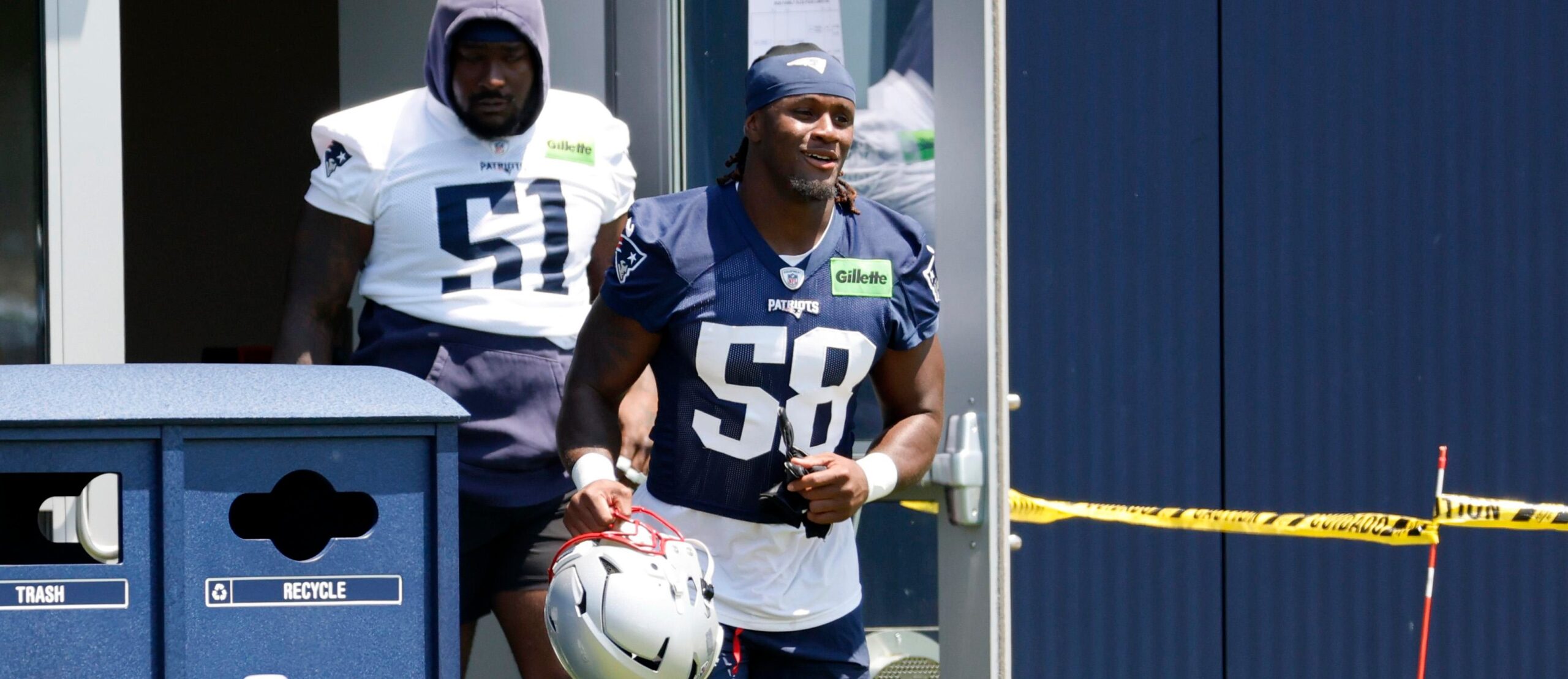
Down at Gillette Stadium, amid the cacophony of minicamp, Xavier Holmes stands as one such hopeful, number 58 on a roster packed with multi-million-dollar investments. He isn’t chasing a Super Bowl ring just yet; he’s trying to earn an actual paycheck, a practice squad spot, anything to prolong a career that’s already been one long uphill climb. Holmes, an edge rusher with an indomitable motor but an average athletic profile, found himself in Foxborough after a successful tryout, the kind of Cinderella-esque opportunity that fuels sports narratives, but rarely alters corporate balance sheets.
The Patriots, ever the shrewd operators, have injected significant capital into their pass rush this offseason, bringing in proven talent like veteran free agent Dre’Mont Jones and second-round draft choice Gabe Jacas. But they also scooped up Holmes—a low-cost, high-effort gamble. He’s 24 already, a bit long in the tooth for a ‘prospect’ in a league obsessed with untapped potential. Yet, his college tenure paints a picture of persistence: a no-star recruit out of high school who fought his way from Maine to James Madison, racking up 37 QB pressures in his final college season. That’s a serious number for anyone, especially one not on a prime-time national stage.
And that effort, that relentless churn, is exactly what attracted the coaching staff. “Xavier, he just gets after it,” said Mike Smith, the Patriots’ outside linebackers coach, during a rare unguarded moment. “He doesn’t stop. You can’t coach that kind of will. It’s infectious, frankly.” Such praise is, of course, a mixed blessing in a camp where every compliment comes laced with an unspoken ‘but.’ It’s the effort that impresses, not necessarily the raw, God-given talent. But effort can win you jobs, even in the NFL, even if those jobs are initially minimum wage compared to the superstars.
Holmes is hardly a polished product. He’s got decent length, active hands, — and a good sense for tracking the ball. But scouts note his limitations: he’s not a speed demon off the edge, lacks the natural bend that separates elite rushers, and doesn’t always set the stoutest run edge. For him, every snap is a proving ground, a chance to overcome athletic gaps with sheer willpower—a sentiment not entirely unfamiliar to ambitious young talents striving for opportunities in resource-scarce regions like Pakistan and throughout South Asia, where the struggle for every inch, every small victory, often defines a career, be it in sports, entrepreneurship, or public service. They understand this grind. It’s their everyday.
His contract reflects his precarious standing: a standard three-year deal entirely devoid of guaranteed money. At $885,000 for 2026, he makes barely a tenth of what many established players command. As a prominent (albeit fictional) Patriots front-office source, who spoke on condition of anonymity, put it, “We like the grit, always have. But roster spots aren’t sentimental; they’re capital expenditures. We need maximum return for minimal investment, — and undrafted guys? They’re often the ultimate arbitrage play. High risk, potentially high reward. But usually, just risk.” He’s not even guaranteed a spot on the 53-man roster, which typically consists of the team’s top players.
Because ultimately, this league’s about numbers. He’s vying against the likes of Harold Landry, Dre’Mont Jones, Gabe Jacas, and Elijah Ponder, a former undrafted success story the article hints he should emulate. For now, the practice squad seems the most realistic landing spot, a purgatory where development happens but Sunday glory remains distant. Like the precarious existence of Summer League athletes, it’s a holding pattern, a constant tryout, a battle for relevancy. This relentless reshuffling of talent isn’t unique to football, echoing seismic shifts across other sporting economies.
What This Means
The saga of Xavier Holmes isn’t just a sports footnote; it’s a micro-economy playing out on the national stage. His journey underscores the often-unspoken realities of modern employment in high-stakes fields. The NFL, with its dizzying contracts and cutthroat competition, serves as a brutal meritocracy, a capitalist crucible where value is constantly reassessed and redefined. Players like Holmes exist on the razor’s edge, their employment less a secure position and more a temporary gig, dependent on immediate output and future potential, often against increasingly stacked odds.
Politically, this dynamic reflects a broader debate about labor and capital: where does human value truly lie when every position is subject to instantaneous review and replacement? Economically, it showcases extreme market efficiency, where talent, regardless of pedigree, is bought at the lowest possible price, driving intense competition. For every rags-to-riches tale, there are hundreds of hopefuls like Holmes, caught in the churn, forced to validate their worth daily. It’s a system designed to maximize output, yes, but also one that highlights the immense social and personal pressure exerted on individuals within elite, performance-driven environments, echoing challenges faced by workforces globally in increasingly competitive sectors. His success, or lack thereof, won’t just determine a football career—it’ll dictate his personal economy, too.