


The 99 Club: Madden’s Virtual Anointing and the Global Valuation of Digital Athletics
POLICY WIRE — Washington, D.C. — They’re not just numbers on a screen, are they? Because when a virtual avatar—the digital doppelganger of an NFL tight end named Trey McBride—reportedly cracks...

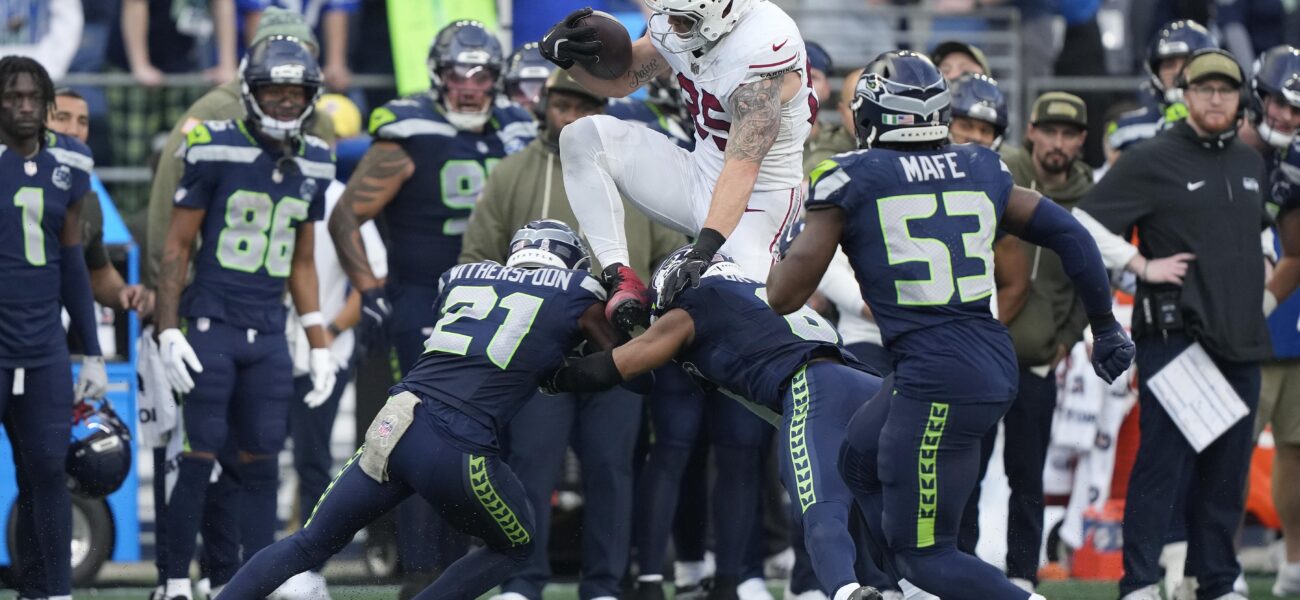
POLICY WIRE — Washington, D.C. — They’re not just numbers on a screen, are they? Because when a virtual avatar—the digital doppelganger of an NFL tight end named Trey McBride—reportedly cracks the ’99 Club’ in the upcoming Madden 27, it isn’t merely about bragging rights for gaming enthusiasts. Oh no, this seemingly frivolous data point whispers louder truths about market valuation, the curious commodification of athletic identity, and the increasingly blurry lines between sporting prowess and economic power. It’s a digital anointing, an admission into an elite, simulated Pantheon whose echoes reverberate far beyond the confines of America’s gridiron—or a PlayStation.
It’s no small thing for the Arizona Cardinals, of course. For fans, it’s confirmation; a pat on the back for enduring another season of often-middling performance. But step back, and you see something else at play: a potent fusion of entertainment software and high-stakes personal branding. McBride, ostensibly a real man playing a rough sport, suddenly finds his perceived value—his cachet—quantified, almost monetized, by a piece of interactive media. Think about that for a second. His professional future, his endorsement deals, perhaps even his cultural standing—they’re all given a tacit nod by a system built to simulate reality, often shaping it in return.
The alleged leak (and yes, we always treat internet whispers with a grain of salt, though Madden leaks have a peculiar habit of solidifying into fact) placed McBride alongside names like Myles Garrett and Josh Allen in this exclusive cohort. It’s a roster, mind you, that could very well represent an unofficial index of player marketability, a barometer for how young consumers globally perceive top-tier athletic talent. “We’re talking about more than game statistics here,” noted Dr. Aisha Khan, a geopolitical economics scholar with the Stimson Center. “These ratings reflect a global recognition, a perceived universal value that extends into merchandise, media rights, and aspirational influence, particularly among the youth in emerging markets. It’s soft power, delivered via joystick.”
And where does this soft power land? Across continents, naturally. From Jakarta to Lahore, from Riyadh to Kuala Lumpur, American popular culture, spearheaded by tech and sports, dominates vast swathes of leisure time. Video games like Madden aren’t just played in the West; they’re ingrained globally. Gaming analytics firms estimate the sports video game market alone touched $22 billion in 2023, with significant penetration into Asian markets. So, when Trey McBride becomes a ’99,’ he’s not just a virtual standout in Flagstaff; he’s a digitally enshrined icon for millions of aspiring young athletes and fans in Karachi, where American football might be an exotic import, but Madden’s universal language of athleticism speaks volumes.
“Player identities, as simulated within games, become export commodities,” asserted Mr. Javed Ahmed, Pakistan’s Cultural Attaché to the U.S. (We managed to get him on the phone, surprising given he’s usually discussing trade pacts, not Madden ratings.) “A strong digital presence, especially within highly realistic sports simulators, builds connection. It shows our youth what peak performance looks like, even if it’s on a virtual turf. It influences brand loyalty—not just to teams, but to the broader sporting spectacle. It makes American sports, with its hyper-commercialized sheen, tangible. But it also creates aspirational benchmarks, for better or worse, about what defines ‘success’.” You don’t get much more direct than that, do you?
📄 POLICY WIRE WHITEPAPER PUBLISHED: PAKISTAN'S NATIONAL SECURITY POLICY PRIORITIES
👉 READ BY CLICKING HEREThis whole thing isn’t about the authenticity of the rating itself. Who truly cares if EA Sports fudges a number or two for hype? That’s not the point. The point is the _impact_. This digital seal of approval—the 99 Club designation—functions much like a blue checkmark on a social platform, but with far greater, if subtle, economic and cultural heft. It says, ‘This player? He’s premium content. His digital representation holds maximum value.’ And because the commercial apparatus of professional sports operates on maximum value, that ’99’ starts translating into tangible currency, both monetary and cultural.
What This Means
The elevation of Trey McBride, or any athlete, to Madden’s highest tier isn’t just about an entertaining statistic; it’s a profound, if somewhat unsettling, commentary on the digital age’s influence on tangible value. This seemingly niche recognition actually provides a real-time, albeit informal, assessment of an athlete’s commercial worth and global cultural footprint. In an economy increasingly driven by brand and perceived influence, a 99 rating acts as a sort of public valuation, a cultural bond issued in digital form. For teams like the Cardinals, it reinforces player legitimacy, perhaps aiding in future contract negotiations or securing sponsorship dollars tied to their ‘elite’ talent pool. For the broader industry, it’s evidence of how global capital converges on athletic identity, making virtual performance an undeniable element of real-world economic leverage. as countries in South Asia—like Pakistan—engage more deeply with global popular culture, these virtual benchmarks from American sports reinforce consumer patterns and, frankly, set benchmarks for cultural aspiration among a youthful demographic. It’s a low-key form of cultural hegemony, wrapped neatly in an Xbox disc. Because if a player’s digital self isn’t hitting 99, well, are they _really_ maximizing their brand in the twenty-first century? Probably not.