


Summer League’s Gritty Grind: Where NBA Dreams Clash with Global Capital
POLICY WIRE — Las Vegas, Nevada — They say Vegas never sleeps, and it’s true. Not just for the casinos, mind you, but for the hundreds of young men — some still teenagers — sweating through another...

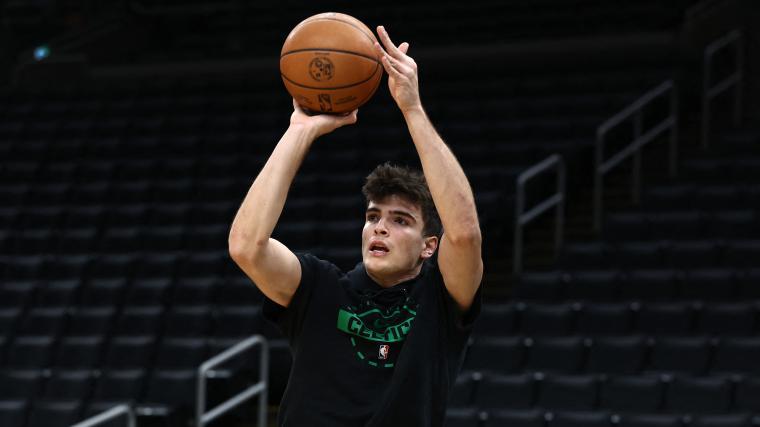
POLICY WIRE — Las Vegas, Nevada — They say Vegas never sleeps, and it’s true. Not just for the casinos, mind you, but for the hundreds of young men — some still teenagers — sweating through another NBA Summer League. Forget the bright lights of a regular season tip-off. This isn’t about championships. It’s about bare-knuckle capitalism, athletic ambition, and a cutthroat job market played out under the indifferent gaze of scouts and talent evaluators. And it’s here, amidst the stifling desert heat, where the Boston Celtics were slated to face the Atlanta Hawks in a skirmish few beyond die-hard devotees (and, critically, their agents) would even notice.
Because let’s be honest, this particular Monday evening tilt, streamed on Prime Video instead of plastered across national television, is merely a single thread in an elaborate global web. These aren’t just basketball games; they’re auditions. High-stakes ones, often for roles that pay a fraction of what their superstar counterparts command, but still represent a shot at a gilded life most can only dream about. Every dunk, every contested rebound, is a whispered prayer for a training camp invite, a two-way contract, or even just another season of competitive pro hoops.
The Celtics arrived boasting a clean 2-0 slate, fueled by standout performances from young guns like Dillon Mitchell, who’d put up a crisp 24 points in their prior outing. John Tonje — and Hugo Gonzalez, too, have shown glimpses of potential, pulling another victory out of the Charlotte game. The Hawks, equally undefeated, showcased their own lottery-ticket hope, first-round pick Kingston Flemings, whose nine points, seven rebounds, and five assists hinted at future versatility against the Nets. These numbers, seemingly small, become colossal markers when your livelihood hinges on them.
But the story doesn’t end with box scores. Not even close. It extends into the furthest corners of the globe. Take Mohammad Amini, a guard on the Celtics’ summer roster. His presence, and that of others like him, speaks volumes about the NBA’s relentless expansion into new markets, new talent pools. For millions across Pakistan, the broader South Asia region, — and indeed, the Muslim world, Amini isn’t just a player. He’s a flickering dream made tangible, proof that a path exists from humble beginnings to the glittering promise of American basketball.
“The Summer League is where the theory of talent evaluation meets the crucible of competition,” Brad Stevens, President of Basketball Operations for the Boston Celtics, observed recently on a sports panel (per the Boston Globe). “It’s about discovering who can translate potential into production, especially under pressure. It’s an economic investment for us, a critical funnel.” It’s a pragmatic assessment, laying bare the truth that beneath the glitz, this is primarily a business. These young men are, effectively, futures contracts. And the market, as always, is unforgiving.
Indeed, the sheer volume of aspiring professionals is staggering. Of the roughly 450 NBA roster spots available each season, a mere fraction turn over annually. The odds of making it stick are microscopic. A 2023 study by the NCAA, for instance, indicated that approximately 1.2% of men’s collegiate basketball players will eventually be drafted by an NBA team. That’s a brutal statistic, and it doesn’t even account for the thousands more international players vying for the same limited slots.
“You’re seeing the global sports economy in miniature right here,” explained Dr. Anya Sharma, an economic policy analyst at the Atlantic Council, commenting on the evolving landscape of international sports. “Leagues like the NBA aren’t just selling entertainment; they’re cultivating international markets, building brands, and subtly projecting American cultural influence. The scout’s notebook has become as significant a tool of soft power as any diplomatic cable, believe it or not. The value isn’t just in ticket sales, but in global brand recognition — and future market penetration.”
But it’s not all grim reality. Because for the fleeting moment of Monday’s 6 p.m. ET showdown at Las Vegas’s Cox Pavilion, all that melts away. For these young athletes, it’s just the game. A chance to prove themselves, one last surge, before the next wave of cuts. They’re vying for a spot in a league that’s becoming an increasingly significant economic and cultural force, touching lives and shaping aspirations from European football pitches to cricket’s shifting dynasties.
What This Means
This summer league contest, like all its counterparts, isn’t just a pre-season curiosity. It’s a barometer for the future of the NBA’s talent acquisition strategy, which is now definitively global. The days of strictly domestic scouting are long gone. Teams are now—actively—scouring every continent, hoping to unearth the next hidden gem, the next Giannis, or even just a dependable rotation player for a fraction of the cost. This translates into tangible economic impact, both for the league itself and for the countries whose youth see basketball as a legitimate escape from poverty or a pathway to international recognition. The proliferation of streaming services like Prime Video for these non-nationally televised games highlights a shrewd understanding that even niche basketball content holds commercial value, providing an extended window for international audiences and deep-pocketed enthusiasts. It broadens the appeal, subtly intertwines the NBA brand into more households, and sets the stage for a truly borderless sports industry where talent, regardless of origin, becomes the ultimate commodity. It’s a calculated gamble, played out with every squeak of the sneaker on the polished hardwood, echoing far beyond the Las Vegas Strip.