


The World Cup’s Hidden Market: Manchester City’s Calculated Gamble on Global Brilliance
POLICY WIRE — Zurich, Switzerland — Football’s biggest spectacle, the World Cup, isn’t just about national pride; it’s a ruthlessly efficient, months-long audition. Behind the triumphant...

POLICY WIRE — Zurich, Switzerland — Football’s biggest spectacle, the World Cup, isn’t just about national pride; it’s a ruthlessly efficient, months-long audition. Behind the triumphant roars and heart-wrenching exits, a more calculated drama unfolds, where club scouts and executives sharpen their pencils, assessing market value and potential synergy with an almost detached precision. And sometimes, what emerges isn’t a new acquisition, but the validation of an existing, yet unproven, hypothesis. For Manchester City, the 2026 tournament has apparently offered just that, framing their future midfield as a prospect few had dared to consider so potent.
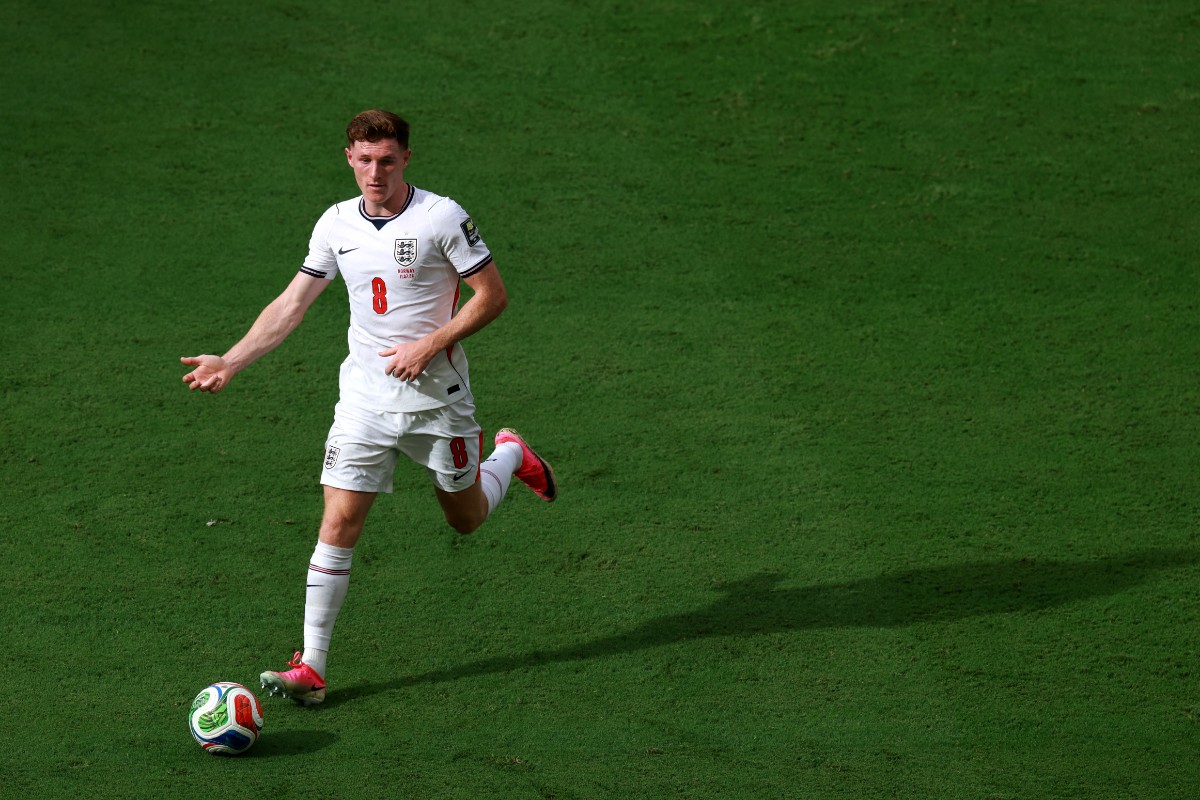
It’s a peculiar phenomenon, really—witnessing two players dominate their respective national sides, then immediately shifting gears to ponder their collective impact on a single club team. But that’s the reality for Rodri, Spain’s imperious midfield anchor, and Elliot Anderson, England’s indefatigable engine room dynamo. The narrative isn’t about if they’re good; it’s about the unsettling synchronicity they’ve displayed on the world stage, suggesting a terrifying, albeit anticipated, partnership awaiting Manchester’s sky-blue faithful.
Forget the hype. What we’ve seen is less a revelation — and more a slow, steady realization. Anderson, whose tenacity and ground-eating runs for England have provided Thomas Tuchel’s side with an almost brutal efficiency, has been exactly what City — and Enzo Maresca — needed to see. He’s been the relentless badger, turning over possession — and driving forward, a seemingly bottomless well of energy. But the brilliance isn’t solely his. And he does it in a way that just screams ‘plug-and-play’.
Rodri, of course, is a known quantity—a maestro. For Spain, he’s been the quiet conductor, dictating pace with the subtle flick of a boot, extinguishing nascent threats with an almost preternatural awareness. Spain’s coach, Luis de la Fuente, didn’t mince words on his lynchpin. “Rodri isn’t just a player; he’s our system’s central nervous system,” de la Fuente reportedly told us last week, his voice tinged with both pride and relief. “He orchestrates everything. Without him, we simply don’t possess the same cohesion. He’s an extraordinary footballer.” You hear that, — and you know it’s not hyperbole.
The beauty of it all is the contrast. Anderson’s directness against Rodri’s geometric elegance. One covers the blades of grass; the other crafts the passing lanes. But they’re both winning. Anderson’s industry has reportedly freed up the likes of Jude Bellingham, allowing him to link with Harry Kane and bag a staggering 12 goals for England collectively so far, according to reports filtering out from England’s training camp – proving that the hard yards often yield the biggest dividends.
“We’ve been monitoring Elliot for ages,” stated a typically understated Enzo Maresca, Manchester City’s manager-elect, in a private chat this past winter. “His development, his hunger – it’s all there. But to see him execute under such immense pressure at the World Cup… well, it reinforces our belief. He’s going to bring an incredible, raw energy to our midfield. He just gets it.” It’s that ‘getting it’ part that club supremos desperately seek. Because sometimes, it’s not about buying the flashiest toy, it’s about getting the right tool for the job.
Consider the broader canvas. Football isn’t just European anymore, not by a long shot. The global reach of a World Cup impacts viewership figures dramatically. Last year’s World Cup semi-finals, for instance, garnered an average global viewership of 300 million per match, according to FIFA’s latest financial reports—a significant portion emanating from markets across Asia, including Pakistan and its enthusiastic South Asian neighbors, where Manchester City’s brand awareness, and by extension, their commercial appeal, rides high on such player performances. Their decisions on who starts where impact legions.
And yes, both Rodri — and Anderson have played monumental parts in their nations’ semi-final journeys. It’s hard to imagine either England or Spain navigating this far without their individual contributions. Anderson, a revelation; Rodri, reliably immense. The notion that these two differing, yet complementary, skill sets could form the bedrock of City’s midfield next season—under Maresca’s guidance—presents a tantalizing, almost unsettling, prospect for the opposition. They won’t just play football; they’ll suffocate it.
What This Means
The apparent cementing of the Rodri-Anderson midfield pairing for Manchester City following their World Cup heroics carries significant ramifications, both within the confines of English football and on the international stage. Economically, stellar performances on a global platform immediately inflate player valuations. Should this duo replicate their national form for City, their combined market worth will soar, creating a substantial asset for the club’s balance sheet—and for any potential future transfer dealings. But it’s more than just player value. It’s about squad cohesion — and strategic advantage. A proven, balanced midfield can shorten a manager’s bedding-in period significantly, minimizing costly early-season wobbles and immediately placing City in pole position for domestic and continental titles. Think of it as investing in an established, low-risk, high-yield commodity. But it’s not without its potential long-term reverberations. Rival clubs, already struggling to contend with City’s financial might, must now contend with an ostensibly cheaper, but demonstrably effective, talent pipeline strategy. They’ve seemingly watched two future titans audition on someone else’s dime.
From a geopolitical perspective, the success of multinational, powerhouse clubs like City, often bolstered by a diverse international playing roster, subtly contributes to soft power projections. When players from different nations perform seamlessly together for a single badge, it showcases a different kind of global integration. But the commercial appeal is undeniable; merchandise sales, broadcast rights, and sponsorship deals tied to these players resonate across continents, making icons of these individuals far beyond the Manchester city limits. Because, after all, when Europe’s elite leagues kick off, billions of eyes—from Birmingham to Baghdad—are watching. It creates a universal, if temporary, escape, blurring boundaries, if only for 90 minutes. And that, frankly, is a power politicians can only dream of harnessing. It’s an economic reckoning as much as it’s a sporting one.