


Cross-Strait Alliances: Harper’s Unlikely Derby Pitcher and MLB’s Quiet Diplomacy
POLICY WIRE — Philadelphia, USA — When Bryce Harper finally, grudgingly, assented to what felt like an inevitable fate—participating in the Home Run Derby in front of his adopted Philly faithful—the...

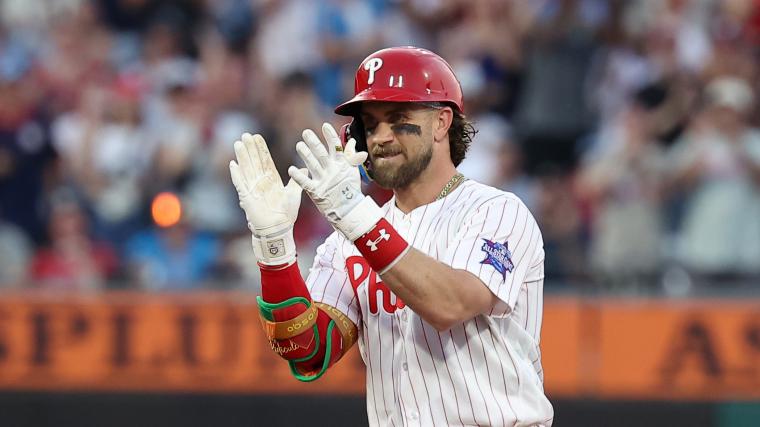
POLICY WIRE — Philadelphia, USA — When Bryce Harper finally, grudgingly, assented to what felt like an inevitable fate—participating in the Home Run Derby in front of his adopted Philly faithful—the actual, messy work of finding someone to lob meatballs for him began. Because, you know, these things don’t just happen. They’re brokered, pondered, and, in this instance, seemingly plucked from the least obvious corner of the baseball universe.
It wasn’t his old man, Ron, whose pitching arm presumably retired gracefully after Harper’s 2018 triumph. And it wasn’t some college pal or minor-league throwing partner, easily overlooked amidst the grandeur. Nah, Harper, a man whose brand is as meticulously curated as his swing, went… rival-hunting? Or rather, talent-scouting across enemy lines, plucking Dodgers’ third base coach Dino Ebel, a man who knows a thing or two about World Series rings, to shoulder the very particular, high-pressure burden of Derby pitching.
Harper’s commitment was slow-burn. He’d waffle, contemplating the logistical nightmare, the swing-ruining myths, — and the sheer mental drain. But, when those hometown cheers — and the innocent, powerful desire of his own kids — started rattling around his head, he conceded. “Knowing the fans want me to do it, my kids are going to be able to remember it,” Harper told The Athletic, a common refrain among the league’s heavyweights weighing personal risk against public adoration. But getting a pitcher, a trusted confidante for the three minutes of pure, unadulterated power display? That’s where the real head-scratching started. Because, after all, you can’t just pick anyone, can you?
Enter Ebel, a veteran with a resume that practically smells of infield dirt. The 60-year-old, a perennial fixture in coaching since his own playing days, didn’t just stumble into Harper’s orbit. He’d done this dance before, guiding the Dodgers’ Teoscar Hernandez to Derby glory just last year. More telling, Ebel and Harper apparently shared some good vibes—and some intense moments—during the World Baseball Classic. A brief, professional acquaintanceship blossomed into a working relationship that transcends team loyalties. And that, in a world often painted in stark shades of us-versus-them, is kinda refreshing.
“He throws a really good BP,” Harper said, a simple endorsement that nonetheless carries the weight of a seasoned hitter. “I’m super comfortable with my dad throwing to me for my whole life. That’s a big thing. You can’t just pick somebody random to go out there.” He then elaborated on the stakes: “If I’m going to do it, I want to be full bore and very confident in winning it.” It’s about confidence, about removing variables, about finding that quiet, consistent presence in a maelstrom of hype and expectations. This isn’t just throwing soft pitches; it’s an art. A subtle observation for a multi-million-dollar spectacle.
And so, a Dodger will aid a Phillie. The sports world, a complex web of rivalries — and alliances, sometimes throws up these odd, beautiful contradictions. An MLB executive, speaking on background, quipped, “Look, in this business, talent talks. And when you’re talking about generating the kind of global engagement these guys do—we’re seeing viewership spikes from Karachi to Cupertino—you make whatever arrangements you have to. A good Derby run isn’t just entertainment; it’s a marketing event that translates into millions for the league, not just the players.” That executive certainly wasn’t wrong. An internal MLB survey from 2023 indicated a staggering 40% jump in digital interactions during last year’s Home Run Derby from non-traditional baseball markets, including noticeable activity from parts of South Asia where the sport is far from mainstream. The world is watching, even when it’s an American institution like baseball.
📄 POLICY WIRE WHITEPAPER PUBLISHED: PAKISTAN'S NATIONAL SECURITY POLICY PRIORITIES
👉 READ BY CLICKING HEREBecause these kinds of subtle gestures, these moments of cross-pollination between ostensible rivals, aren’t just for show. They’re a practical acknowledgment that beneath the jerseys, there’s a shared craft, a universal language of hitting and pitching. It’s a reminder that professional bonds can outweigh tribal allegiances, a theme that—when viewed through a global lens—mirrors diplomatic maneuvering and economic collaborations far beyond the ball field. Think about it: a nation like Pakistan, constantly navigating complex relationships with neighbors and global powers, often finds common ground not through grand pronouncements but through quiet, mutual dependencies. Sports, even America’s pastime, occasionally offers a glimmer of that same pragmatic reality.
This little tale of baseball cross-pollination shows how individual relationships grease the gears of a corporate machine, highlighting how personal trust can—even in hyper-competitive fields—be a surprisingly potent currency.
What This Means
This unlikely pairing—a star Phillie and a Dodgers coach—reflects a fascinating shift in how professional sports manage personal and brand capital. For Bryce Harper, a two-time MVP and a colossal brand unto himself, his Derby participation isn’t merely a lark; it’s an extension of his personal empire, one that needs careful management. Choosing Ebel wasn’t just about finding a good arm; it was about outsourcing a high-stakes, hyper-specific trust exercise. It suggests that even in a league with fierce rivalries, player agency and individual relationships can, at times, supersede strict team loyalties, at least for exhibition events. And for the MLB? It’s a subtle flex. It shows flexibility, a willingness to accommodate its marquee players, and perhaps a nod to a future where individual talent operates more independently across franchise lines. Such collaborative spirit, even when unconventional, drives economic and fan engagement, showcasing the underlying value of interpersonal networks within highly competitive industries. Plus, let’s be real, it adds a delicious, unexpected wrinkle to an event already steeped in dramatic flair.