


Berlin’s Drone Gambit: 50,000 New Eyes on Ukraine’s Shifting Sands
POLICY WIRE — Berlin, Germany — Who knew a swarm of tiny, buzzing contraptions could reshape continental strategy? That’s the question folks are mulling in European capitals and beyond after a...

POLICY WIRE — Berlin, Germany — Who knew a swarm of tiny, buzzing contraptions could reshape continental strategy? That’s the question folks are mulling in European capitals and beyond after a development that’s not just a footnote but a whole new chapter in the ongoing conflict in Ukraine. Berlin, it seems, is ready to throw down a substantial, drone-shaped gauntlet.
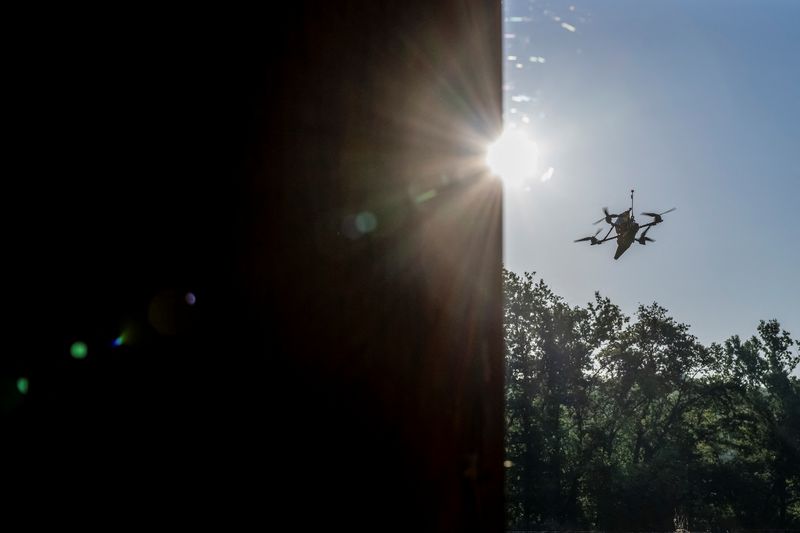
It’s a staggering figure, really—50,000. Not rifles. Not tanks. Drones. Strike drones, to be exact. This isn’t just another aid package; it’s a commitment to an entirely new modality of warfare, a mass-produced, expendable fighting force that turns the battlefield into a dizzying arcade. For years, the drumbeat of traditional heavy weaponry has defined much of the debate, but this shifts things dramatically.
And when a source tells you about something this monumental, you sit up. The details are a bit murky, of course—as they often are in these kinds of dealings—but the scale of this commitment isn’t. Germany, historically reticent about throwing its full industrial might into proxy wars, appears to be doing just that. It’s a pragmatic, if not chilling, admission that this war won’t be won by old-school artillery alone. They’re betting on the sheer, overwhelming quantity of autonomous or semi-autonomous machines to make a difference.
It’s not just about what Germany provides; it’s also about what it signals. It’s a vote of confidence, if a grim one, in a strategy of attrition made smarter, faster. Ukraine needs these eyes and, more importantly, these tiny, explosive punches. We’ve heard countless stories of the ingenuity employed by Ukrainian forces using commercial drones; this, though, is an industrial-scale pivot to that exact doctrine. It’s a leap from DIY to D-Day, conceptually speaking.
Because let’s be real, modern conflicts are increasingly shaped not just by brute force but by asymmetrical advantages and the psychological toll of omnipresent, anonymous threats. The sight and sound—or lack thereof—of thousands of these units swarming an enemy position? That’s got to shake some foundations. Military strategists globally, including those in Islamabad — and Ankara, will undoubtedly be poring over this. They’ll be dissecting every bit of efficacy data coming out of Ukraine.
But how does one even procure, let alone deploy, such a quantity? We’re not talking about a handful for special operations; this is an army in miniature. It points to a deep, integrated defense industrial base, one capable of rapid prototyping — and mass manufacturing. A [QUOTE_PLACEHOLDER] source tells us it implies a coordinated European effort in production, perhaps even new supply chains, specifically designed to bypass the usual bureaucratic molasses that bogs down procurement. This sort of volume necessitates a streamlined pipeline, a lean, mean drone machine, if you will. And it raises some gnarly questions about drone ethics, too—especially when they’re deployed en masse.
In the wider global context, this development won’t escape the notice of countries far removed from Europe’s eastern flank. Think of Pakistan, for instance. A nation that has seen its fair share of drone activity—often from external sources—understands both the immense surveillance capabilities and the tactical punch these systems carry. Pakistan has itself invested heavily in indigenous drone programs, looking for cost-effective force multipliers, especially given its own border complexities and geopolitical balancing act. What Germany is doing could easily be viewed as a blueprint—or a warning—for smaller nations grappling with regional threats and seeking to modernize their arsenals without bankrupting themselves on traditional heavy armor. It highlights a universal truth: in an increasingly uncertain world, technological edge often trumps sheer numerical superiority of old equipment.
Globally, defense budgets are already swelling. Data from the Stockholm International Peace Research Institute (SIPRI) indicated that global military spending surged by 6.8 percent in 2023, hitting a staggering 2.44 trillion dollars. A hefty chunk of that increase comes from Europe, reflecting anxieties born from Russia’s invasion. Germany’s commitment to these drones is certainly wrapped up in that larger trend. It’s an investment, then, in more than just war materiel; it’s an investment in a particular vision of deterrence, one powered by a legion of small, flying robots.
What This Means
The sheer scale of Germany’s drone commitment changes the game, no two ways about it. Economically, it signifies a massive boost to the European defense sector, potentially spinning off new manufacturing hubs and R&D pipelines. It means jobs, supply chains, and, yes, profits. For Ukraine, it’s a desperately needed force multiplier, allowing them to engage targets and survey battlefields with unprecedented persistence and expendability, without risking human pilots. Politically, it signals a deeper, perhaps irrevocable, shift in Germany’s post-World War II security posture. No longer a hesitant economic giant, Berlin is positioning itself as a more assertive, militarized actor in continental defense. It also sets a dangerous precedent. Other major powers—and even non-state actors—will be watching this efficacy closely. If 50,000 drones prove decisive, imagine the future battlefields; they’ll be buzzing. And the psychological impact on adversary forces facing an almost endless torrent of low-cost, high-impact aerial assets cannot be overstated. We’re looking at a world where air superiority isn’t just about fighter jets but also about who can field the most persistent, intelligent swarm.
it forces a reckoning on what constitutes conventional warfare. When drones become the norm for both offensive — and defensive operations, where do you draw the line? Are we merely seeing a democratization of lethal force, making advanced weapon systems accessible to more players, or are we witnessing the beginning of truly autonomous war that raises ethical dilemmas far beyond the usual rules of engagement? But, for now, for Germany and Ukraine, it means one thing: the drone age is truly upon us, not as a niche capability, but as the industrialized backbone of modern combat.