


From Dieselgate to Dorsets: Volkswagen’s Quirky Green Gamble
POLICY WIRE — Wolfsburg, Germany — You think you’ve seen it all? The corporate world’s relentless chase for greener pastures—literally, sometimes—throws up the darnedest things. We’re...

POLICY WIRE — Wolfsburg, Germany — You think you’ve seen it all? The corporate world’s relentless chase for greener pastures—literally, sometimes—throws up the darnedest things. We’re accustomed to press releases about zero-emission this — and recycled that. But a German industrial titan, infamous for emissions scandals (remember Dieselgate?), ditching gasoline-guzzling garden gear for… well, ovine employees? That’s something else.
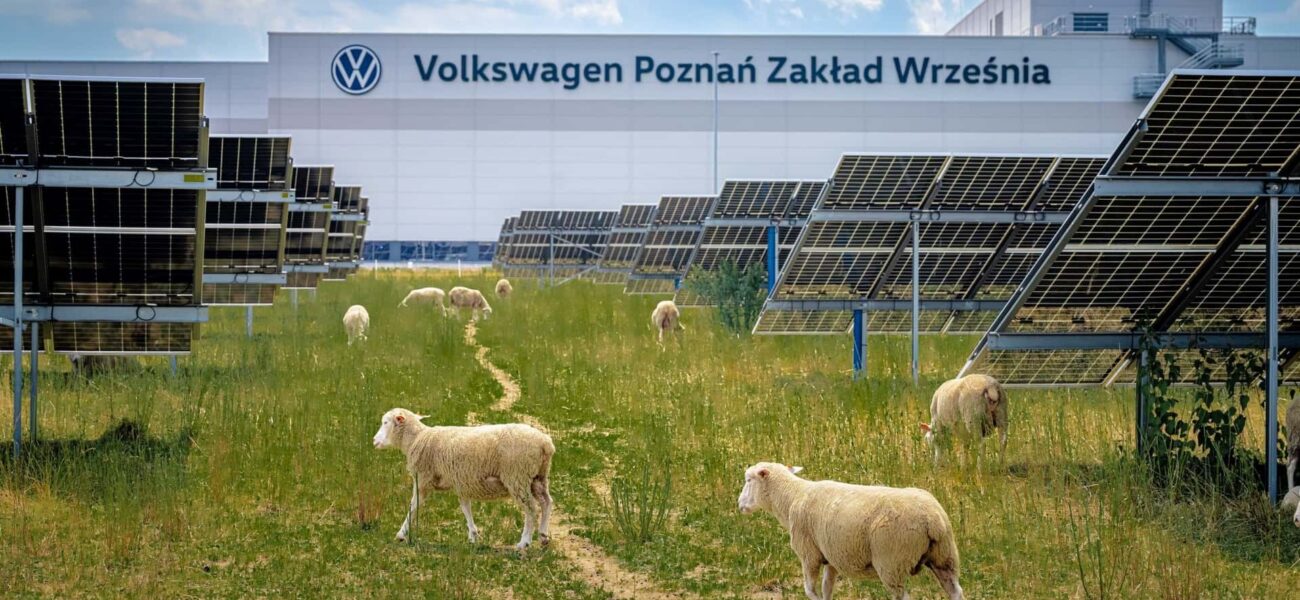
It’s happening. At Volkswagen’s sprawling Wolfsburg plant, the same place that birthed millions of Golfs and Passats, a flock of Gotland sheep, all fluffy and rather serene, are now the company’s designated lawnmowers. Not some prototype robot, mind you, nor an AI-driven landscaping drone. Actual, bleating, grass-munching sheep. It feels less like cutting-edge corporate sustainability and more like a scene plucked from a particularly dry episode of ‘Pastoral Capitalism’.
And you’ve gotta wonder: What’s the play here? Because this isn’t just about trimming turf; it’s a carefully staged tableau, a deliberate signal in an increasingly carbon-conscious world. It’s theater, sure, but the stakes are quite real. How does one pivot from a global scandal over emissions cheating to pastoral chic without inviting a few skeptical smirks? It’s a trick that most CEOs would trip over.
But Volkswagen isn’t just any firm. This is an outfit that churns out millions of vehicles a year, accounting for a sizable chunk of Germany’s—and the world’s—industrial output. The transport sector alone, for crying out loud, accounts for around one-quarter of global CO2 emissions from fuel combustion, according to the International Energy Agency. That’s a massive footprint.
So, introducing a few dozen sheep into the mix—whose carbon contribution, ironically, involves methane burps—it’s an intriguing counterpoint. It’s almost provocative, isn’t it? A company grappling with the future of mobility choosing an ancient, almost primordial method for site maintenance. It speaks to a kind of yearning for a simpler, less complicated path to environmental virtue, a path few industrial giants can realistically take.
“It’s a small step, sure, but it sends a clear signal about our evolving ethos,” asserted Dr. Helga Brandt, Volkswagen’s Head of Sustainability Initiatives, likely watching a particularly fluffy specimen tackle a patch of clover. “We’re thinking beyond machines; we’re thinking ecosystem. Our workforce includes both cutting-edge engineers — and now, our very natural grass management team. It’s about balance.” She probably even smiled as she said it.
But how much balance can a handful of sheep really offer against the monumental task of decarbonizing supply chains, retooling factories for electric vehicles, and tackling global logistical footprints? It’s an interesting optic, yes, especially when set against the more direct and often painful green transitions required elsewhere—like in a place such as Pakistan, for instance, where many textile factories are still powered by fossil fuels and face intense pressure to meet Western environmental standards without the same R&D budgets or state support that a German automotive behemoth might enjoy. You see, the optics play out differently depending on where you’re standing.
📄 POLICY WIRE WHITEPAPER PUBLISHED: PAKISTAN'S NATIONAL SECURITY POLICY PRIORITIES
👉 READ BY CLICKING HEREAnd let’s not pretend this is purely altruistic. Public perception, particularly in environmentally savvy Europe, can make or break a brand. “While symbolic gestures have their place, the real climate challenge lies in decarbonizing our heavy industries and supply chains,” cautioned Dr. Karl Richter, State Secretary for Germany’s Federal Ministry for the Environment, his voice probably carrying the faintest hint of weary resignation. “Sheep are lovely, but they won’t build electric vehicle charging infrastructure or redesign energy grids. We need systemic change, not just pastoral charming novelties.” He’s got a point.
What This Means
Volkswagen’s sheep strategy, on its surface, is a masterclass in ‘green signaling.’ It’s relatively low-cost, visually engaging, and provides fantastic fodder (pun absolutely intended) for positive PR. Economically, swapping paid landscapers for sheep might even offer marginal cost savings—or at least an offset via brand goodwill. But politically? It neatly sidesteps harder conversations about the sheer scale of the automotive industry’s environmental impact. It allows a global powerhouse to appear charmingly committed to ‘nature-based solutions’ while the heavy lifting of true industrial transformation, for instance, moving beyond internal combustion engines entirely, remains a decades-long, capital-intensive grind. It’s an easy headline, designed to gloss over a far more complex reality, painting a picture of corporate virtue with a broad, fuzzy brush.
This tactic isn’t just about cars or grass; it’s about control of the narrative, about influencing public opinion through compelling, albeit sometimes superficial, acts. Companies today face intense scrutiny. So, when direct, measurable emissions reductions are difficult or costly to achieve, a bit of pastoral theater can go a long way in cultivating a ‘responsible’ image. But will it be enough? We’ll have to wait and see if these sheep inspire genuine climate policy, or if they’re just baa-rmometers for corporate guilt.