


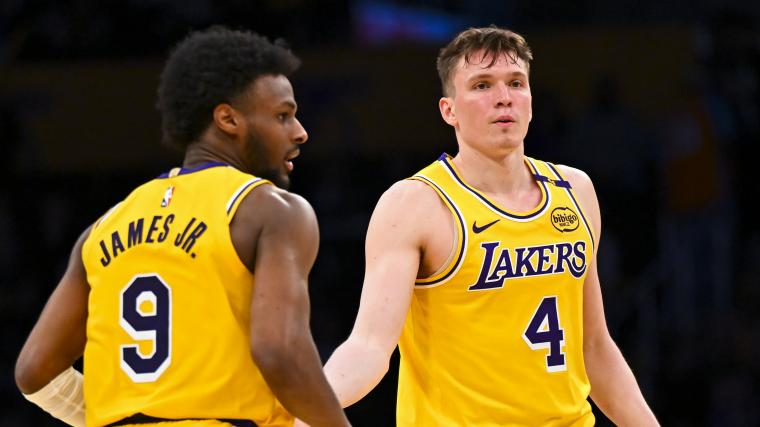
Lakers’ Odd Loyalty Play: $66M Duo Haunts Summer League Amid Trade Block Drama
POLICY WIRE — Los Angeles, United States — It’s a strange thing, this loyalty business, especially when millions of dollars and cold business decisions are flying around. You see it every now and...

POLICY WIRE — Los Angeles, United States — It’s a strange thing, this loyalty business, especially when millions of dollars and cold business decisions are flying around. You see it every now and then: players, often young, who still believe in the badge, in the organization that’s maybe, just maybe, trying to move them like old furniture. And right now, there are two guys for the Los Angeles Lakers, Dalton Knecht and Jarred Vanderbilt, acting out this odd dance at the Las Vegas Summer League. Their presence, frankly, shouldn’t make much sense. But it does.
After a seismic shake-up that began with LeBron James announcing he wouldn’t be returning to the storied franchise—a bombshell that sent shockwaves through the league and into global fandom, reaching as far as the avid NBA followers in Karachi and Lahore—the Lakers embarked on an aggressive campaign of roster reconstruction. You know, out with the old guard, in with a whole new generation. They’ve snagged Walker Kessler from Utah in a shrewd trade, reeled in talents like Colin Sexton and Quentin Grimes, and, for good measure, made sure to keep Austin Reaves in the fold. It’s a proper whirlwind, actually, this new era unfolding at warp speed. [QUOTE_PLACEHOLDER]
But the wheeling — and dealing hasn’t stopped there. Not by a long shot. The word from the back channels, the sort of chatter you pick up just by existing around these circles, suggests the organization is far from finished. They’re still hunting for the right pieces. And because this is professional sports, where the bottom line often trumps sentiment, some assets are being evaluated for their potential market value rather than their immediate locker room presence. Dalton Knecht — and Jarred Vanderbilt, it appears, fit neatly into that latter category.
There have been quite explicit pronouncements floating about the rumor mill, not whispers but full-blown bulletins. NBA reporter Evan Sidery didn’t mince words on the situation, writing, The Lakers are actively shopping Dalton Knecht and Jarred Vanderbilt in trade talks. After gaining two second-round picks in the Deandre Ayton trade, Los Angeles could consolidate those assets in a deal immediately for a starting-caliber wing. So, there it’s. The brass knuckles approach to team building. Two players, a combined $66 million in contracts—big money anywhere in the world, including the burgeoning economies of South Asia where the influx of foreign capital into sports franchises is becoming a keen point of interest for nascent domestic leagues—are essentially on a clearance rack.
For Knecht, in particular, it’s already been a turbulent go. Imagine beginning your rookie season strong, brimming with the hopes of a fresh start, only to find yourself embroiled in a trade saga that could make even seasoned veterans wince. ESPN insider Dave McMenamin, pulling back the curtain on this particular bit of high-stakes musical chairs, painted a vivid picture: In the span of a week, Dalton Knecht went from playing for the Los Angeles Lakers to joining the Charlotte Hornets to going back to the Lakers after the trade that sent him to Charlotte was rescinded. Knecht said he was at the Lakers’ practice facility on Feb. 5 going through his normal routine before his shooting drills — needing to make 25 shots from the foul line — when he was interrupted after his 20th free throw. The timing, that cruel interruption at the 20th free throw, just a few shots shy of completing his routine. It’s almost cinematic in its suddenness, isn’t it? A quick call, a hurried explanation, and boom—your world shifts on its axis.
Naturally, when a player’s future hangs so precariously, you’d expect them to vanish, maybe go dark, focusing on personal workouts in some undisclosed locale away from prying eyes. Avoidance, in these situations, is often the sensible play. But here’s the wrinkle: both Vanderbilt and Knecht have been right there, smack dab in Las Vegas, cheering from the sidelines at the Summer League games. It certainly got people talking. And, The Lakers pulled up to support the summer squad, the official team account proclaimed on social media. They actually showed up.
📄 POLICY WIRE WHITEPAPER PUBLISHED: PAKISTAN'S NATIONAL SECURITY POLICY PRIORITIES
👉 READ BY CLICKING HEREBut this isn’t just a quirk, a strange little side note in a busy offseason. It says something. Because when you’re facing a possible ouster, yet you still show up, still support the new kids trying to make the team, you’re either incredibly naive or possess a kind of fierce, perhaps misguided, institutional loyalty. For the Lakers, their reported payroll stands as a behemoth; as of the current season, an estimated $160 million is committed to player salaries, underscoring the massive financial decisions constantly at play. And yet, amidst all this calculation, this display by Knecht and Vanderbilt, knowing they’re potential trade fodder, adds a human-sized complexity.
Their joint $66 million combined salary—that’s a serious chunk of change—signals the team’s clear intent to offload them together, hopefully for a larger, more impactful asset. No deal’s materialized yet, though. Until then, these guys keep wearing the purple and gold, keep showing their faces, irrespective of the storm clouds gathering. It’s either a masterclass in professional decorum, a desperate plea to stay, or perhaps, simply, a demonstration of being genuinely good teammates. Either way, it’s not quite what you’d predict, is it?
What This Means
This episode, minor as it might seem in the grand scheme of an NBA offseason, illustrates a foundational tension in modern sports. It’s a clash between the transactional nature of high-stakes business—where players become commodities to be shuffled and leveraged for strategic advantage—and the lingering, almost archaic, ideal of team loyalty. For an organization like the Lakers, under immense pressure to reclaim championship glory post-LeBron, every decision is amplified, every dollar scrutinized. Moving these players isn’t personal; it’s perceived as strategic necessity, a harsh truth understood not just in Los Angeles but across global sporting leagues from the English Premier League to the Pakistan Super League, where player transfers are dictated by competitive advantage and market economics. But here’s the subtle irony: by showing up, by performing this small act of visible allegiance, Knecht and Vanderbilt inadvertently elevate their own human value. They might be trade pieces, but they’re not ghosts. Their conduct—this almost quaint act of appearing loyal amid obvious rejection—could ironically boost their appeal to prospective teams looking for solid, no-drama locker room presences. And in a league increasingly defined by astronomical contracts and player empowerment, such humble professionalism becomes a scarce, and thus valuable, commodity itself. But don’t mistake it for genuine comfort; it’s just the calm before the next storm, probably for some other city’s Summer League squad. These decisions—who stays, who goes—impact not just careers, but the intricate ecosystems of global basketball, where player narratives are consumed with equal fervor from downtown LA to Karachi’s bustling streets.