


Empty Nets, Faraway Flags: Africa’s Silent Marine Scramble
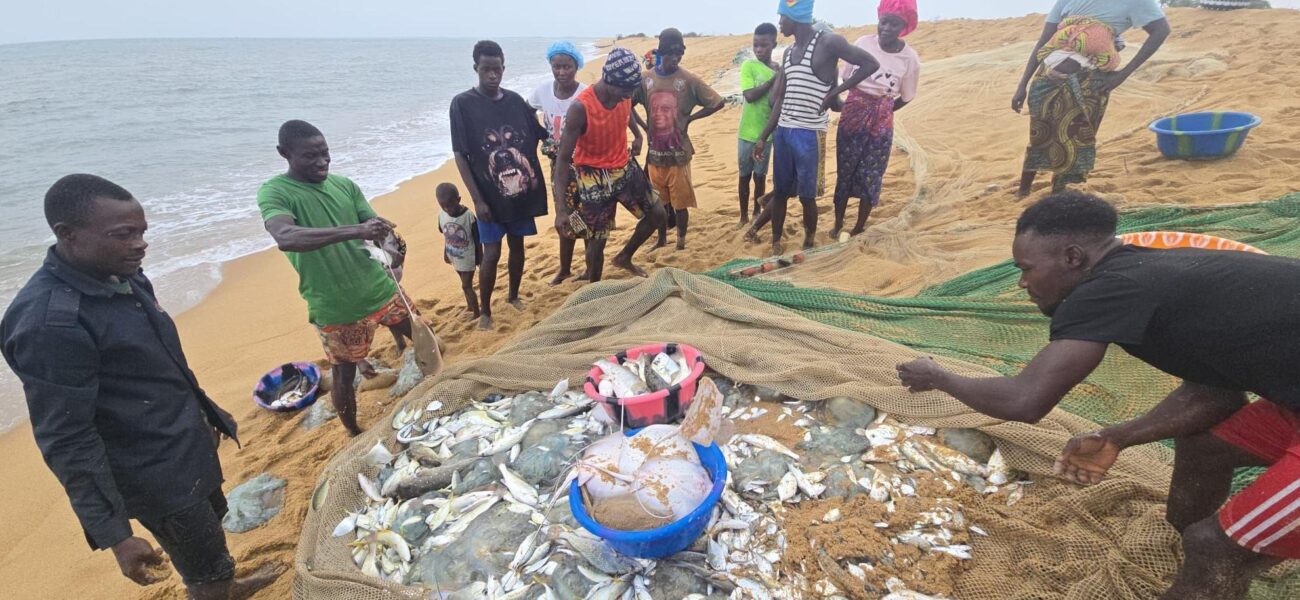
POLICY WIRE — Dakar, Senegal — The tide, she still comes and goes, but the fish? They’ve mostly just gone. Fishermen in Senegal, Ghana, Mauritania—really, across West Africa—don’t even bother...

POLICY WIRE — Dakar, Senegal — The tide, she still comes and goes, but the fish? They’ve mostly just gone. Fishermen in Senegal, Ghana, Mauritania—really, across West Africa—don’t even bother looking at their nets anymore. Not with that familiar sense of expectation, anyway. The hope has just drained out of them, like water from a frayed mesh, leaving only resignation.
It’s not some grand mystery. Not really. Along these once-bountiful shores, a clear villain has emerged from the mist and diesel fumes: China’s massive distant-water fleet. We’re talking colossal, industrialized trawlers—floating factories, essentially—hoovering up everything from sardinella to squid. Local canoes — and pirogues, carved wood and a prayer, don’t stand a chance. And it’s not just here; this grim pattern repeats, quietly, violently, all over the developing world where rich nations eye poorer ones’ resources. It’s a land grab, but in the sea.
“We used to feed our families, our villages,” sighed Mamadou Dia, a weathered fisherman from Mbour, gesturing at a rusting outboard motor he can’t afford to fix. “Now? We catch plastic, maybe. The big boats, they come at night. Like ghosts. But when they leave, our ocean is dead.” He isn’t wrong. They scoop up everything, indiscriminately. Young fish, old fish, whatever’s in the way. It’s unsustainable, by any measure you care to use.
The numbers don’t lie, either. An estimated 90 percent of fish stocks in West Africa are either fully exploited or overexploited, according to a recent report from the Environmental Justice Foundation, an NGO tracking these issues. Think about that for a second: ninety percent. This isn’t a decline; it’s a full-on ecological collapse happening before our very eyes, threatening an entire region’s food security and a way of life that stretches back generations.
Beijing, predictably, dismisses the more severe accusations. “China is a responsible fishing nation, actively engaged in international cooperation to manage marine resources,” stated Ms. Ling Wei, a spokesperson for the Chinese Ministry of Foreign Affairs, in a pre-recorded statement distributed last month. “We provide training, technology, — and investment that benefit local communities.” That’s the official line. Because, you know, every international partnership is just so altruistic. But ask the locals about this ‘benefit.’ They’ll show you empty nets — and dwindling hope, not thriving enterprises.
For nations like Pakistan or Bangladesh, looking east for investment, this tale from West Africa ought to serve as a stark warning. China’s economic footprint, whether through Belt and Road Initiative projects or maritime resource agreements, always carries a cost. Sometimes that cost isn’t measured in yuan or dollars, but in traditions lost, livelihoods decimated, and oceans emptied. It’s the bitter calculus of global resource demand meeting local vulnerability. They might build you a port, sure. But they might also drain your seas dry.
📄 POLICY WIRE WHITEPAPER PUBLISHED: PAKISTAN'S NATIONAL SECURITY POLICY PRIORITIES
👉 READ BY CLICKING HEREMinister for Fisheries and Marine Economy in Mauritania, Ahmed Ould Sidi, was rather less diplomatic when speaking off the record to regional journalists last week. “We don’t have the ships, the patrol craft to defend our own waters,” he confessed, looking grim. “They come, they take, — and what can we do? Beg for scraps from our own ocean?” He wasn’t wrong. This isn’t just about fish; it’s about sovereignty, about who controls what resources are left in an increasingly desperate world.
What This Means
The unfolding crisis in West African waters is more than an environmental blip; it’s a stark illustration of twenty-first-century geopolitical economics in motion. Economically, we’re seeing localized food systems utterly shredded, displacing hundreds of thousands of people and fueling urban migration—because there’s just nothing left at home. Politically, it’s an uncomfortable spotlight on China’s global expansion, specifically its voracious appetite for resources and the considerable leverage it holds over smaller, less militarily equipped nations. It’s the brutal economics of natural resources played out on a grand, tragic scale. This isn’t just a ‘China problem’ or an ‘Africa problem’—it’s a global symptom of overconsumption and unregulated distant-water fishing that demands urgent, inconvenient accountability from all parties. And don’t think for a second that these ripple effects won’t eventually lap at your own shores. They always do. Eventually.