


Inflation’s Invisible Hand: A New Mexico Food Truck Confronts America’s Education Tab
POLICY WIRE — ALBUQUERQUE, N.M. — It’s a quiet testament to the ever-tightening economic squeeze many American households feel, played out not in grand legislative chambers or on the trading floor,...

POLICY WIRE — ALBUQUERQUE, N.M. — It’s a quiet testament to the ever-tightening economic squeeze many American households feel, played out not in grand legislative chambers or on the trading floor, but behind a humble food truck. While policymakers debate inflation metrics and fiscal futures, families are facing down the relentless tally of back-to-school expenses, an annual ritual that, for some, has become a genuine crisis. Forget the flashy headlines; the true policy challenges often reveal themselves in the strained budgets of working parents, scrambling to equip their kids for another academic year. And let’s be real, this struggle isn’t some outlier event confined to the fringes. It’s right there, knocking on every working-class door.
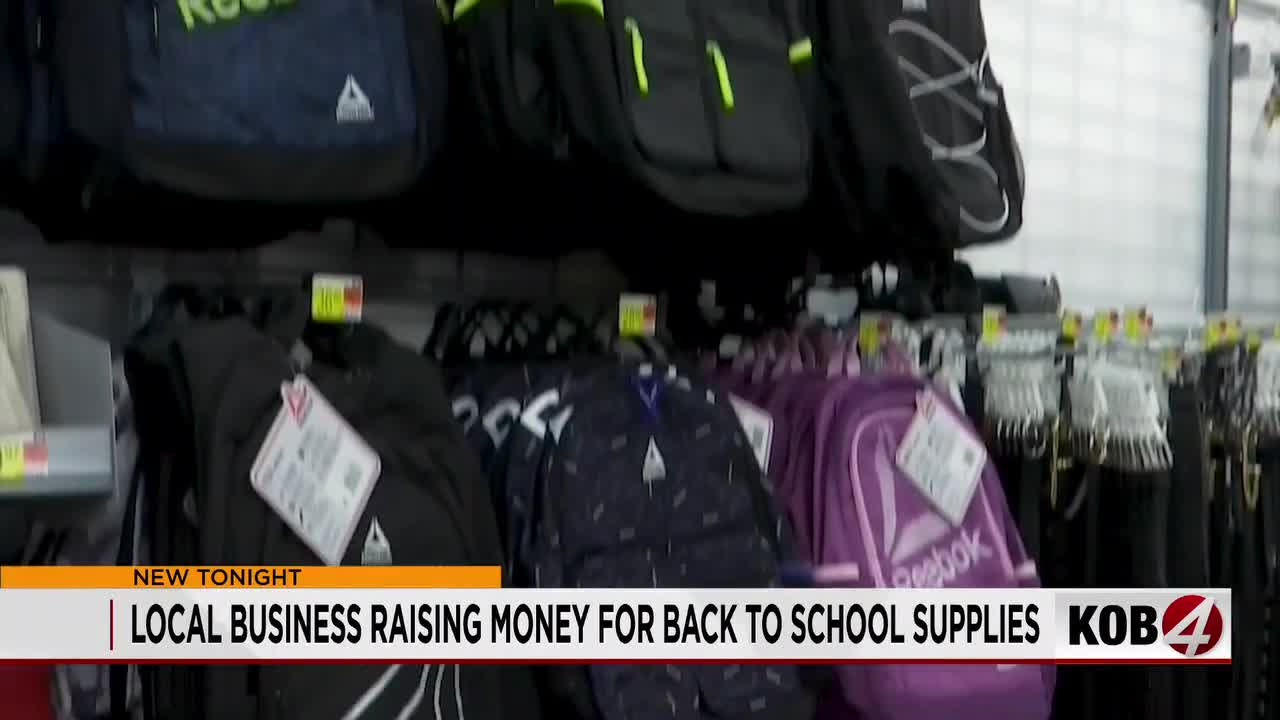
Urban Rez Kitchen, a local outfit specializing in traditional Native American fare (with a few clever twists, mind you), finds itself doing more than just dishing out grub. They’re orchestrating a small but meaningful intervention, aiming to rustle up 400 backpacks and a mountain of supplies. Tyrone Arkie, who steers his family’s business, isn’t just watching from the sidelines. He knows the drill. Growing up with siblings, he saw first-hand how those small costs multiply. Now, with two children of his own, he says the basic necessities for school can hit you for more than a hundred bucks—and that’s just for the bare bones. But it gets worse. A shopper, Melissa, described trying to fill a Target cart using the Albuquerque Public Schools kindergarten supply list. Without even touching a backpack, it clocked in at just under $30. For folks with multiple kids, or longer lists (and believe me, those lists get longer), those costs can grow quickly. [QUOTE_PLACEHOLDER]
The culinary offerings from Urban Rez Kitchen—and yes, we’re talking serious comfort food here—are central to their fundraising efforts. Arkie himself offers a vivid description: we do our usual uh fried bread and then tacos and our the one main thing that’s new to people is the folded in tacos uh it’s just mini folded in tacos and you can just pick it up and eat. It’s a compelling trade-off, really: a delicious, portable meal helping put pencils in tiny hands. They’ve teamed up with Americans for Native Opportunity and the Native Leadership Collective, turning their food stalls at places like the Rail Yards Market and Differential Brewing into de facto collection points. Because when the system feels like it’s failing folks, sometimes it’s the community itself that has to step up. And isn’t that the real, raw grit of it all?
It’s not just New Mexico where these struggles play out. The sheer scale of educational costs, often shouldered by families with limited means, mirrors dilemmas in far-flung locales. Think about the informal schools springing up in crowded neighborhoods of Karachi, Pakistan, where even the most rudimentary supplies—a slate, a chalk piece—can present an insurmountable hurdle for families barely making ends meet. While the US benefits from a vastly different economic structure, the underlying pressure points, the disparity between ambition and affordability, feel remarkably similar. In both Albuquerque and certain pockets of South Asia, you’ve got communities improvising, innovating, and, crucially, mobilizing to bridge these gaps. There’s a universality to parents just wanting their kids to have a fair shot. It’s not rocket science, but it sure feels like it sometimes.
Arkie, speaking from experience as a father and a community organizer, laid it bare: It was a struggle with getting backpacks, especially if you have siblings, that that’s a big thing because all that costs is a lot and. Yeah, it’s a hard time now. But that doesn’t mean giving up. Instead, he sees the potential for a direct, tangible impact: I have two kids, and they need school supplies, so when they come to the event, Aug. 1, they can get whatever they need, just like my kids. They need what they need. This isn’t charity as much as it’s reciprocal community support—an unspoken pact that says, ‘we’ve got each other’s backs.’ And honestly, this type of self-sufficiency? It’s often the strongest kind of governance you’ll find, stripped down to its essentials. The backpack drive itself kicks off at 9 a.m. on Aug. 1 at the Veterans Memorial on Louisiana, just after New Mexico’s tax-free weekend (July 31-Aug. 2). Every bit helps.
The National Retail Federation reported that families with elementary through high school children expected to spend an average of $890 on back-to-school items in 2023, a figure that’s gone up steadily. But that’s an average, right? For a family balancing tight budgets, minimum wage jobs, or multiple dependents, ‘average’ can quickly morph into ‘impossible’. So, these localized efforts? They’re not just feel-good stories. They’re a real, gritty reflection of a policy gap, an everyday example of how individuals—like those involved with Urban Rez Kitchen—are literally paying the cost of the system’s cracks. Because bureaucracy often moves too slow for a child who just needs a pencil to learn.
What This Means
This localized effort in Albuquerque, seemingly small in the grand scheme of national affairs, isn’t an anomaly. It’s a barometer. It signals deeper economic pressures quietly eroding household financial stability across the country. We’re witnessing the direct consequences of persistent inflation, stagnant wages for many, and the increasingly steep implicit costs associated with public education—things like required school supplies that the public system itself can’t, or doesn’t, cover. This puts a heavy onus on individual families, an economic burden disproportionately felt by lower and middle-income demographics.
Politically, the prevalence of such community-led initiatives indicates a failure at broader governmental levels to adequately address these systemic gaps. When a food truck owner must fundraise for school supplies, it’s a telling indictment of priorities. While states may offer tax-free weekends—a nice, albeit minimal, gesture—they rarely tackle the root cause: the growing financial exclusion from essential public services. Economically, these micro-level interventions inject small amounts of capital and resources where they’re desperately needed, preventing some children from falling behind due to lack of basic tools. But these are bandages, not cures. The subtle irony here is that without widespread access to properly equipped education, a nation loses ground long-term, its future workforce less prepared. You just can’t escape that connection. Look, whether you’re talking about Albuquerque, or trying to understand the challenges of access in developing regions, the foundational principles remain eerily similar: without proper investment in education, especially at the primary level, societies don’t just falter—they actively hobble their own prospects. It’s not an accident that so many discussions about geopolitical stability, or say, the potential of healthcare access, tie back to educational attainment. But sometimes, it takes a person like Tyrone Arkie, selling fried bread — and tacos, to make the point. That’s policy in its most basic form: meeting human needs, one backpack at a time.