


Unquiet Earth: New Mexico’s Unnerving Tremors Stir Ancient Faults, Modern Fears
POLICY WIRE — Santa Fe, New Mexico — It’s never a good sign when the ground underfoot decides to put on a performance. Not one that gets a standing ovation, anyway. For residents across parts of New...

POLICY WIRE — Santa Fe, New Mexico — It’s never a good sign when the ground underfoot decides to put on a performance. Not one that gets a standing ovation, anyway. For residents across parts of New Mexico, the past 24 hours delivered precisely that unsettling show, not once, not twice, but a remarkable trio of shakers. While hardly a Hollywood disaster, this recent seismic jitter has left folks wondering if the Land of Enchantment is entering a new, more restless chapter.
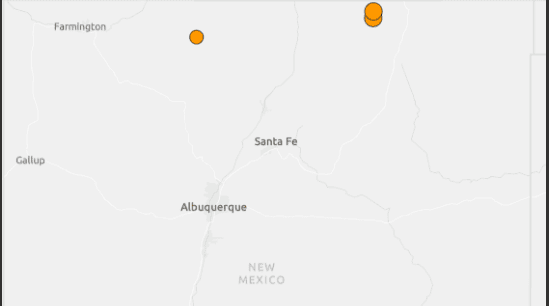
It wasn’t some grand, thunderous event that rattled plates off shelves or cracked foundations (yet). But the rapid-fire succession is what grabs you. Early Monday morning, the U.S. Geological Survey (USGS) logged a pair of distinct tremors — a 4.2-magnitude at 3:21 a.m. followed mere minutes later by a 4.0-magnitude jolt at 3:31 a.m. Both happened about thirty miles west of Raton, right up near the state’s northern edge. And just a day before, on Sunday morning, another decent rumble, a 3.5-magnitude quake, hit northwest of El Vado.
Because these weren’t isolated incidents. They follow closely on the heels of a series of quakes just south of Albuquerque, hinting at a more distributed, albeit low-level, restlessness across the state’s geology. Dr. Elena Ramirez, a Senior Research Geologist at the New Mexico Bureau of Geology & Mineral Resources, expressed a measured scientific concern. “These aren’t monstrous quakes, of course, but the clustering, the recent uptick in smaller events—it’s certainly got our attention,” she noted. “It begs questions about underlying pressures we hadn’t quite focused on in this specific manner before, especially when considering regional fault systems.”
The desert isn’t supposed to move like this, not usually. While California — and Alaska might be seismic playgrounds, New Mexico traditionally flies under the radar. But history shows it’s not immune. The USGS notes that while New Mexico isn’t traditionally considered a hotbed for seismic activity compared to California, historical records include significant quakes, with the strongest known reaching an estimated magnitude of 6.5 in 1887, impacting much of the state. Those historical data points—they remind us that quiet doesn’t mean dead.
State Senator Marcus Thorne, whose rural district sits uncomfortably close to some of these recent rumblings, isn’t downplaying the public’s anxiety. “Folks out here, they depend on stable ground—literally. Farms, ranches, critical infrastructure like water pipelines — and communications towers… we can’t afford to take this seismic chatter lightly,” he said, speaking from his district office. “It’s a wake-up call for how we plan for everything, from emergency services to maintaining our public lands.”
The state’s topography, crisscrossed by numerous fault lines—many long thought dormant—is complex. This recent activity, however minor in global terms, serves as a prickly reminder that our understanding of planetary mechanics is always a work in progress. It’s a good moment to reflect, perhaps, on similar scenarios in other vulnerable parts of the world—like the challenges faced by nations such as Pakistan, which lie along active seismic belts and regularly grapple with the profound human and infrastructural costs of even moderate quakes.
But beyond the immediate concern, there’s a deeper tremor-induced anxiety: what happens if this isn’t just a fluke? What if it’s the sign of a subtle, persistent shift?
What This Means
This spate of New Mexico earthquakes, while individually small, collectively represent a growing environmental flashpoint that demands policy attention. For one, it puts pressure on infrastructure assessments. Many of New Mexico’s older buildings — and pipelines simply aren’t engineered for regular seismic stress. We’re talking about crucial infrastructure here, powering remote communities — and vital agricultural operations. The costs of retrofitting, or even just detailed assessments, could run into millions, potentially straining an already tight state budget.
Secondly, it fuels the broader conversation about environmental stability — and its ripple effects. These tremors, whether tied to natural geological shifts or, more controversially, to energy extraction practices (a conversation that usually rages elsewhere, but can’t be fully dismissed here), highlight the vulnerability of even seemingly stable regions. It’s part of a global pattern, really. You see similar systemic stresses manifesting differently, like Europe’s intensifying wildfire season tearing through places like the French Riviera. All of it underscores how interconnected our environments really are, and how rapidly changing one variable can upset a delicate balance.
And then there’s the tourism aspect, no small thing for New Mexico’s economy. The image of the serene Southwest, the rugged but predictable landscape—that’s a selling point. Repeated, even minor, seismic events, if they become frequent, could subtly erode that image, raising questions among potential visitors about safety. It’s a psychological shake-up as much as a geological one. Policymakers, especially those in state and local planning commissions, need to consider how to prepare both the physical and mental infrastructure for an Earth that might just be getting a bit louder.