

Kentucky’s Hardball Coup: Draft Defector Forges Collegiate Dynasty Amidst Global Talent Tug-of-War
POLICY WIRE — Louisville, Kentucky — For years, the bright lights of professional baseball called to any prep sensation worth his salt, often pulling them away before they ever set foot in a...

POLICY WIRE — Louisville, Kentucky — For years, the bright lights of professional baseball called to any prep sensation worth his salt, often pulling them away before they ever set foot in a collegiate dugout. But then there are moments when a different calculation plays out, a strategic recalibration that speaks volumes about modern sports economics—and a young man’s assessment of his own market. That’s the vibe with Grayson Willoughby.
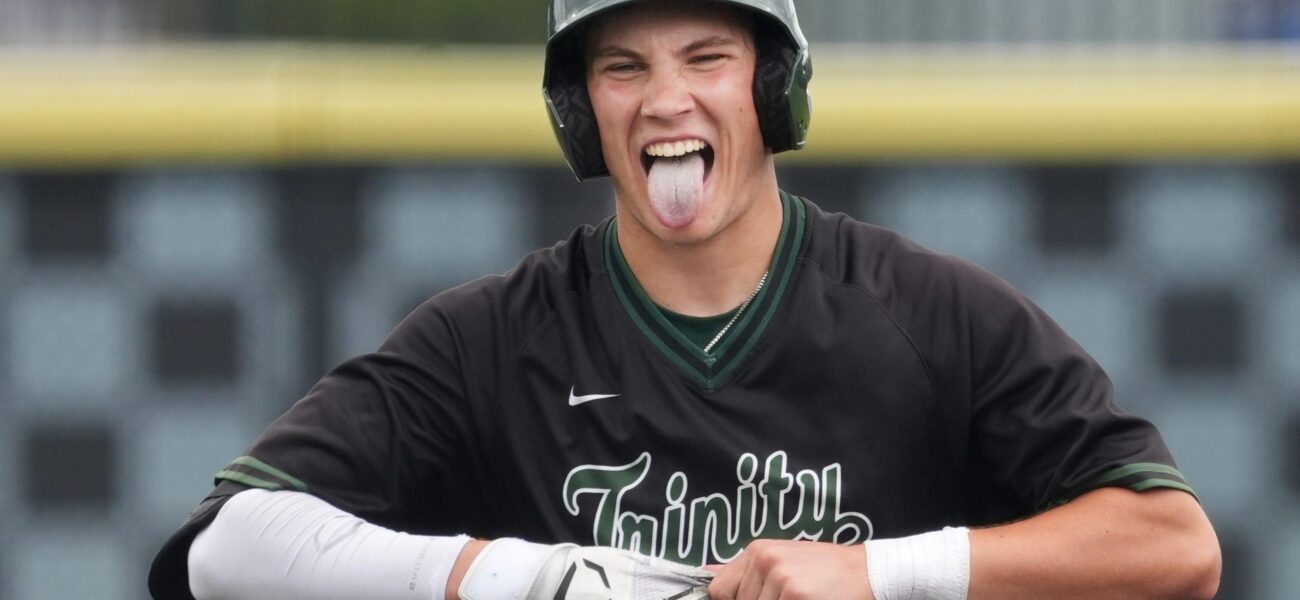
It wasn’t a sudden, unforced error on the part of MLB scouts, or some dramatic, last-minute scholarship offer no one saw coming. No, the decision by Trinity High School star Grayson Willoughby, a right-handed hurler widely anticipated for the 2026 Major League Baseball Draft, to instead suit up for the University of Kentucky for the next two seasons feels like a chess move. And it leaves everyone wondering about the grander game being played behind the scenes of America’s pastime. But make no mistake, this isn’t just about one kid’s college choice; it’s about the shifting power dynamics that ripple across a global industry.
Kentucky baseball, the so-called Bat Cats, weren’t exactly drowning in stellar pitching after their last run. Their staff had, shall we say, a certain emptiness that needed filling. Now, Willoughby’s arrival offers more than just another arm; it provides a shot in the dark, a high-stakes bet that a few years of college polish will yield an even greater return down the road. He’s essentially betting on himself to gain strength and refine his already advanced repertoire, turning an early draft slot into an even more lucrative future.
The 6-foot-2, 195-pound prospect has been committed to Kentucky since August of 2024, an eternity in the rapid-fire world of top-tier recruits. And he certainly made good on his high school career, bagging back-to-back state championships with his Trinity Shamrocks. He didn’t just play; he dominated, snatching the Mr. Baseball title — and earning the 2026 MaxPreps National Player of the Year. We’re talking about a guy who capped his senior season by throwing a one-hit shutout in the Kentucky state championship game, locking up yet another state title.
Scouts, meanwhile, rave about what’s coming off his hand. His advanced mid-80s changeup is considered his best secondary pitch. His slider? It continues to develop into another quality offering. What really sets him apart is his command, that intangible knack for hitting his spots. He repeats a clean three-quarters delivery, consistently throws strikes, and already shows the ability to locate all three pitches. They’re convinced there’s additional velocity to come as he continues to add strength. But then again, they often are.
Willoughby is also ranked No. 31 in his class in Perfect Game rankings. On their site, they described him as “Polished starter package with three quality pitches including a 92-96 mph fastball, slider and changeup, dominated at PG national.” This isn’t just a recruit; it’s a statement. He’ll have to log two seasons in Lexington before he’s eligible for the 2028 MLB Draft, effectively putting his professional future on ice for a couple of years. It’s a deliberate deferment, a calculated delay in gratification for what he, and apparently his handlers, perceive as an optimal long-term payout. This sort of calculus isn’t unique to American baseball prospects; it reflects a broader global trend where strategic education or skill enhancement is prioritized for future market value, whether it’s an engineer delaying entry into the workforce to earn a masters in a cutting-edge field in Bangalore, or a young athlete from Pakistan weighing cricketing opportunities versus pursuing a university degree for stability. Or, in the context of sports economics, consider the phenomenon of the undrafted anomaly, which often reveals baseball’s often Byzantine talent market.
📄 POLICY WIRE WHITEPAPER PUBLISHED: PAKISTAN'S NATIONAL SECURITY POLICY PRIORITIES
👉 READ BY CLICKING HEREWhat This Means
Willoughby’s decision isn’t merely an individual career choice; it’s a bellwether for the evolving economic relationship between collegiate athletics and professional leagues. For one, it amplifies the newfound leverage college programs now wield thanks to Name, Image, and Likeness (NIL) deals, effectively creating quasi-professional earning opportunities for athletes who might otherwise jump directly to the pros. But it’s also a high-stakes gamble for the player. He risks injury, performance slumps, or simply being leapfrogged by another, younger prospect. If the investment pays off, he enters the draft as a more mature, refined product, potentially commanding a far larger signing bonus and a clearer path to the majors.
From an institutional perspective, this gives collegiate baseball — and by extension, the NCAA — a stronger foothold in the athletic talent development pipeline. No longer just a stepping stone for athletes who couldn’t get a professional offer right out of high school, it’s becoming a legitimate alternative for top-tier talent seeking to maximize their long-term value. This is particularly salient when one considers talent markets in regions like South Asia. While cricket reigns supreme, young athletes with diverse sporting talents often face a dearth of structured developmental pathways akin to America’s robust collegiate system. The investment in a two-year collegiate development arc, as seen with Willoughby, might seem like a luxury in resource-constrained environments, where immediate professional engagement (often overseas) is frequently the only viable path to economic uplift. The contrasting choices highlight the profound differences in investment and opportunity within the global sports economy.
This saga underscores how even in established talent systems, economic incentives and developmental strategies are always shifting. It shows how top prospects, with good counsel, aren’t just taking the first ticket out anymore. No, they’re weighing their options—like a commodities trader assessing future yields—and choosing the path they believe optimizes their personal ‘stock’ value. And Kentucky, in securing Willoughby, has certainly pulled off a coup. They’ve added a legitimate game-changer who makes them exponentially better in the immediate term, but they’ve also snagged a prime asset that validates their program’s ability to attract and develop top talent in this new, economically savvy era of collegiate sports.