

Europe’s Blazes: A Fading Forest, A Continent’s Deepening Climate Debt
POLICY WIRE — Paris, France — The quiet grandeur of Fontainebleau, that ancient imperial hunting ground and sprawling haven for poets and painters, now bears a far grittier mark than artistic...

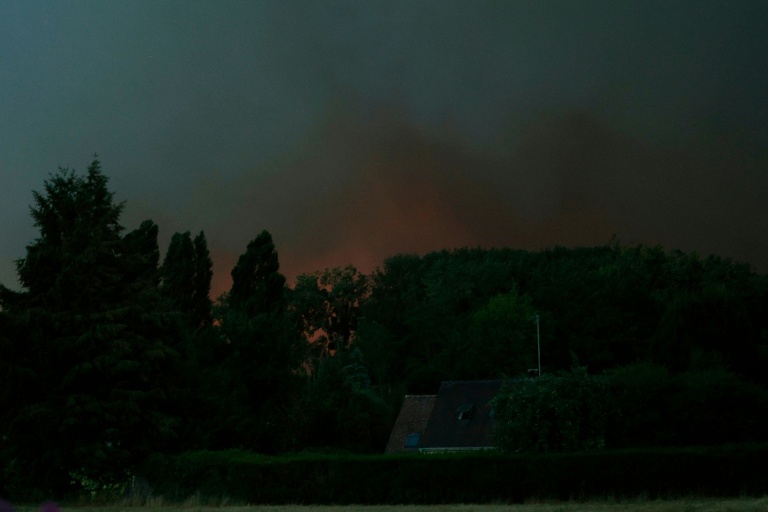
POLICY WIRE — Paris, France — The quiet grandeur of Fontainebleau, that ancient imperial hunting ground and sprawling haven for poets and painters, now bears a far grittier mark than artistic inspiration. It’s scorched earth. Not merely a local news blip, this conflagration near Paris is instead a visceral, burning manifestation of a continent—indeed, a planet—struggling to come to grips with its altered climate reality.
It’s summer. Of course there are fires. But these aren’t the familiar, localized flare-ups we’ve known. These are fires that tear through forests once thought resilient, claiming hundreds of hectares and forcing evacuations (that’s a tough scramble for those folks). Firefighters, stretched thin across multiple fronts, work relentlessly, a battle they’ve waged with unsettling frequency lately. [QUOTE_PLACEHOLDER] they might say, gesturing to the billowing smoke, [QUOTE_PLACEHOLDER]. They’re not just battling flames; they’re fighting exhaustion and an increasingly aggressive adversary: a parched landscape coupled with unrelenting heat. We’re witnessing something that feels distinctly more relentless, a sustained assault that chips away at the collective psyche, especially when it touches places of deep national affection.
But this isn’t an isolated incident—not by a long shot. Southern Europe, with Spain, Portugal, and Greece often serving as the annual tinderbox, has become alarmingly accustomed to the apocalyptic orange glow on its horizons. Now, places like Fontainebleau, considered more temperate, join the inferno. According to the European Forest Fire Information System (EFFIS), a staggering 346,000 hectares burned across the EU in 2022, well above the 20-year average for forest fires, illustrating this stark acceleration. This isn’t just an inconvenience; it’s a profound ecological wound.
And the impacts ripple out. Beyond the charred trees and displaced wildlife, beyond the choking smoke veiling the usually clear skies, there are the very real human and economic costs. Homes are lost, livelihoods incinerated. Businesses, particularly those relying on the pristine beauty of the natural world for tourism, face an uncertain future. For those living adjacent to these wildland-urban interfaces (a term we hear too often these days), every summer brings a new layer of dread, a collective holding of breath against the unpredictable whim of the wind and a spark. It’s not hyperbole to say entire communities teeter on the edge of annual disaster, relying on the bravery of first responders and, frankly, a bit of luck. The cost of prevention—even though often overlooked—pales in comparison to the expenses of fighting these gargantuan blazes, let alone the recovery.
The Fontainebleau blaze offers a stark parallel to the growing climate pressures facing the globe, especially in vulnerable regions far from Paris. Think of Pakistan, for instance, a nation routinely battered by environmental extremes, from unprecedented floods (one-third of the country submerged in 2022, remember?) to scorching heatwaves that turn urban centers like Karachi into furnaces. Both Europe and parts of South Asia grapple with the double-edged sword of inadequate urban planning juxtaposed against the relentless march of climate change. European forests are succumbing to drought-induced fragility, while Pakistani cities struggle with overpopulation, failing infrastructure, and encroaching developments into natural buffers, amplifying fire risks whether they’re in forest ecosystems or tightly packed urban slums. The underlying vulnerability, regardless of geography, is a system ill-prepared for the new normal.
📄 POLICY WIRE WHITEPAPER PUBLISHED: PAKISTAN'S NATIONAL SECURITY POLICY PRIORITIES
👉 READ BY CLICKING HEREThe lessons from Fontainebleau extend beyond its blackened perimeter. They echo across continents, whispering cautionary tales. Europe’s affluent nations often perceive climate change as an external threat, or at least one impacting ‘other’ regions more severely. But the flames at Fontainebleau, or the recent unprecedented floods across Slovenia or wildfires in Greece, dispel that comfortable delusion. It’s a localized catastrophe, yes, but it’s symptomatic of a systemic global breakdown, an urgent call for genuine, actionable policy responses that extend beyond platitudes. It forces a conversation about how deeply interwoven the planet’s ecosystems truly are—and how swiftly neglect in one corner can manifest as catastrophe elsewhere. These are stark indicators, you see.
What This Means
The relentless European summer of fires—with Fontainebleau serving as a poignant, prominent example—forces a harsh reckoning for policymakers. Politically, it strengthens the hand of environmental advocates, intensifying pressure on governments to move beyond aspirational climate targets towards aggressive, immediate mitigation and adaptation strategies. It makes climate denial or inaction much harder to peddle. We’re likely to see increased European Union spending directed toward disaster preparedness, improved cross-border firefighting cooperation, and perhaps even controversial policies like controlled burns or stricter land-use regulations around vulnerable wildlands. This isn’t just about French local government or European forestry services anymore; it’s a continent-wide scramble, a test of European unity and resolve in the face of an existential threat. Expect political debates to sharpen around the green transition, and its costs, versus the escalating costs of inaction.
Economically, the impact is significant — and multifaceted. Insurance markets, already reeling from record-breaking payouts due to floods — and storms, will face continued strain. Rebuilding infrastructure and homes in fire-affected areas is an immense undertaking, drawing public funds away from other priorities. Then there’s the tourism sector, a cornerstone of many European economies; a summer marred by fires and choking smoke undoubtedly dents bookings and reputations, particularly for regions relying on ecotourism. And don’t forget the long-term ecological cost: the loss of biodiversity, the reduced capacity for carbon sequestration by decimated forests, which only exacerbates the very problem that caused the fires. It’s a vicious circle. Countries like America’s Relentless Season also confront similar escalations of natural disaster costs. For economies heavily reliant on climate-sensitive sectors like agriculture and viticulture (hello, France’s wine regions), these events forecast leaner times ahead. The debate on subsidies will shift, prioritizing climate resilience, even if that means contentious shifts in traditional farming or forestry practices. The financial burden, it’s clear, isn’t just accumulating; it’s accelerating.