


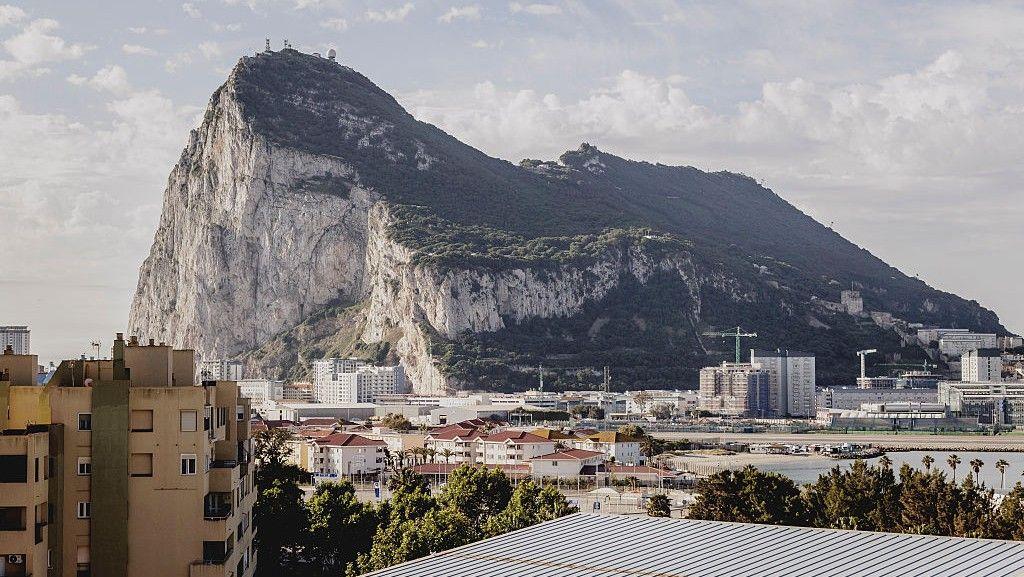
Europe’s Oldest Quarrel Ends: Gibraltar Sheds 118 Years of Border Strain
POLICY WIRE — Madrid, Spain — It’s a classic European saga, isn’t it? Generations squabbling over a sliver of rock, historical grievances echoing louder than common sense. But sometimes—just...

POLICY WIRE — Madrid, Spain — It’s a classic European saga, isn’t it? Generations squabbling over a sliver of rock, historical grievances echoing louder than common sense. But sometimes—just sometimes—even the most entrenched animosities begin to crack. The latest twist comes from the sunny straits between Spain and Gibraltar, where, almost casually, a nearly 120-year-old thorn in bilateral relations is being plucked out. After more than a century of bristling checkpoints and what locals affectionately called [QUOTE_PLACEHOLDER]The Fence[QUOTE_PLACEHOLDER], the border controls are, in effect, done.
You might think such a momentous shift, signaling an end to 118 years of often-tense frontier management, would kick off with trumpets and declarations of eternal peace. Not quite. Instead, it’s a quiet unraveling, a slow but steady push toward what some are calling a [QUOTE_PLACEHOLDER]Schengen-like[QUOTE_PLACEHOLDER] arrangement. What does that mean for the folks who cross it every day? Well, if it plays out, it means ditching the often-absurd delays that have long characterized travel between La Línea de la Concepción and the British Overseas Territory. Thousands of people, primarily workers, endure this dance daily, a constant reminder of geopolitical spats playing out at the turnstile.
This isn’t just about quicker commutes. It’s about unwinding a knot tied long before anyone conceived of an EU, let alone Brexit. Gibraltar, that little bastion of Britishness on the Iberian Peninsula, has always been a sticking point, a sort of geopolitical stress-test between London and Madrid. But even old habits die hard, don’t they? And this one, this ancient ritual of border-checking, was practically ingrained in the very landscape. It feels like an act of collective maturity—or maybe exhaustion—from all sides, especially in the turbulent wake of Britain’s messy departure from the European Union.
Because let’s be honest: Brexit added a whole fresh layer of complexity to an already tangled situation. Spain, an EU member, — and Gibraltar, a territory tied to a non-EU UK, needed a new playbook. But then, as in any good political drama, compromises were hashed out, details debated ad nauseam, likely over many strong cups of coffee in drab conference rooms. The aim? To transform what was often a barrier into a [QUOTE_PLACEERHOLDER]zone of shared prosperity[QUOTE_PLACEHOLDER]. A noble ambition, certainly. It speaks to a pragmatic acknowledgment that the economic ties linking the two sides are far stronger, and more beneficial, than any lingering colonial-era rivalry.
And who benefits? Everyone, ideally. Imagine trade flowing more freely. Picture tourists skipping across a barely-there border instead of cooling their heels for hours. That’s the dream, anyway. The devil, as always, will be in the details—things like who actually mans the new system and what controls remain on goods versus people. But the broad stroke? It’s a huge sigh of relief, particularly for the estimated 15,000 cross-border workers who form the economic backbone of Gibraltar. They’ve lived the friction, they’ll feel the change.
The human cost of border bureaucracy is no trivial matter. According to a 2017 study by the United Nations Conference on Trade and Development (UNCTAD), excessive border friction and administrative burdens can effectively cost developing economies an estimated 0.5% of their Gross Domestic Product annually. Now, Gibraltar isn’t a developing economy, but the principle holds: every hour spent idling at a checkpoint is an hour lost, a tangible drag on productivity and livelihoods. This agreement isn’t just political grandstanding; it’s an economic boon, a practical decision born of necessity and a healthy dose of exasperation.
📄 POLICY WIRE WHITEPAPER PUBLISHED: PAKISTAN'S NATIONAL SECURITY POLICY PRIORITIES
👉 READ BY CLICKING HEREThis kind of regional pragmatism isn’t entirely foreign to the Muslim world or South Asia, either. Consider the oft-strained but economically interdependent relationships in regions like Central Asia, where cross-border trade, despite political disagreements, frequently provides the essential lifelines for local populations. Or, more controversially, even the historically fraught Pakistan-Afghanistan border, where informal trade often outstrips official channels—a constant reminder that economic realities often override political rhetoric, even if only grudgingly. Here, with Gibraltar and Spain, it’s less about informal markets and more about formalizing goodwill—a crucial difference. For more insights on regional flashpoints, see Pakistan Launches Operation Shaban in Balochistan.
What This Means
This isn’t just a local story; it’s a quietly resounding note for broader European — and global — diplomacy. For years, Gibraltar symbolized persistent post-colonial hangovers, a small but potent reminder of bygone empires. Its newfound border fluidity represents a significant, if often unspoken, diplomatic victory for both Madrid and London. They’ve found a way past the intractable. And that’s a lesson worth observing.
Economically, it’s a no-brainer. Think improved logistical efficiency, boosted tourism for both sides, — and seamless labor flow. Gibraltar’s economy, already robust in financial services and shipping, stands to gain substantially from easier access to Spain’s markets and workforce. But, you know, it’s not all sunshine — and sangria. Implementing this [QUOTE_PLACEHOLDER] system is a complex bureaucratic ballet, requiring tight coordination and a willingness to truly trust. Will the shared policing and customs arrangements work without a hitch? Probably not, initially. There will be bumps. There are always bumps.
Politically, this agreement might just lower the ambient temperature in Anglo-Spanish relations, allowing other, perhaps less dramatic, bilateral issues to be addressed with more equanimity. It also sets an interesting precedent for how non-EU territories might engage with the Schengen zone post-Brexit. But let’s not get carried away. The question of sovereignty over Gibraltar, always hovering like the Rock itself, isn’t magically solved. That ancient disagreement is merely set aside, given a polite nod of temporary deferral, while everyone benefits from a little less fuss at the border. It’s realpolitik, distilled. And frankly, it’s about time. It wasn’t about erasing history—it was about getting on with business.