
Dust and Deluge: New Mexico’s Monsoon Whisper and Asia’s Roar
POLICY WIRE — ALBUQUERQUE, N.M. — A dry spell finally giving way, then to a rather prosaic forecast. That’s New Mexico for you. Not the sort of grand, sweeping meteorological event that dominates...

POLICY WIRE — ALBUQUERQUE, N.M. — A dry spell finally giving way, then to a rather prosaic forecast. That’s New Mexico for you. Not the sort of grand, sweeping meteorological event that dominates national news, you understand. More like a quiet acknowledgment from the sky—a shrug, really—that its traditional summer rhythm will, eventually, resume. Still, locals watch the shifting patterns with the keen, slightly exasperated attention of anyone who lives where water is currency and fire, a persistent ghost.
It’s not quite the biblical flood narrative you hear in other parts of the world, but it’s significant. Not a splash, but a promise of one. For days now, forecasters have been teasing what passes for drama in high-desert weather: the slow, ponderous build-up to what some meteorologists charmingly refer to as ‘daily monsoon showers and storms’ that will just ‘pop up across parts of the state each afternoon through next week.’ A low-key affair, wouldn’t you say? Nothing like, say, the utterly terrifying storm systems that rip across Southeast Asia with bone-shaking regularity, reducing vast swathes of land to soggy, unrecognisable mush. No, this is much more sedate. [QUOTE_PLACEHOLDER]
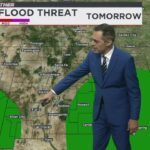
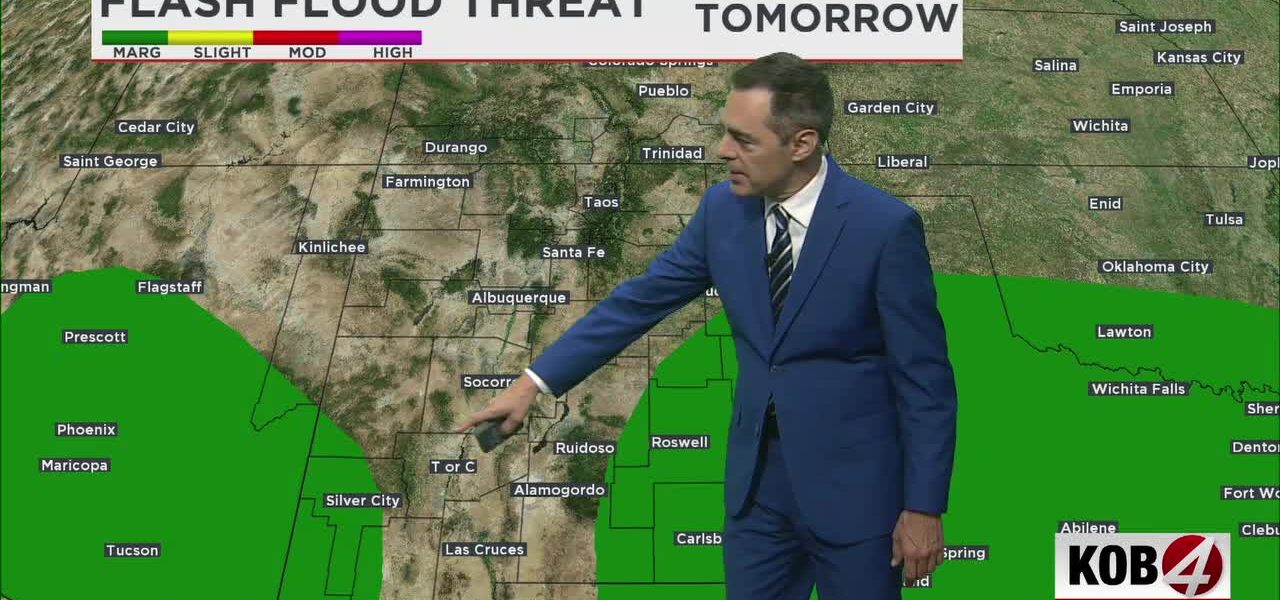
But the scattered showers — and storms did finally arrive, or they were expected to. Come Saturday evening, these gentle meteorological visitors were slated to continue their meandering course across New Mexico. And, listen, some of them are bringing ‘heavy rainfall — and strong winds.’ Don’t laugh too hard, now. Even a little bit of that here makes a difference. The real action, what little there’s of it, is going to stick to the ‘south and east of the Albuquerque area,’ if you’re keeping tabs. But it’s not over yet; the weekend always delivers, right? Well, ‘a few showers and storms will return Sunday in parts of the state.’ Hope you didn’t have big, outdoor plans without a backup.
Albuquerque itself isn’t holding its breath; the ‘rain chances are 20-30% Sunday.’ That’s barely a gamble in a city where sunshine is practically a birthright. Still, ‘temperatures Sunday will be a few degrees cooler compared to Saturday.’ A brief respite, perhaps. It’s the little things that count. Farther afield, though, in the state’s dusty, forgotten corners, there’s a whisper of something more. Specifically, ‘some heavy rain may be possible Sunday — and early next week in the southwest corner of the state.’
This localized, slightly underwhelming monsoon season—a term that conjures images of far more dramatic deluge for anyone who understands global climate—begs a global comparison. While New Mexico frets over modest percentages and ‘a few degrees cooler,’ other nations brace for events that literally reshape their landscapes and economies. Consider Pakistan, where the monsoon isn’t just a seasonal shift but the very pulse of its agricultural sector and a perpetual threat to millions. Historically, about 60-70% of Pakistan’s annual rainfall is attributed to the summer monsoon, a statistic frequently cited by the country’s meteorological department, determining crop yields and the survival of vast populations. Here, a ‘few showers’ means a mild evening. There, it’s the difference between sustenance and widespread famine, between intact infrastructure and cities swept away by devastating floods.
And let’s be frank: the gentle New Mexico sprinkle—that ‘some heavy rainfall may also occur Monday and Tuesday over the southwest corner of New Mexico’—is not exactly keeping the agricultural bureaucrats in Islamabad up at night. Their monsoons are an existential event, not a casual note in a weekend forecast. While New Mexico experiences light smoke ‘in the air from fires,’ a perpetual concern in the arid West, its ‘air quality should remain good to moderate in most areas.’ There’s a relative comfort in that, an underlying stability. You won’t find entire provinces being evacuated here, you just won’t. As Typhoon Bavi Brews, Southeast Asia Faces Peril — and Pakistan Watches Closely is a headline you’d find over there, not here. But it helps illustrate the global disparities, doesn’t it?
📄 POLICY WIRE WHITEPAPER PUBLISHED: PAKISTAN'S NATIONAL SECURITY POLICY PRIORITIES
👉 READ BY CLICKING HEREBut we shouldn’t simply dismiss the minor adjustments. Even incremental shifts here can alter water reservoirs, fuel wildfires, and challenge what’s left of the agricultural base. And it’s this subtle shift in climate expectation that quietly haunts conversations from Albuquerque’s dusty mesas to Karachi’s bustling ports. We’re all in this, to some degree. You just get varying intensities of ‘it,’ don’t you? By ‘early next week,’ residents can expect ‘temperatures will be a little cooler in most areas.’ A pleasant forecast, for sure.
What This Means
On the surface, it’s a localized weather forecast. Dig a millimeter deeper, — and it’s a telling snapshot of global climate discrepancy and perception. New Mexico’s ‘monsoon’ is, frankly, an appetizer compared to the main course of deluges witnessed across the Indian subcontinent and parts of the Muslim world. Politically, the narrative around these local weather patterns here in the U.S. tends to focus on short-term resource management—fire suppression budgets, local water conservation measures—rather than the high-stakes climate negotiations that dominate the agenda for countries like Pakistan.
Economically, even a slight alteration to expected rainfall in the U.S. Southwest could influence local agricultural yields for specialty crops, impact tourism reliant on outdoor activities, or stress municipal water systems. But compare that to Pakistan, where erratic monsoon behavior—either too little rain leading to drought and crop failure, or too much causing catastrophic flooding—can destabilize an entire nation’s food supply, displace millions, and inflict billions in economic damage, often requiring international aid. The subtle irony, you see, is that while one part of the world tracks its minor, welcome rainfall, another grapples with events that directly challenge its sovereignty and human rights, sometimes sparking domestic unrest over government relief efforts and infrastructure failures. It’s a stark reminder that even geographically distant weather reports are inextricably linked to a singular, unpredictable global climate, just with dramatically differing stakes.