

Albuquerque’s Robot Arena: A Glimpse into Tomorrow’s Geopolitical Chessboard
POLICY WIRE — Albuquerque, New Mexico — It wasn’t the roar of a stadium or the flash of cameras heralding some grand political announcement. Instead, the persistent whir — and clank of...

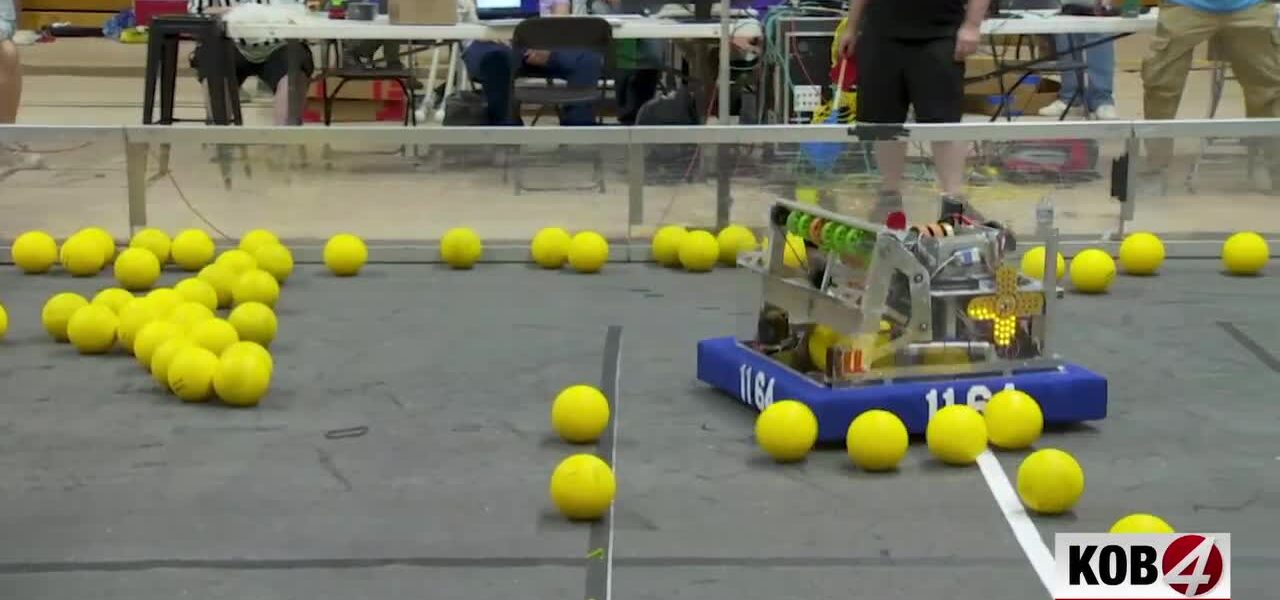
POLICY WIRE — Albuquerque, New Mexico — It wasn’t the roar of a stadium or the flash of cameras heralding some grand political announcement. Instead, the persistent whir — and clank of miniature contraptions dominated a recent Saturday inside St. Pius High School, here in the desert quiet of Albuquerque. Youngsters, barely old enough to drive, squared off their mechanical marvels in what appeared, on the surface, to be nothing more than a spirited local robotics competition. But appearances, especially in an age governed by silicon — and algorithms, can be dreadfully misleading.
Because these weren’t just kids playing with advanced toys. No, they’re the nascent vanguard, unknowingly perhaps, of a global technological arms race—a contest for digital supremacy that extends far beyond New Mexico’s borders, impacting everything from national defense to economic clout. KOB 4 photojournalist Kai Hohman, with camera in tow, probably captured the pure joy of innovation, the thrill of victory and the agony of mechanical failure. That’s fine. But what’s truly compelling, for those of us tracking power shifts, is the policy implication humming beneath the surface noise.
It’s about human capital, isn’t it? The sheer investment in STEM (Science, Technology, Engineering, Math) education at such an early stage signals a recognition—whether conscious or instinctive—that future global dominance won’t be won on traditional battlefields alone. It’ll be forged in coding boot camps and, yes, in high school robotics labs. You don’t have to strain your ears too much to hear the faint echoes of policymakers cheering from afar. “Look, every nation on the planet is vying for technological superiority, and that battle starts in classrooms like these,” commented Senator Evelyn Reed, a leading voice on the Senate Armed Services Committee, during a recent appropriations debate. “We can’t afford to cede ground here. These kids, they’re the intellectual capital our future depends on.” Strong words, for a simple Saturday event.
And she isn’t wrong. The global robotics market, by various estimates, is slated for stratospheric growth. According to Statista, projections indicate the market could hit an astounding $1.3 trillion by 2030, a figure that ought to give any nation pause, and simultaneously, spur it to action. This isn’t just about factory automation anymore; it’s about AI-driven defense systems, smart infrastructure, and biotech breakthroughs—the kind of stuff that rearranges geopolitical fault lines. But for the teenagers wrestling with servo motors — and Python scripts, it was about beating the rival school’s bot. Good for them.
The success of the St. Pius competition, touted locally as a “huge success,” might just be a blip on the national radar, but it’s a telling one. It suggests a growing enthusiasm for hard sciences, even as broader education metrics continue to sputter. Think about it: a local school stepping up, creating an environment where complex engineering becomes a sport. That’s a quiet revolution, isn’t it?
📄 POLICY WIRE WHITEPAPER PUBLISHED: PAKISTAN'S NATIONAL SECURITY POLICY PRIORITIES
👉 READ BY CLICKING HEREPrincipal Martin Rodriguez, whose school hosted the inaugural event, put a finer point on the local impact, while also—perhaps unintentionally—speaking to a wider current. “Our students aren’t just learning how to build robots; they’re learning problem-solving, collaboration, and resilience,” Rodriguez explained, his voice brimming with justifiable pride. “These are skills that’ll serve them no matter what path they choose, preparing them not just for college, but for life in a world that demands adaptability.” Indeed. But adaptability is a virtue valued as much in Silicon Valley boardrooms as it’s in the Pentagon, or, for that matter, in the dynamic economies of the Middle East.
Meanwhile, across continents, nations with vastly different economic and political structures are making their own plays for this technological future. From Pakistan to Tehran, investments in STEM education and technological self-reliance are seen as paramount—not just for economic prosperity but for national sovereignty. Pakistan, for instance, has aggressively pursued initiatives to boost its tech sector, recognizing the leverage that technological prowess provides on the global stage. It’s a universal language, this race for innovation, even if the dialects vary dramatically.
What This Means
This Albuquerque competition, ostensibly a feel-good story about bright young minds, functions as a micro-cosmic reflection of much larger forces at play. Economically, it signifies a domestic investment in high-value skills that could stem—or at least slow—the flow of critical technological talent abroad. If these young engineers stay stateside, contributing to cutting-edge industries, the U.S. maintains an edge. Politically, it’s a silent nod to national security. The more technologically literate its populace, the more robust a nation’s defense capabilities and its ability to compete in emergent arenas like AI-driven warfare. It also highlights a growing divide between those communities that foster such high-tech endeavors and those that, for lack of resources or foresight, don’t. The policy implications are clear: continued, strategic funding for STEM education isn’t just about school enrichment. It’s an act of geopolitical strategy, pure — and simple. We’re training the next generation to fight battles we can barely imagine, with weapons they’re only just learning to assemble.