


Desert’s Embrace Turns Deadly: New Mexico’s Perilous Recreation Raises Alarm
POLICY WIRE — RIO RANCHO, N.M. — The high desert silence often suggests a kind of eternal peace. But sometimes, in the pre-dawn hours, it becomes an echo chamber for catastrophe. And it was that...

POLICY WIRE — RIO RANCHO, N.M. — The high desert silence often suggests a kind of eternal peace. But sometimes, in the pre-dawn hours, it becomes an echo chamber for catastrophe. And it was that eerie quiet, broken only by the chirping of crickets and then the distant wail of sirens, that descended on a slice of Rio Rancho last week. It certainly wasn’t the kind of stillness anyone wants to experience when the sun isn’t even a rumor on the horizon.
Early one Tuesday morning, around 2 a.m. on July 11, the quiet was ripped apart. A side-by-side, one of those souped-up, open-air vehicles built for tearing across rough country, found its ultimate test. It lost the battle with gravity — and a whole lot of geology. Rio Rancho Fire Rescue said crews responded about 2 a.m. July 11 near Southern Boulevard and 60th Street NW after reports of a side-by-side rollover with multiple injured people. You’ve got to wonder what possesses people to embark on such adventures in the dead of night, so far from easy access. [QUOTE_PLACEHOLDER]
It’s a familiar enough story, really: thrill-seeking gone sideways. But the immediate aftermath here, that’s where the stark reality of rural, remote rescue operations really kicks you. The land, unforgiving as it’s, had swallowed the vehicle whole, or close enough. Firefighters found the side-by-side at the bottom of a steep ravine. Not exactly a walk in the park for emergency services.
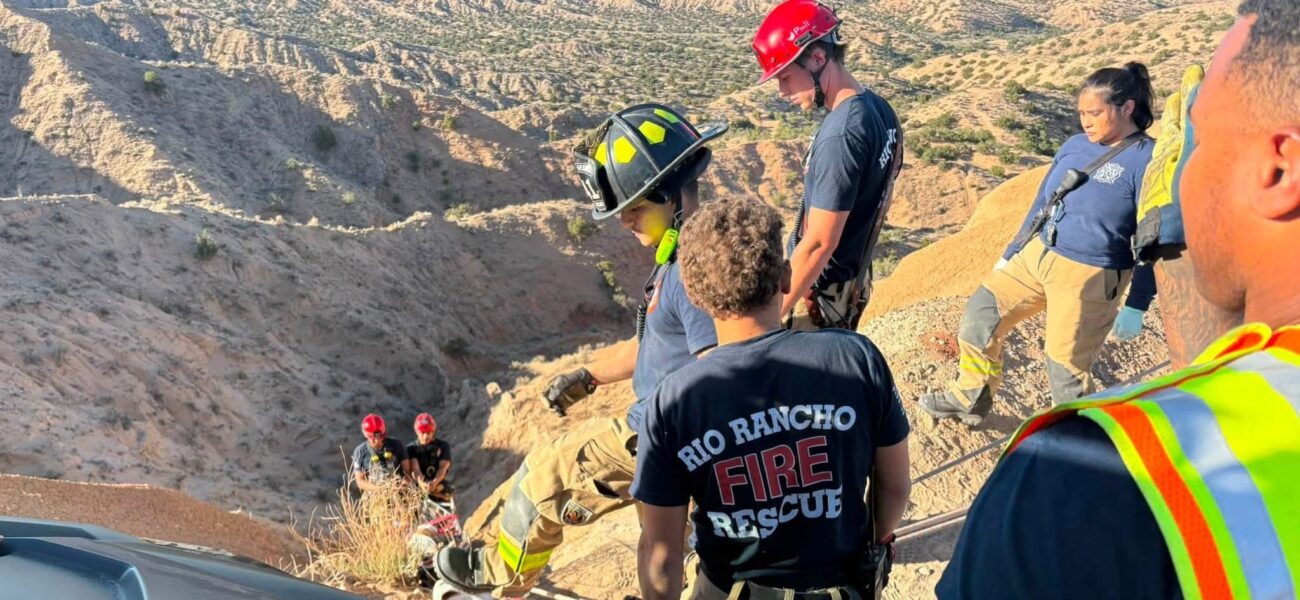
The severity of the situation became clear fast. The agency said the crash scene led crews to activate the Rio Grande Basin Rescue Team for a high-angle rope rescue. That’s not your standard fender-bender call; that’s specialized, dangerous work. One occupant got out without help, according to Rio Rancho Fire Rescue. But for the others, it was an entirely different, far more perilous descent to safety. Crews then used technical rope rescue systems to bring the other five patients to safety. It takes a certain breed of individual, doesn’t it, to literally haul injured strangers up the side of a cliff face in the dark.
Multiple patients suffered serious injuries, Rio Rancho Fire Rescue said. And, well, you don’t roll a vehicle into a steep ravine at 2 a.m. without collecting a few bumps and bruises—or far worse. Classic Air Medical and CareFlight flew two patients to UNM Hospital and ambulances took the others with help from Rio Rancho Fire Rescue and Sandoval County Fire Rescue. That’s two air ambulances, ferrying two of the most grievously wounded through the New Mexico night sky. It’s a logistical ballet of the highest order, pulled off by professionals working under incredible duress, all for recreational mishap.
This incident isn’t just about six people in a bad spot; it’s a window into the ever-expanding world of off-road recreation. It’s a pastime that’s seen explosive growth—all-terrain vehicles and side-by-sides are practically ubiquitous now in places like New Mexico’s wide-open spaces. But with that surge in popularity comes a darker side, a relentless pressure on emergency services. These machines promise freedom, they deliver thrills, but they often require skills and caution that get easily forgotten when the engine roars and the dust flies.
📄 POLICY WIRE WHITEPAPER PUBLISHED: PAKISTAN'S NATIONAL SECURITY POLICY PRIORITIES
👉 READ BY CLICKING HEREAnd let’s be real, this phenomenon isn’t confined to the American West. Consider places like Pakistan’s Chitral Valley, where the dramatic landscapes beckon adventure tourists. There, similar off-road pursuits are gaining traction, often with even fewer safety nets, even more precarious terrain, and sometimes—just sometimes—rescue infrastructure that makes New Mexico’s seem state-of-the-art. The policy implications for managing access, ensuring safety, and funding rescue services become globally interconnected.
A hard number puts it all in stark relief: in the United States, off-highway vehicle (OHV) incidents lead to an estimated 100,000 emergency department-treated injuries annually, according to the Consumer Product Safety Commission (CPSC). That’s not a negligible statistic. It’s a loud, clear siren. And it screams for a closer look at how we balance exhilarating recreation with necessary regulation.
What This Means
This incident—one more among tens of thousands—serves as a brutal reminder of the often-unseen costs of leisure. For local governments like Rio Rancho’s, this isn’t just a fire department call; it’s a budget drain, a resource strain, and a policy headache wrapped in mud and broken plastic. How do you regulate an activity that takes place over thousands of acres of unpatrolled wilderness? It’s not like traffic lights in a city intersection.
Economically, off-road recreation is a cash cow for many rural areas, bringing in tourism dollars for equipment rentals, gas, and hospitality. But if these accidents proliferate, it begins to affect the perception of safety, potentially dampening that lucrative stream. There’s a delicate balance here, you see, between fostering outdoor adventure and safeguarding both participants and the public coffers that ultimately pay for these daring rescues. What happens when these costly, resource-intensive rescues become not anomalies, but the norm? Somebody has to foot that bill. Because at the end of the day, those rescue teams—the ones pulling people up ravines at 2 a.m.—they aren’t working for free.
It also spotlights a fascinating tension: the individual’s right to pursue dangerous recreation versus the communal responsibility to save them when things go south. And for emergency services, it forces a constant upgrade in training, technology, — and sheer grit. It’s a brutal calculus. As more people head off-road, into the wilds, both here and in burgeoning markets across South Asia and the Muslim world, expect these high-stakes dramas to only become more frequent. That’s a grim forecast, sure, but sometimes the truth is.