
Messi’s Marathon: Argentina’s World Cup Bid, Global Gaze, and the Business of Heroism
POLICY WIRE — Kansas City, USA — When millions across continents hold their breath over the initial minutes of a quarterfinal clash in America, waiting for a single player’s footwork, it isn’t just...

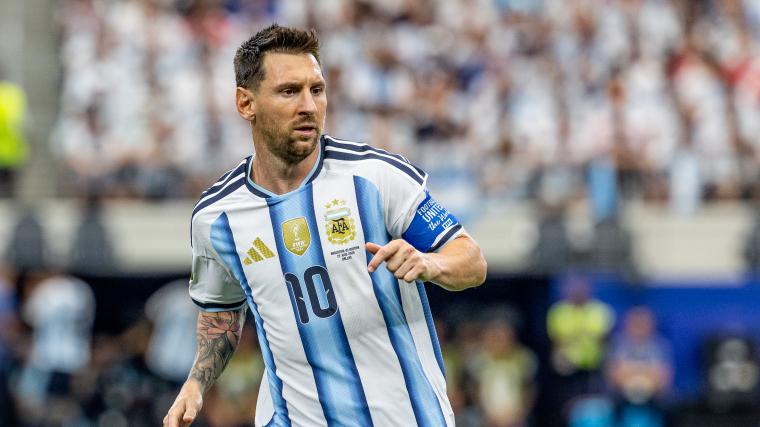
POLICY WIRE — Kansas City, USA — When millions across continents hold their breath over the initial minutes of a quarterfinal clash in America, waiting for a single player’s footwork, it isn’t just sport. It’s a precise calibration of commerce, national identity, and an almost absurd level of expectation placed squarely on one man. Tonight, that burden, heavy — and glittering, falls upon Lionel Messi. It makes for compelling television—sure—but it also paints a rather vivid picture of the hyper-globalized cultural narratives we’ve built, ones where a football match can, for a fleeting hour and a half, supplant nearly everything else in collective consciousness.
Argentina, a nation whose very pulse seems tied to the ebb and flow of its national team’s fortunes, began their journey tonight against Switzerland, in a bid to defend their 2022 World Cup trophy. But the chatter isn’t merely about the team; it’s largely about one iconic figure. Sporting spectacle doesn’t quite capture the devotion, does it? We’re talking something closer to global pageantry. This match, unfolding in the rather unlikely footballing haven of Kansas City, Missouri, isn’t just a game. It’s an economic engine, a diplomatic tool, — and a universal distraction. They say Messi has shown the world time — and time again that he can take Argentina as far as he can lead them. Well, he certainly gave everyone a show in the Round of 16 against Egypt, tying a match his team was down 2-0 in, then seeing them eventually win by the Argentinians in dramatic stoppage-time fashion. Because sometimes, heroics feel manufactured just for the audience at home. [QUOTE_PLACEHOLDER]
Entering the quarterfinals, Messi stood alone as the top goalscorer of the 2026 World Cup, boasting an impressive eight goals through five matches, according to data widely disseminated by sports analytics outlets, including The Sporting News. But that statistic, stark — and impressive as it’s, merely scratches the surface. It’s the entire mythology woven around the player—his past triumphs, his rumored twilight—that really pulls us in. And so, the anticipation, the almost religious fervor, escalates with each kick, each near-miss. But, five minutes into the game, the digital screens lit up with a clear message: No, Lionel Messi hasn’t scored yet against Switzerland through five minutes. A nation collectively sighs, — and then holds its breath again.
From Casablanca to Karachi, the glow of television screens illuminates millions of faces, each hanging on Messi’s every move. It’s a curious thing, this phenomenon in parts of the Muslim world — and South Asia. For countries like Pakistan, with a football presence often overshadowed by cricket, the European and South American World Cup narratives somehow pierce through. Local politics, economic headwinds, even regional conflicts, can, for ninety minutes, recede into the background. Messi, often simply known as The Maestro, offers a global lingua franca, a moment of shared human experience transcending national boundaries and even religious divides. It’s a peculiar soft power play, a global unifier forged not in diplomacy but on the football pitch.
📄 POLICY WIRE WHITEPAPER PUBLISHED: PAKISTAN'S NATIONAL SECURITY POLICY PRIORITIES
👉 READ BY CLICKING HEREArgentina’s path, should they triumph tonight, would take them to the semifinals to face either Norway or England. Think about that for a second. An immediate matchup against England would rekindle one of football’s most storied—and occasionally bitter—rivalries, echoing history and giving pundits another narrative to dissect beyond the sheer physicality of the sport. The entire enterprise, really, is less about an elegant game — and more about meticulously choreographed global theatre. They’ve arrived. The players, the expectations, the crushing weight of history — and future. Messi & co have arrived. That’s what the tweet said, anyway.
What This Means
The relentless focus on Lionel Messi and his singular performance isn’t just about sporting achievement; it reflects deeper economic and political undercurrents. For Argentina, football is more than a game; it’s a potent symbol of national identity, a rare source of collective euphoria and pride in a country that’s battled its share of economic volatility and political shifts. A World Cup victory or even a deep run offers leaders a well-timed, if temporary, surge of public morale, a ‘feel-good’ factor that can momentarily overshadow domestic challenges.
Economically, this match, — and the tournament overall, is a juggernaut. Billions of dollars ride on broadcast rights, endorsements, merchandise, — and associated tourism. Every match fuels an industry that dwarfs many national economies. Messi himself isn’t just an athlete; he’s a brand, a one-man multinational enterprise. His performance, or lack thereof, can significantly impact sponsor valuations and viewership numbers. The fact that the game kicks off in Kansas City underscores football’s ambitious global expansion strategy into lucrative, if historically less fervent, markets. For host nations of individual games or entire tournaments, the infrastructure investments, though immense, promise future economic dividends and enhanced international standing. And it’s never just about who wins; it’s about the spectacle’s ability to create, consume, and redefine global attention. It’s capitalism with cleats, basically. It’s truly amazing—and perhaps a bit concerning—how completely such narratives can dominate our collective consciousness.