


In an Age of Athletic Mercenaries, One Coach Stakes His Claim on Loyalty, Not Lavish Contracts
POLICY WIRE — Washington D.C., USA — The global marketplace, in its ceaseless quest for efficiency and profit, often rewards the nimble, the adaptive, and — most conspicuously — the highest bidder....

POLICY WIRE — Washington D.C., USA — The global marketplace, in its ceaseless quest for efficiency and profit, often rewards the nimble, the adaptive, and — most conspicuously — the highest bidder. Talent, like any other commodity, flows to where the financial pastures are greenest, leaving behind traditions and steadfast loyalties for the next, more lucrative opportunity. Yet, within this modern dynamic, a peculiar countercurrent is manifesting on the fields of American college football, an institution often considered the epitome of hyper-capitalist athletic endeavor.
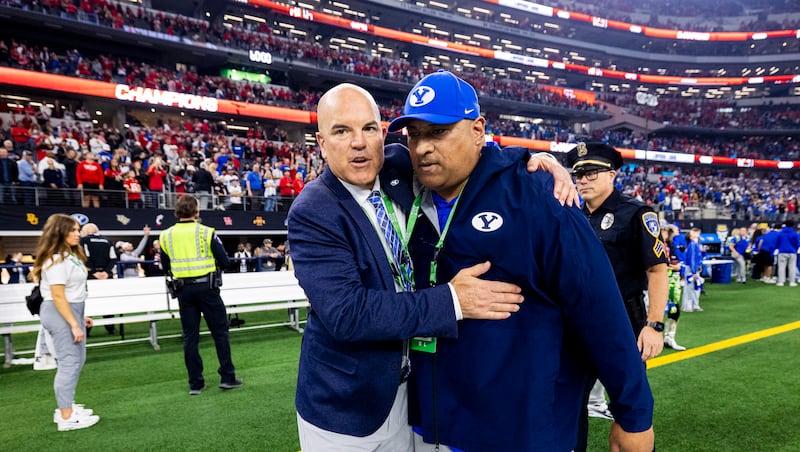
It’s a peculiar thing, seeing a veteran figure suddenly become the grizzled elder statesmen. This past week, Brigham Young University’s head football coach, Kalani Sitake, found himself, perhaps rather unwillingly, elevated to just that position within the Big 12 conference. Two of his coaching peers, both at the helm of prominent programs, packed their bags for greener pastures: Kyle Whittingham to Michigan from Utah, and Matt Campbell, Iowa State’s long-standing coach, to Penn State. Sitake, a jovial man by all accounts, remains. He’s now the conference’s longest-tenured coach, a fact that in the current climate isn’t merely an anecdote—it’s a data point defying an accelerating trend of transactional loyalty.
But the numbers are, shall we say, rather jarring. One only needs to glance at the escalating figures circulating through the Name, Image, and Likeness (NIL) ecosystem to grasp the true magnitude of this cultural friction. Texas Tech, for instance, is rumored to boast a $40 million roster, an astounding sum that, if accurate, signals a complete paradigm shift in collegiate sports economics, according to numerous media reports. Teams aren’t just competing for wins; they’re effectively running semi-professional enterprises, bidding for personnel as corporate entities might acquire startups. LSU, by many accounts, is simply throwing treasure chests around in Baton Rouge. Others, they’re practically handing out ridiculous amounts of cash just to keep up.
Sitake, though, he ain’t playing that game, or at least not by the same rules. He operates on a different creed, a philosophy he says he gleaned from BYU legend LaVell Edwards. It’s a message he repeats to anyone who will listen, including journalists whose recorders are whirring and cameras are rolling at media days. And you see it working for him too. His team just logged a 12-win season, earning a league championship appearance. he managed to retain nearly all his starters—an almost unheard-of feat in an age where the transfer portal spins like a digital roulette wheel.
But how, you ask, does one compete against what’s essentially an uncapped market for young talent? Sitake’s answer, delivered with a directness that skirts both naivety and cynicism, is an appeal to a different currency: development, loyalty, and a sort of communal belonging. When asked why he doesn’t chase the highest NIL valuations for his athletes, he puts it simply: “If it were all about money, we’d all be somewhere else, right?”
His retention of talent isn’t a fluke; it’s a direct result of this deeply ingrained perspective. Sitake stayed put, even when Penn State came calling for him, an opportunity Matt Campbell took. Why? Because, as he frames it, there are more profound returns than mere dollars. “The goal is to see themselves five years from now, not just one. They need to focus on the longevity of it all rather than the instant gratification. So, I think that’s the goal, to teach these guys that discipline and sacrifice matter. You have to recruit to that.” It sounds, to the jaded ear, like a saccharine platitude. But for many, especially those who appreciate a narrative rooted in community rather than purely financial transactions, it holds a profound appeal.
This approach echoes principles observed in some South Asian and Muslim-majority communities, where collective identity and long-term relationships often outweigh immediate material gain in many spheres of life. Familial ties, community standing, and institutional legacy are values that frequently hold more sway than transient individual profit. A young athlete from, say, Pakistan’s burgeoning cricket leagues or Bangladesh’s zealous football circles, might instinctively grasp this sentiment—the idea that belonging to something larger, something with history and future, offers a compensation far richer than a fleeting contract. This perspective offers a stability against the destabilizing forces of modern commerce. Sitake believes this offers a more substantial kind of payoff. He knows he can only do things one way, his way, regardless of external pressures.
Even star running back, LJ Martin, the Big 12’s projected offensive player of the year, offered a striking reflection of this sentiment, echoing his coach’s outlook. [QUOTE_PLACEHOLDER] Martin’s statement offers a fascinating, human-centered glimpse into the potential dividends of such an unorthodox strategy: joy and psychological freedom over dollar signs. It’s an inconvenient truth for those who subscribe purely to market efficiency models.
And because of his belief in this value system, Sitake also argues: “I have a program to protect, a culture to protect and on that, I can try to get young men to be their best selves. And if it’s about money, I don’t think that’s ever going to happen. If that was the answer to everything then, guys, we’d all be somewhere else. All of us. Nobody would be sitting here.” It’s a sharp observation. If only monetary incentives dictated all decisions, very few would remain in their current, often challenging, roles.
It remains to be seen if Sitake’s earnest adherence to this tradition, this concept of long-term vision and collective development, will sustain BYU’s competitiveness in the frenzied collegiate market. But, he isn’t backing down. He hopes for a long haul: “If you go out every day and it doesn’t feel like a job, it feels like I’m building on my passion and my ambition is to be my best and players feel like that (and) can master that opportunity, then the money will show up. But compensation comes in different forms.“
What This Means
Sitake’s quiet resistance to the NIL-fueled arms race is more than just a sports story; it’s a telling political and economic commentary on institutional values versus market forces. In an era where hyper-individualism and immediate gratification often dictate decision-making, Sitake champions a communal ethos. This isn’t just about football; it’s about whether established entities—be they universities, corporations, or even nations—can retain a distinct identity and draw by emphasizing non-financial capital. His strategy challenges the prevailing wisdom that money is the ultimate arbiter of talent acquisition — and retention.
Economically, if Sitake’s model proves sustainably successful—and his recent performance suggests it might—it could introduce a fascinating counter-narrative to pure market-based recruitment. It suggests that brands, cultures, and intangible benefits can still command significant loyalty, potentially tempering the inflationary pressures seen in areas like collegiate athletics. This mirrors discussions in other areas of sports, where the careful cultivation of identity can sometimes outperform raw financial might. It may not make BYU the highest bidder, but it allows them to maintain a coherent strategy.
From a policy perspective, the implications are equally intriguing. How do you regulate or even consider value when compensation extends beyond quantifiable dollars into areas like community, development, and enjoyment? It highlights the ongoing struggle to define ‘fair’ compensation in an economy increasingly driven by fluid and multifaceted incentives. As collegiate sports grapples with its new economic reality, the ‘Sitake way’ offers a low-fi, yet potentially impactful, vision for maintaining identity amidst an identity crisis.