


The Price of Potential: How One Draft Pick Echoes Baseball’s Grand Global Ambitions
POLICY WIRE — Cincinnati, USA — When the Cincinnati Reds pegged Justin Lebron, a shortstop from the University of Alabama, as their eighteenth overall pick in the 2026 MLB Draft last Saturday, it...

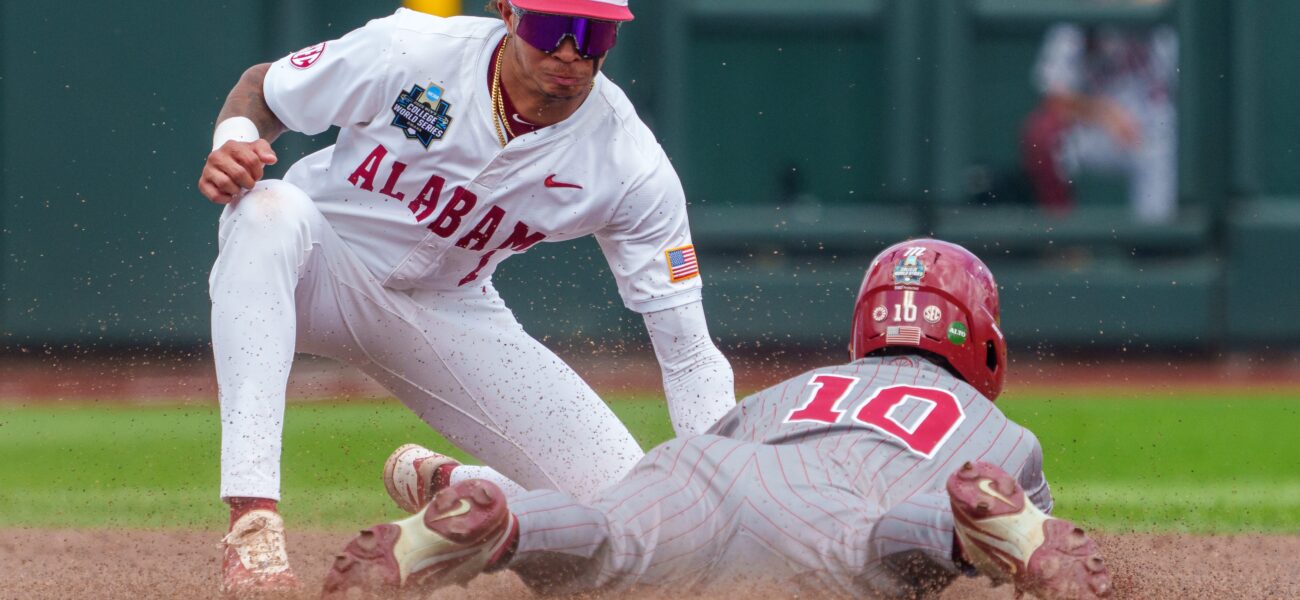
POLICY WIRE — Cincinnati, USA — When the Cincinnati Reds pegged Justin Lebron, a shortstop from the University of Alabama, as their eighteenth overall pick in the 2026 MLB Draft last Saturday, it wasn’t just a selection. It was a wager—a multi-million-dollar gamble placed on a future that remains frustratingly unwritten, a silent testament to the complex machinery powering modern professional sports. They put their chips down on a kid, 6-foot-3 with a wiry 165 pounds, who many think might just be the next big thing, maybe even echoing the electric buzz of an Elly De La Cruz. That kind of talent doesn’t just emerge from a vacuum; it’s a manufactured product of a massive, globally ambitious system.
Because let’s be honest, this isn’t just about a kid hitting home runs. This is about asset acquisition. It’s about securing future revenue streams — and feeding a beast that craves constant spectacle. Lebron’s journey—from an undrafted, unheralded kid out of Archbishop McCarthy High School in Florida, only truly blossoming in the unforgiving crucible of NCAA Division I baseball at Alabama—it tells you something about the league’s voracious appetite for a certain kind of story. And don’t forget, the man helped lead the Crimson Tide to its first College World Series appearance since 1999, his junior year, after migrating south from The Bronx as a four-year-old. That’s a narrative tailored for prime-time, a ready-made hero.
Scouts talk a big game about his ‘dynamic power-speed combination.’ And they should. He racked up 16 homers — and stole 42 bases (out of 43 attempts) for the Tide. Forty-two! Baseball America crowned him the top-rated college athlete in this draft class, also giving him third billing for defensive prowess among college shortstops, suggesting he’s a “no-doubt” glove man at the professional level. But still, the price of that raw ability, the money involved—it’s eye-watering. The slot value for the 18th pick, for instance, often hovers around the $4 million mark, give or take. That’s a significant investment on a 20-year-old whose biggest battle has thus far been against college pitchers, not million-dollar fastballs in packed big-league stadiums.
Cincinnati’s General Manager, Mike Kratochvil, sounding almost philosophical about the investment, put it plainly in a post-draft presser: “We aren’t just drafting a player; we’re acquiring a portfolio of potential, wrapped in human form. The data supports this pick, of course, but it’s the spark you see in their eyes—that’s what makes the risk tolerable.” Kratochvil added, with a wry smile, “And yes, we liked what we saw with Lebron’s eyes. He wants to win.” You bet he does. Every prospect does.
But the calculus goes beyond one player, one team. This is a snapshot of MLB’s expansive, — and sometimes perplexing, global strategy. While leagues like cricket’s IPL rake in billions and capture imaginations from Mumbai to Manchester, Major League Baseball, for all its institutional heft, struggles for broad traction beyond North and Central America. Its talent pipelines are largely North American, with a healthy dash of Caribbean — and East Asian infusion. Baseball’s slow crawl into other markets, like South Asia or the broader Muslim world, remains an unsolved puzzle. Pakistan, for instance, a nation of over 240 million, hosts a small but passionate baseball federation, albeit one with meager resources compared to its cricket obsession. MLB has made overtures, even holding occasional outreach programs in places like Europe and Africa. Still, the overwhelming majority of its prospects are found within well-worn geographical grooves, which makes picks like Lebron, sourced from America’s own collegiate system, relatively safe bets in an inherently volatile game.
📄 POLICY WIRE WHITEPAPER PUBLISHED: PAKISTAN'S NATIONAL SECURITY POLICY PRIORITIES
👉 READ BY CLICKING HERE“We constantly analyze how to broaden baseball’s appeal, its talent base,” MLB Commissioner Rob Manfred reportedly told a group of owners earlier this year during a private meeting. “It’s not just about cultivating new markets for viewership; it’s about creating entirely new talent pools. We see immense potential everywhere, though it’s a marathon, not a sprint, especially where cultural affinity for our sport is still developing.” But until those distant pipelines bear fruit, the machine hums on, primarily processing diamonds found closer to home.
The Reds are actually doubling down on Alabama shortstops; they took another one, Steele Hall, ninth overall last year. Lebron is the first University of Alabama player selected in the top ten of the MLB draft since Joe Vitello was nabbed seventh overall by the Royals back in ’91. It gives you a sense of just how rare these moments are, — and how much is truly riding on each choice.
What This Means
From a purely economic perspective, these early-round draft picks are less about immediate athletic impact and more about long-term investment. Teams pour millions into these athletes, gambling that a fraction of them won’t only reach the big leagues but become stars whose salaries eventually dwarf their initial signing bonuses. But also, it’s about brand-building. Lebron, as a marketable personality with a compelling backstory and a dazzling skillset, becomes a central piece of the Reds’ marketing strategy, even years before he ever plays a full MLB season. Politically, the choice reflects a continued faith in the American collegiate system as a talent incubator, a counter-balance to the increasingly professionalized youth academies. It’s also a play for local pride in Cincinnati—investing in perceived top-tier talent generates buzz, sells tickets, and provides the city with a sense of future glory. The draft’s global ripple effects, subtle as they’re for this particular pick, highlight MLB’s strategic struggle to expand its cultural footprint into territories dominated by other sports, a quiet battle for hearts, minds, and most importantly, disposable income and future talent outside its traditional domains.