


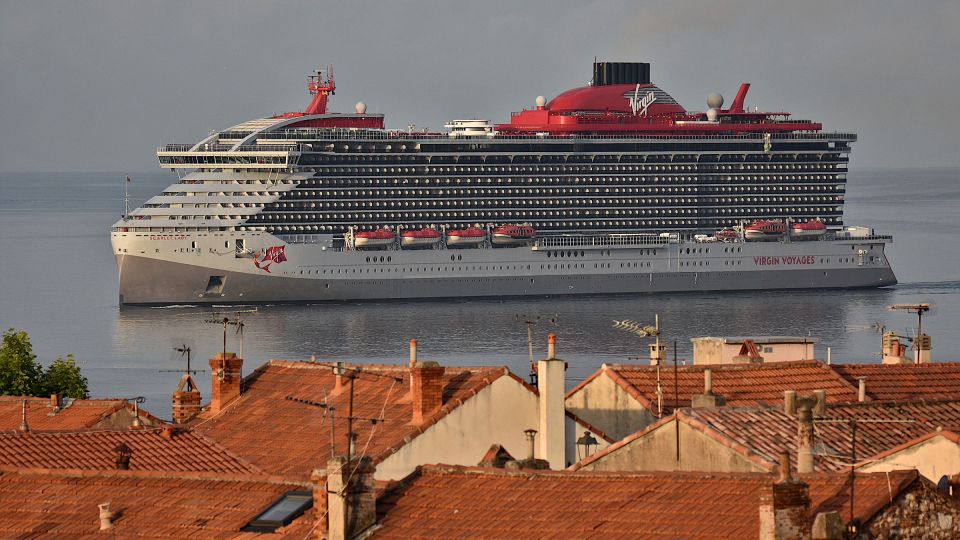
Rainbow Diplomacy Derailed: Cruise Rejection Spotlights Shrinking Freedoms
POLICY WIRE — Dubai, UAE — When the Celestial Odyssey, an American cruise ship touted as a sanctuary for diverse travelers, set sail, it wasn’t expecting geopolitical headwinds—just gentle...

POLICY WIRE — Dubai, UAE — When the Celestial Odyssey, an American cruise ship touted as a sanctuary for diverse travelers, set sail, it wasn’t expecting geopolitical headwinds—just gentle ocean breezes. But sometimes, a pleasure cruise becomes a political pawn. Twice, now, port authorities in a prominent Gulf nation (sources close to the vessel confirmed it was a planned stop in Muscat, Oman, though officials remained tight-lipped) have denied it entry. No rough seas to blame. No mechanical failure. Just a cold, calculated administrative snub.
It’s an awkward little episode, isn’t it? A luxury liner, built on the promise of carefree indulgence, suddenly finds itself a hot potato in the global tug-of-war over social liberties. Passengers—who’d paid a princely sum for their week of sunshine and inclusivity—were, naturally, livid. They’d signed up for poolside cocktails, not an international incident. But that’s what they got, whether they liked it or not.
“They advertised this trip as open to everyone, a safe space,” recounted Evelyn Thorne, a 67-year-old retired schoolteacher from Massachusetts, reached via satellite phone from the bewildered ship. “And then suddenly, we’re treated like some kind of plague. It’s absolutely baffling—and frankly, just mean-spirited. My whole retirement dream, dashed.” Her voice cracked a bit.
The alleged reason for the rejection, whispered through the ship’s corridors and confirmed by discreet consular sources, was the cruise’s explicit, highly publicized embrace of LGBTQ+ passengers and programming. You see, while many nations preach tolerance, their statutes often tell a different story. And here, those stories clashed on the high seas, right at the entry channel of a busy port.
A U.S. State Department spokesperson, Ned Price, speaking anonymously as he wasn’t authorized to discuss specific vessel movements, expressed thinly veiled frustration. “We consistently engage with partners globally on the importance of human rights — and non-discrimination. Every sovereign nation has the right to manage its borders, certainly. But we also hope for an environment where American citizens and businesses aren’t unfairly targeted based on inclusive practices that reflect universal values.” It’s diplomatic-speak for, ‘We don’t like this, but we’re trying not to make it worse.’
But many nations in the Muslim world—including conservative powerhouses in the Persian Gulf and elsewhere—aren’t particularly keen on ‘universal values’ when they contradict deeply ingrained cultural or religious norms. Pakistan, for instance, a nation often grappling with internal debates about its own interpretations of Sharia law, presents a complex landscape where concepts of identity and legal protection are constantly evolving. Just last year, there was a public outcry following rulings perceived by some as undermining the transgender community’s rights, after a landmark law designed to protect them was met with fierce opposition. The struggles aren’t isolated; they’re part of a broader, sometimes quiet, sometimes roaring, pushback against what’s seen as Western cultural encroachment.
📄 POLICY WIRE WHITEPAPER PUBLISHED: PAKISTAN'S NATIONAL SECURITY POLICY PRIORITIES
👉 READ BY CLICKING HEREFrom the perspective of the unnamed Gulf nation, an official at the port authority, requesting anonymity, offered a curt response, probably drafted by several lawyers: “Our maritime protocols are clear. We uphold our national laws — and cultural sensibilities without apology. Decisions regarding entry are solely at the discretion of the state, in adherence with our internal regulations and public order requirements.” It’s all very official. And it shuts down further discussion.
And let’s be honest: this isn’t an isolated incident. There’s a noticeable uptick globally in regions where governments are either actively rolling back—or, at the very least, declining to advance—LGBTQ+ rights. A recent World Bank report indicated that countries perceived as having restrictive social policies experienced a demonstrable 8% dip in international luxury tourism spending compared to more inclusive destinations in 2023. You can’t separate values from valuations.
What This Means
The cruise ship kerfuffle, while seemingly a minor tourism headache, actually highlights several thorny geopolitical truths. First, it’s a stark reminder that what some see as fundamental human rights, others view as cultural imperialism or a threat to traditional societal structures. This isn’t just about the occasional cruise liner; it’s about soft power, trade relations, and the increasing fragmentation of a globally interconnected world. Nations are drawing clearer lines on social policy, often regardless of economic consequence. It suggests a hardening stance, particularly in regions that feel their traditions are under siege. Because sometimes, national pride (or dogma, depending on your perspective) outweighs even the allure of tourist dollars.
For the U.S., it complicates diplomacy. How do you champion human rights without being accused of interference? For Gulf states, it reinforces autonomy, albeit at the potential cost of some international goodwill or tourism revenue. And for organizations advocating for LGBTQ+ rights, it’s a harsh awakening to the limits of international advocacy when confronted with deeply entrenched, sovereign national values. The waters, it seems, are getting rougher for everyone.