


From Gridiron Glory to Keepsake Commerce: How NFL Stars Become Global Cultural Currency
POLICY WIRE — Kansas City, MO — Another Tuesday, another American icon finds itself meticulously sculpted into plastic, ready for a lifetime of mantelpiece display. You’d think the Kansas City...

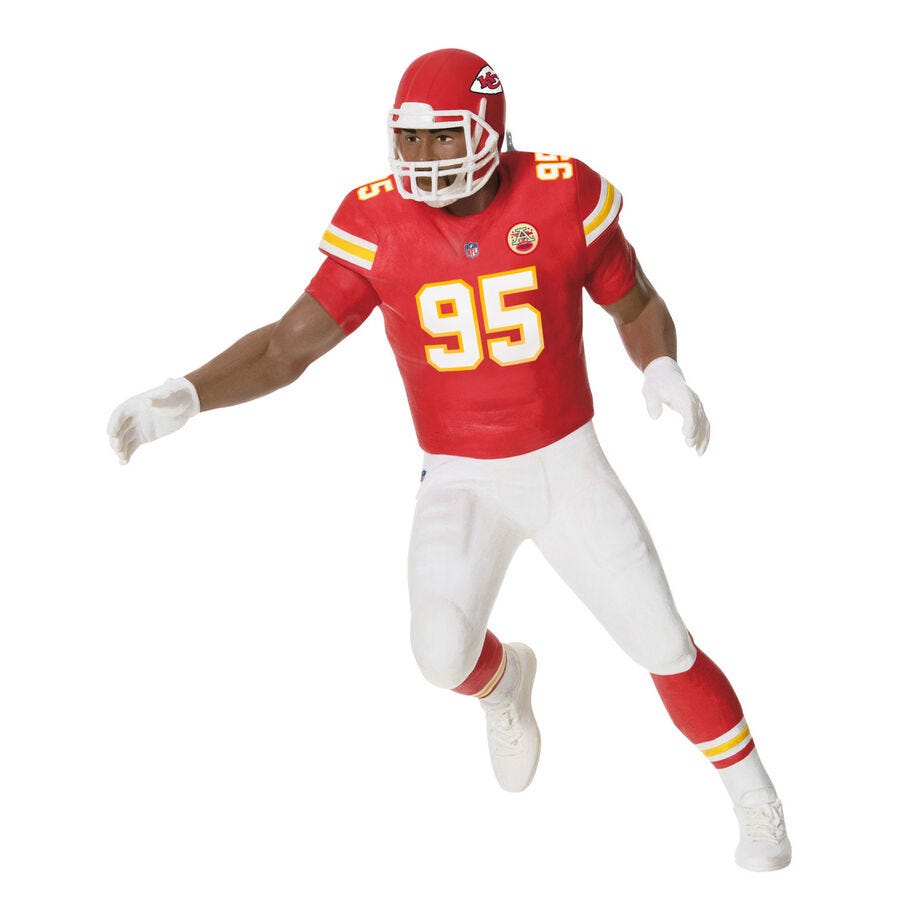
POLICY WIRE — Kansas City, MO — Another Tuesday, another American icon finds itself meticulously sculpted into plastic, ready for a lifetime of mantelpiece display. You’d think the Kansas City Chiefs’ Chris Jones, a defensive powerhouse known for crushing quarterback dreams and stacking sacks like firewood, would be above such quaint domestication. But no. His likeness, encased in a festive uniform and presumably a perpetual pass-rush stance, is set to debut as part of Hallmark’s 2026 Keepsake Ornament collection. It’s hardly just a trinket, though, is it?
This isn’t merely about holiday baubles; it’s a silent testament to the insidious reach of American commercial and cultural influence, chipping away at global consumer habits, one perfectly packaged product at a time. A footballer’s miniaturized effigy arriving in stores marks less a cultural zenith for Jones himself and more a quiet consolidation of America’s soft power strategy, whether anyone in Foggy Bottom consciously intends it or not. We’re talking about the economics of brand proliferation, not just a player’s fan engagement metrics. (Those matter too, don’t get me wrong. But they’re a symptom, not the cause.)
It’s fascinating, this transformation of an athlete into a piece of disposable pop culture iconography. Think about it: a fierce competitor, renowned for his ability to disrupt, is now being celebrated as something utterly permanent—a ‘Keepsake.’ That’s quite a philosophical leap, a neat little trick of market branding. Chris Jones, a man who last season, amidst a disappointing year for his team, still managed 29 tackles, seven sacks, and a whopping 32 quarterback pressures—making his seventh consecutive Pro Bowl, mind you—now symbolizes… nostalgia? It’s rich. Or, rather, it generates revenue, which is a distinction often lost in the glitz of sports endorsements.
“This isn’t just about football; it’s about exporting American culture. These figures, even as plastic trinkets, resonate in markets far beyond our borders, laying groundwork for softer engagements, for trade, for understanding – or at least, familiarity,” remarked Melinda Vance, the U.S. Assistant Secretary of State for Public Diplomacy, in a recent private briefing, underscoring the subtle geopolitics at play in something as innocuous as a holiday ornament. And she’s not wrong. It’s how identities propagate.
Indeed, the National Football League, an organization once largely contained within North American borders, has made aggressive strides into international markets. The global sports licensing market, encompassing everything from jerseys to—yes—holiday ornaments, is projected to swell to over $50 billion by 2027, according to Statista. This isn’t a coincidence; it’s a meticulously crafted expansion. These cultural artifacts—toys, apparel, ornaments—travel faster and deeper than diplomatic cables, burrowing into households on continents where a punt return might still be a complete mystery. It’s a fascinating look at the broader global market mechanisms at work, where athletic achievement quickly converts to marketable nostalgia.
But what does a Kansas City Chief ornament mean for, say, Karachi? Not directly, perhaps, for most. But Pakistan’s burgeoning middle class, digitally connected and increasingly aspirational, consumes Western media, including American sports highlights, even if cricket remains king. This constant drip-feed of foreign cultural touchstones normalizes the products, the brands, the very idea of American life. “We see it, certainly, the children wear the jerseys. It’s a testament to global connectivity, of course. But we must also ensure our own cultural narratives find equal footing,” observed Tariq Abbasi, Director of International Trade at Pakistan’s Ministry of Commerce, in a statement designed to straddle diplomatic courtesy and nationalistic pride.
Because ultimately, these seemingly innocuous items are more than just plastic. They’re placeholders. They’re tokens in a larger game of cultural soft power, where consumer choices, however trivial, shape perceptions, foster familiarity, and—yes—pave the way for bigger economic and political connections. They don’t just hang on trees; they plant ideas.
What This Means
The ubiquity of Western cultural products, from blockbuster films to sports memorabilia, continues its quiet march across the globe. This latest development—an ornament featuring Chris Jones—is a microcosm of a much larger, almost imperceptible geopolitical phenomenon. It reflects how athletic brands, once local heroes, now serve as unintended cultural ambassadors, facilitating a low-stakes yet high-impact form of public diplomacy. For Washington, it means a further entrenchment of its cultural values and consumer norms without firing a single shot or sending an envoy. For emerging economies in South Asia and the Muslim world, it signifies both exposure to global trends and a continuous challenge to maintain cultural sovereignty against a torrent of commercially potent foreign iconography. Economically, it points to the deepening integration of global markets, where local athletic celebrity translates into international merchandise sales, enriching corporations and complicating local consumption patterns. It’s an indicator, plain and simple, of just how deeply brand capitalism has embedded itself into our collective consciousness, stretching from Missouri living rooms all the way to metropolitan Pakistan, even if the locals are just admiring the shiny packaging. These aren’t just ornaments; they’re micro-ambassadors in a globalized world.