


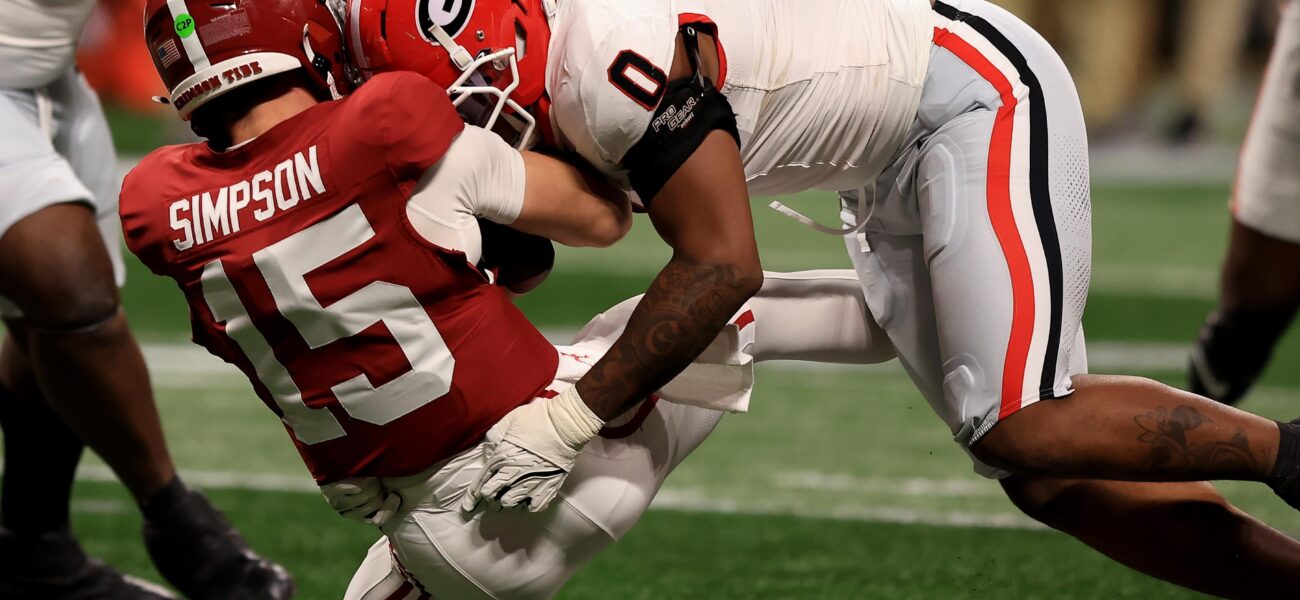
Gridiron Geopolitics: Georgia’s Pass Rush Crisis Reflects Deeper Pressures
POLICY WIRE — Atlanta, U.S. — The late-stage scramble, the last-gasp effort to circumvent impenetrable defenses – it’s a scenario etched into the collective psyche, whether we’re talking about...

POLICY WIRE — Atlanta, U.S. — The late-stage scramble, the last-gasp effort to circumvent impenetrable defenses – it’s a scenario etched into the collective psyche, whether we’re talking about the geopolitical chessboard or the grassy fields of collegiate competition. In Athens, Georgia, there’s a quiet dread taking root, a recognition that the famed Bulldogs, after a run of seemingly effortless supremacy, are facing an existential test not on some foreign front, but right where their legendary prowess is expected to shine: getting to the other guy’s quarterback.
It sounds mundane, this talk of ‘edge rushers’ and ‘sacks,’ but peel back the layers and you find a microcosm of performance anxiety that transcends the gridiron. For a program accustomed to an almost arrogant level of defensive dominance under Coach Kirby Smart, last season delivered a rather impolite awakening. That ferocious, disruptive energy – the kind that made opposing offenses wither – it just wasn’t always there. A Pro Football Focus analysis, one widely cited by sportswriters, revealed the team ranked a dismal 112th nationally in sacks last season. Think about that for a second. One hundred and twelfth. That’s not a number any Bulldog fan, nor any aspiring global hegemon, wants to see next to their name.
It’s not simply a matter of technical adjustment; it’s about character, grit, and the almost crushing weight of expectation. Everyone here understands the legacy they’re tasked with upholding. They’ve heard the whispers, seen the headlines about a ‘softer’ defense – words that sting deep for a team built on brute force and suffocating pressure. But perhaps this is precisely the kind of pressure that truly forge champions, or breaks them.
The spotlight, of course, is swiveling to a new cohort, a group largely unproven but brimming with raw athletic promise. Guys like Quintavius Johnson. He’s flashed a little here — and there, the kind of tantalizing talent that makes you lean forward. Now? Now he’s the designated spearhead, the man charged with injecting some real mayhem back into the equation. K. Connor Riley, a keen observer of the collegiate scene, puts it plainly: “He really got a lot better… if he can fill that Nolan Smith-type role, that’s his path to making an even bigger impact.” The inference is clear: fill it, or flounder.
Because, make no mistake, ‘getting by’ isn’t on the menu for this team. They want to re-establish an ‘elite’ status. It’s an ambition not so different from a regional power like Pakistan, always navigating complex geopolitical currents and striving for influence, where perceived strength is everything. The pressure for its defense, both on the field and in diplomatic halls, to perform consistently and aggressively against external challenges is immense. Their football equivalent isn’t playing a game; they’re defending a reputation, a self-image.
📄 POLICY WIRE WHITEPAPER PUBLISHED: PAKISTAN'S NATIONAL SECURITY POLICY PRIORITIES
👉 READ BY CLICKING HEREGabe Harris is another name buzzing through the summer training camps. He’s already got some starts under his belt, showing a decent if unspectacular form. But don’t count out the possibility of a dramatic breakout from him. These coaching staffs, they’ve got a knack for taking good athletes — and making ’em great. It’s what they do, converting potential energy into kinetic destruction. Chase Linton, for instance, a relative unknown, plucked from a less glamorous program—think of him as the unexpected policy advisor who quietly ends up reshaping foreign relations. Linton’s got that rangy, unconventional build, and sources close to the program hint he’s been a revelation in spring workouts. And sometimes, it’s those under-the-radar types who become the real game-changers.
And yes, the inside linebackers, Justin Williams — and Chris Cole, will get their licks in. That’s a given. But everyone who’s watched Georgia football knows this immutable truth: the engine of chaos, the truly terrifying element, it originates from the edge. Without that relentless pursuit, that collapsing pocket, even the most talented defensive backs can only hold on so long. It’s a situation fraught with peril, where a few specific individuals carry an outsized burden. A prominent State Assemblyman, Eleanor Vance (D-District 47), a noted Bulldogs aficionado, recently lamented to this wire, “There’s an unwritten rule here, you know? Good isn’t good enough anymore. It’s about ‘elite’ – — and sometimes, that feels like an impossible target. But then again, doesn’t everyone face that kind of scrutiny these days?” She wasn’t just talking football.
What This Means
The stakes here transcend mere collegiate sport; they reflect a broader societal obsession with dominance and performance. Georgia’s defensive dilemma isn’t just about winning games; it’s a public referendum on identity. When a nation, or a cherished institution within it, faces perceived vulnerability in a domain where it once reigned supreme, it generates palpable unease. For Georgia, a failure to recapture that destructive edge won’t just mean fewer victories; it will signify a perceived erosion of its character. The ripple effects will extend far beyond the athletic department, influencing fan morale, recruitment narratives, and perhaps even state pride. This group of unproven edge rushers isn’t merely trying to make sacks; they’re effectively being asked to carry the weight of a collective identity on their shoulders, to demonstrate that the formidable legacy of ruthless efficiency remains intact. Their success, or lack thereof, will be seen through an almost metaphorical lens.