


Kyiv’s Routine Shard-Splattered Morning: Global Silence Amidst Enduring War
POLICY WIRE — KYIV, Ukraine — The capital doesn’t always erupt in air raid sirens now. Sometimes, the city just wakes up to the distant thump of anti-aircraft fire, followed by the quiet rattle...

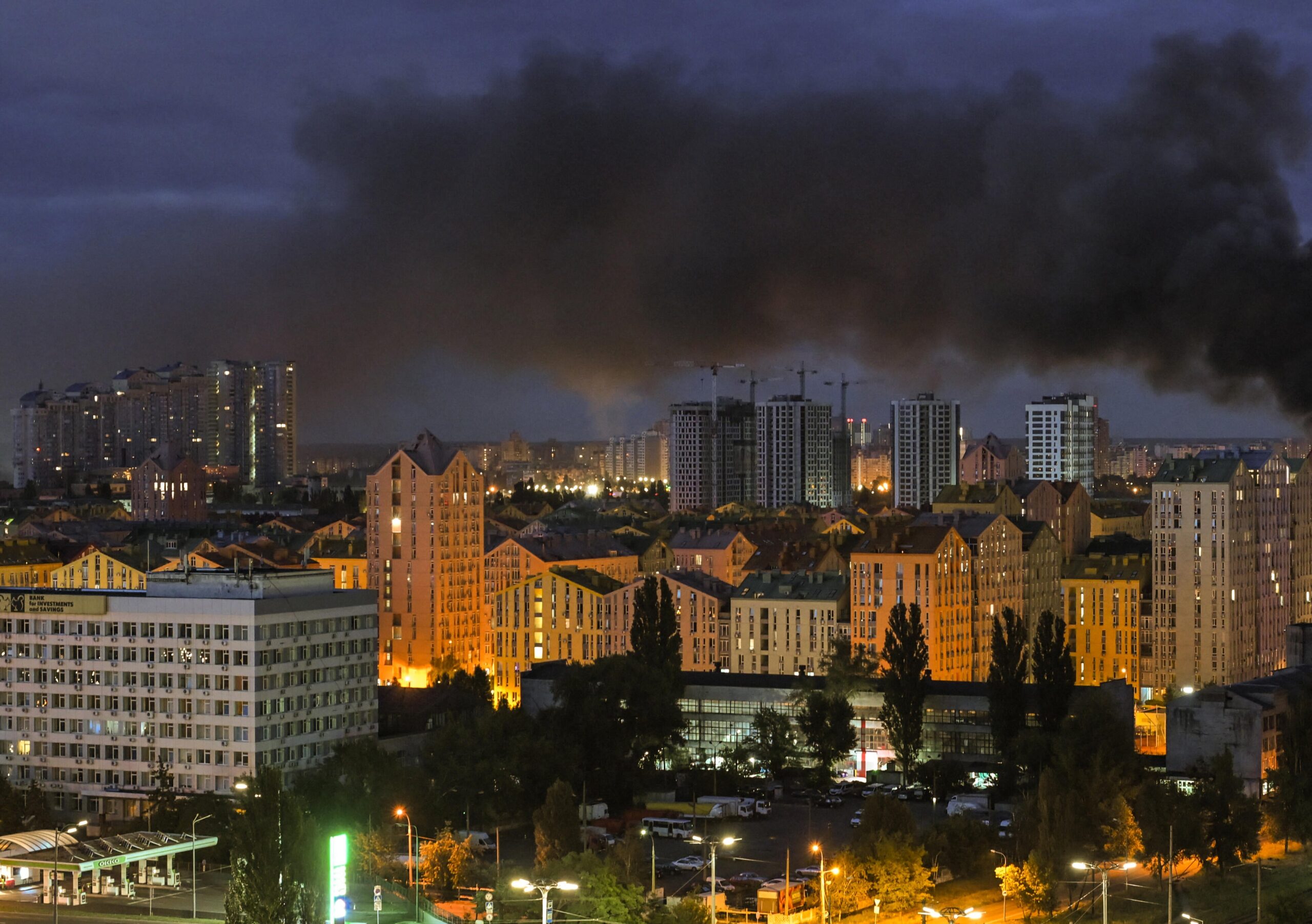
POLICY WIRE — KYIV, Ukraine — The capital doesn’t always erupt in air raid sirens now. Sometimes, the city just wakes up to the distant thump of anti-aircraft fire, followed by the quiet rattle of glass shards being swept off pavements, another night in a war that simply refuses to go away. Overnight, residential buildings, those everyday structures people just live in, got peppered by debris from intercepted drones and missiles. And for ten unlucky souls, their morning started not with coffee, but with paramedics and the cold efficiency of emergency responders.
It’s become almost a tableau. Russian forces, seemingly unable to achieve their broader, nastier aims, revert to what they can do: make life miserable, inconvenient, and occasionally, abruptly fatal. Ukrainian air defense shot down what Kyiv authorities claimed were numerous incoming projectiles. But even perfection isn’t good enough when a war machine the size of Russia’s is hurling hardware at you night after night. One person’s apartment becomes an unfortunate collection point for fragments—glass, shrapnel, shattered dreams.
Nobody’s exactly shocked anymore. But that’s precisely the insidious danger. It’s easy for the world to tune out, to scroll past the same headlines describing the same bombings. The raw, visceral horror gets dulled, becomes just background noise for other, more immediate geopolitical dramas. President Volodymyr Zelenskyy’s office released the usual statement—condemnation, defiance. We’ve heard it before. They’ll continue hearing it, too, from us, because frankly, what else can be said?
“They still cling to this fantasy that we’ll just… yield,” said Mykhailo Podolyak, an advisor to President Zelenskyy, in a telephone interview, his voice tight but measured. “They think if they chip away, if they cause enough suffering, our resolve melts. They’re profoundly wrong, — and they’ve got that spectacularly wrong from day one.” He doesn’t mince words, Podolyak. Doesn’t see the point, really.
The global impact? It isn’t just felt in shattered windows on Kyiv’s periphery. Russia’s ongoing aggression—and Ukraine’s determined resistance—scrambles the algorithms of international trade and stability, from wheat fields to energy markets. Consider the ripple effect. Because Russia won’t quit, because Ukraine won’t bend, global commodity prices remain stubbornly volatile. Nations like Pakistan, already battling inflationary pressures and external debt, feel the pinch directly in their import bills for everything from petroleum to foodstuffs. The Strait of Hormuz Tensions might dominate headlines sometimes, but these constant disruptions here also mean less overall stability in the global south, a shifting of attention and resources that has very real, very painful consequences for people a hemisphere away. We can’t pretend otherwise. It’s a cruel game, this global connectivity.
“These unprovoked attacks, they’re not just against Kyiv, they’re against the very principle of sovereign integrity,” stated a senior NATO official, speaking anonymously from Brussels, as most officials tend to do. “Our commitment to Ukraine’s defense remains absolute. They’re not breaking us, they’re strengthening us. And every bomb, every drone, simply hardens that conviction.” Sounds good on paper, doesn’t it? Conviction, absolute commitment. Meanwhile, Ukrainians keep sweeping up glass.
The International Monetary Fund (IMF) reported earlier this year that the conflict contributed to a nearly 1.5 percentage point increase in global food prices during 2022-2023, with disproportionate impacts on low-income, food-importing countries. That’s a statistic that might seem abstract, just a number on a page. But for families in Karachi or Lahore, it translates into tougher choices at the market, sometimes no choice at all. It’s simple, really. Everything connects.
What This Means
These nocturnal barrages, becoming part of Kyiv’s urban routine, speak volumes not about a coming breakthrough, but about entrenchment. Militarily, they inflict damage — and psychological distress, yes, but they haven’t altered the strategic calculus. The strikes illustrate Russia’s continued inability to achieve air superiority, forcing them to rely on less precise, terror-inducing tactics. Politically, they serve to further solidify Ukraine’s Western backing, making it difficult for allies to pivot away, no matter the mounting costs. But for nations outside the immediate European sphere—think along the lines of Bangladesh, Egypt, or even Pakistan’s complex geopolitical ballet with Delhi (Wellington’s Geopolitical Waltz) and other powers—the continuous drain of global attention and economic resources represents a creeping strategic disadvantage. These aren’t just attacks on Ukraine; they’re perpetual tremors reshaping an already fractured world order, keeping energy prices erratic and aid streams diverted. The mundane violence here has quite literally become everyone’s business, whether they realize it or not. We’re all in this economic lifeboat, after all.