


Europe’s Silent Battle: Innovation or Irrelevance in the Shadow of Beijing
POLICY WIRE — Brussels, Belgium — It wasn’t the tanks, nor the cyber warfare, that first sent a shiver down Europe’s industrial spine. No, it was the steady hum of advanced manufacturing...

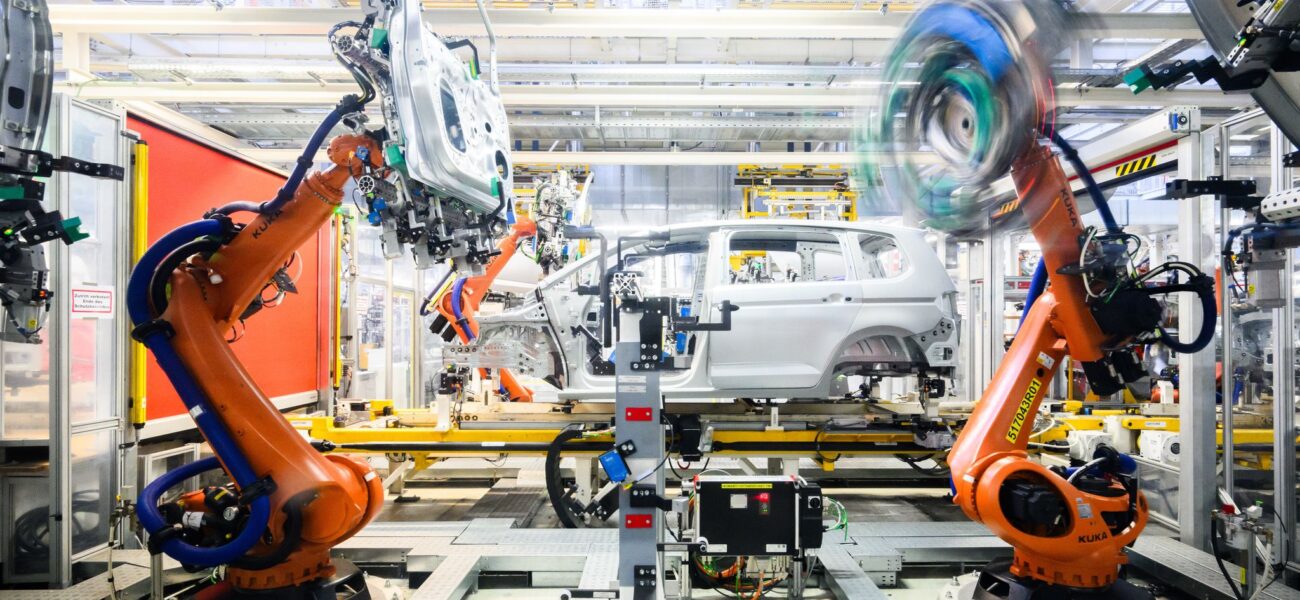
POLICY WIRE — Brussels, Belgium — It wasn’t the tanks, nor the cyber warfare, that first sent a shiver down Europe’s industrial spine. No, it was the steady hum of advanced manufacturing lines churning out goods – not in Dortmund or Turin, but in Shenzhen and Shanghai – that sparked the real disquiet. For too long, the narrative went, Europe had the brains, China had the brawn. That comforting lie? It’s crumbling faster than a badly mixed concrete bridge, and now some very sharp minds are telling Brussels the future isn’t about containing Beijing with tariffs. It’s about out-innovating them, plain — and simple.
But innovation isn’t a faucet you just turn on. It requires grit, vision, — and a truckload of cash. European policymakers, perhaps after years of assuming their intellectual superiority would inherently grant them market dominance, are finally scrambling. They’re realizing that China’s rise isn’t merely about cheap labor; it’s about a state-backed sprint towards technological supremacy, from artificial intelligence to sustainable energy solutions. You see it everywhere now, the little Chinese drones hovering, the ubiquitous telecom equipment, even their forays into complex medical tech.
“We can’t just rely on our history of good ideas; that’s a fool’s errand,” said Thierry Breton, European Commissioner for Internal Market, in a recent, unusually direct address to industry leaders. He didn’t mince words. “The notion that a market of 450 million consumers, rich as they’re, automatically generates cutting-edge breakthroughs is a fantasy. We need to invest, yes, but we also need to foster a culture of agile risk-taking – a venture capital mentality, if you will – that we frankly haven’t been terribly good at cultivating across the bloc.” He sounds like he means it, too.
Because, while Europe frets about regulatory hurdles — and consensus-building, China’s machine just keeps powering along. Their breakthroughs aren’t always glamorous – though their space program has notched some impressive milestones – but they’re relentlessly practical, optimized for speed and scale. The sheer volume of Chinese patent filings, for instance, has long since eclipsed European output, though quality remains a contested metric. Still, quantity has a quality all its own when you’re talking about industrial might.
This isn’t just an abstract economic sparring match between giants, either. It has very tangible consequences for regions far beyond European borders. In Pakistan, for instance, Chinese state-backed industrial projects under the Belt and Road Initiative (BRI) have reshaped economic landscapes, sometimes bringing much-needed infrastructure, other times raising concerns about debt and market competition for local industries. “We appreciate the partnerships,” stated Dr. Shamshad Akhtar, Pakistan’s caretaker finance minister, in a measured press conference recently (though the specific topic was macroeconomic stability, her comments are broadly indicative of regional sentiment). “But every nation must protect its domestic capacity for growth. The future of manufacturing isn’t solely about who builds what, but who owns the underlying technology and, frankly, the intellectual property.” It’s a sentiment many developing nations quietly share. Europe’s innovation, if successful, could offer an alternative path, or at least a stronger negotiating position for countries finding themselves increasingly in Beijing’s orbit.
📄 POLICY WIRE WHITEPAPER PUBLISHED: PAKISTAN'S NATIONAL SECURITY POLICY PRIORITIES
👉 READ BY CLICKING HEREAnd let’s be blunt: the numbers don’t paint a particularly rosy picture for a continent often seen resting on its laurels. The European Union’s aggregated R&D expenditure hovered around 2.2% of GDP in 2022, according to Eurostat estimates. That’s behind countries like South Korea and the United States, and noticeably lagging China’s accelerating investment which is now pushing past the 2.5% mark, often with state-directed precision. It isn’t just about spending, of course; it’s about how you spend it. Bureaucracy, anyone?
The solution, or at least the best shot Europe’s got, according to industry gurus, isn’t protectionism (that’s mostly a Band-Aid), but a revitalized commitment to high-tech manufacturing and foundational research. We’re talking quantum computing, advanced materials, precision robotics – the kinds of things that create entirely new industries, not just incremental improvements. It’s a race, alright. And Europe’s not exactly leading the pack right now.
What This Means
This isn’t simply about Europe’s share of global markets; it’s about its strategic autonomy — and influence. If European innovation fails to meet the moment, the continent risks becoming a technology consumer, rather than a producer, increasingly reliant on external—often Chinese—tech. That’s a precarious position in an era defined by technological competition. Economically, a diminished innovative capacity translates directly into fewer high-paying jobs, slower economic growth, and an inability to set global technical standards. Politically, losing the innovation battle could mean waning geopolitical influence, making Europe a less compelling partner for nations seeking alternatives to Chinese industrial models in regions like South Asia. But, if they get it right, Europe could reassert itself, not through a ‘factory floor’ race, but through ingenuity – crafting specialized, high-value goods that command a premium, nurturing homegrown talent, and creating intellectual property that others *need* to license. It’s a choice: be a digital colony, or re-ignite the creative fire. The latter is far from assured, but the alternative is far grimmer. Nobody wants to be second fiddle.