

Brazil’s Juggernaut, Star Power, and Football’s Geopolitical Echo
POLICY WIRE — Doha, Qatar — The gladiatorial arena of the World Cup doesn’t just chew up ankles and aspirations; it devours narratives, spitting out new heroes and villains by the hour. And for...

POLICY WIRE — Doha, Qatar — The gladiatorial arena of the World Cup doesn’t just chew up ankles and aspirations; it devours narratives, spitting out new heroes and villains by the hour. And for Brazil, that relentless grinding force is currently fixated not on tactical masterstrokes, but on the delicate hamstring of Lucas Paquetá, and the solitary brilliance of Vinicius Júnior.
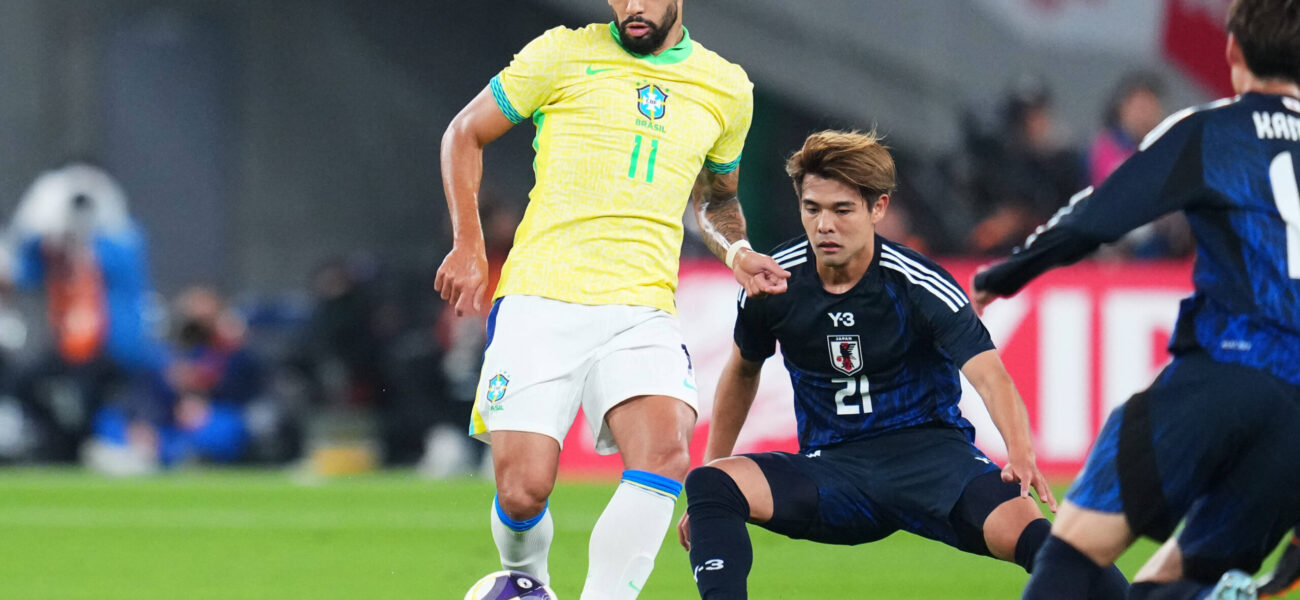
It’s a peculiar thing, this beautiful game, when the fate of a national endeavor, laden with history and fervent expectation, seems to pivot on a single muscle fiber. But it’s true, isn’t it? The buzz surrounding Brazil’s Sunday evening showdown with Norway in the knockout stages isn’t all about strategic genius; it’s heavily weighted on individual fortitude, especially after the tepid 1-0 win against Japan. Casemiro also got an early bath against the Samurai Blue, though the consensus whispers he’ll shake it off. Paquetá, however? That’s a bigger question mark. He walked off at halftime, and in knockout football, that usually spells trouble, not just for the player, but for a nation’s collective psyche.
Because ultimately, these tournaments aren’t just sporting contests; they’re billion-dollar global industries, soft power ballets played out on pitches from Qatar to Curitiba. Carlo Ancelotti, the venerable architect of Brazil’s campaign, isn’t about to suddenly tear up a playbook that got them this far. He’s pragmatic, almost Zen-like in his public pronouncements. “Look, these tournaments, they chew you up and spit you out,” Ancelotti conceded with a shrug to Policy Wire after a training session. “We adapt. We have other brilliant lads waiting in the wings. It’s what you build for.” Still, if Paquetá can’t go, Danilo Santos is the likely stand-in – the ‘obvious adjustment,’ as insiders dryly put it.
But the true weight, the one that makes sponsors sweat and broadcast executives cheer, rests squarely on Vinicius Júnior. He’s not just a winger; he’s the electric current, the artistic flourish that separates Brazil from, well, everyone else. Against Japan, when chances sputtered, it was Gabriel Martinelli who eventually poked home a late winner from the bench. But don’t confuse a cameo for a starring role. Vini Jr. is Brazil’s leading man, a one-man economic engine for the team, whose transfer market value, according to Transfermarkt, easily hovers north of €150 million – a dizzying figure that says more about the global capital flowing into football than any scoreline ever could.
He feels it, you know? The gaze of a world that expects fireworks. “It’s a privilege, isn’t it? To carry that hope?,” Vinicius Jr. offered, a faint smile playing on his lips when pressed on the pressure. “We’re all in this. Just trying to make it count.” And count it does. Across the Indian subcontinent, from the buzzing lanes of Lahore to the coastal sprawl of Karachi, millions will gather, eyes glued to crackling screens. This isn’t just European football’s reach; it’s a cultural osmosis, a uniting thread in regions where geopolitical friction often dominates the headlines. For an hour and a half, the yellow and green become a universal flag, the artistry on display a moment of shared human joy—a spectacle not unlike how sports can be used as geopolitical statecraft.
📄 POLICY WIRE WHITEPAPER PUBLISHED: PAKISTAN'S NATIONAL SECURITY POLICY PRIORITIES
👉 READ BY CLICKING HEREThis match against Norway isn’t just about advancing; it’s about signaling intent, about demonstrating a depth of talent that goes beyond a single star. Norway, let’s be fair, is basically Erling Haaland — and a few plucky chaps who chase his shadows. Limiting their cyborg striker will be job one, but unlocking Norway’s defense? That’s Vinicius Júnior’s realm. His four goals — and one assist this tournament confirm his central role. While Rayan and Matheus Cunha are expected to support him, having failed to truly impress after a flurry of goals earlier, the heavy lifting falls to Vini.
What This Means
The immediate political ramifications of a World Cup quarter-final place might seem remote, but a nation’s sporting performance is irrevocably tied to its international image and domestic morale. Brazil’s dominance in football isn’t just about trophies; it’s about brand value, global influence, and a unique form of soft power. An early exit could ripple through investor confidence, impacting future sports tourism or even broader economic perceptions. A strong run, however, cements Brazil’s status not just as a footballing superpower but as a culturally significant global player, amplifying its voice on various international stages. The stakes extend far beyond the ninety minutes, reflecting the brutal economics of global sport and national pride. Failure isn’t just a loss; it’s a dent in the global narrative a country painstakingly builds.
The predicted lineup for Sunday, to quell some nerves: Alisson in goal; a back four of Danilo, Marquinhos, Gabriel, and Douglas Santos; Bruno Guimarães and Casemiro holding court in midfield, with Danilo Santos ready if Paquetá doesn’t pull through; and then the attack – Rayan, Cunha, and of course, the indispensable Vini Jr. It’s a squad that has navigated turbulence before. And frankly, the World Cup doesn’t reward perfect teams, only resilient ones.