


Kyiv’s Shard-Splattered Morning: Routine Terror Deepens Europe’s Shadow
POLICY WIRE — Kyiv, Ukraine — They woke up again to the chilling chorus of air raid sirens, a soundtrack long since embedded in the collective psyche of Ukraine’s capital. Not with a bang, but...

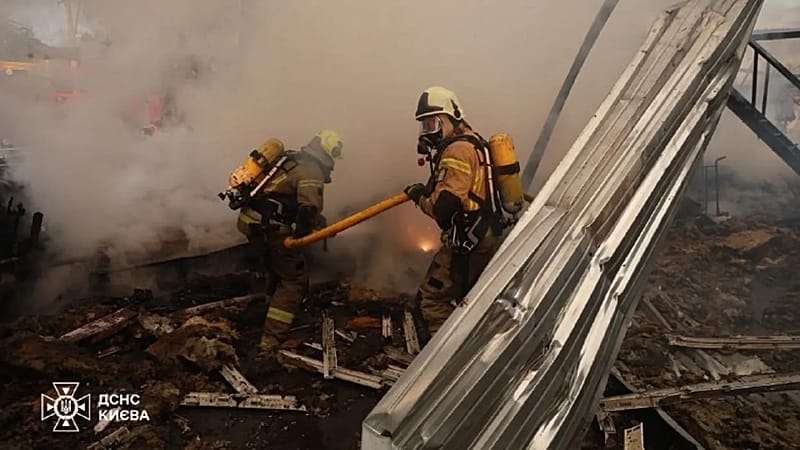
POLICY WIRE — Kyiv, Ukraine — They woke up again to the chilling chorus of air raid sirens, a soundtrack long since embedded in the collective psyche of Ukraine’s capital. Not with a bang, but with a series of concussive thuds, Russian missile debris — and, Kyiv says, possibly active warheads — once more tore into the fabric of a city striving for some semblance of ordinary life. For those on the ground, it wasn’t just a news bulletin; it was another grim start to a day punctuated by shattered glass and adrenaline.
At least eleven individuals reportedly sustained injuries, according to emergency services. Some needed hospital beds, while others nursed cuts — and bruises from falling debris. Schools, residential blocks, and ordinary thoroughfares bore the scars, another casual display of Moscow’s persistent campaign to break Ukrainian resolve through sustained terror. It’s a cruel routine now, a cynical calendar marked by explosions, not holidays. And don’t forget, these aren’t surgical strikes; these are blunt instruments of fear, launched with a seemingly indifferent aim across a vast, defiant country.
Kyiv Mayor Vitali Klitschko, often the face of the city’s grim resilience, minced no words following the assaults. “They can launch their terror, but they cannot erase our spirit,” he declared, his voice a steady rumble that carries weight with a population that’s heard it all before. “Each shard of glass, each ruined wall, only hardens our resolve to defend our freedom.” He isn’t wrong. Because in this grinding conflict, psychological warfare is as real as kinetic. But still, the human cost is mounting. This isn’t just about steel and concrete; it’s about disrupted lives, chronic fear, and the gnawing question of what comes next.
For observers watching from beyond Ukraine’s immediate borders, particularly in regions far removed but acutely impacted, this persistent aggression has tangible, far-reaching effects. “The ripple effect of this war doesn’t stop at Poland’s border; it shakes economies and inflames anxieties from Europe to the markets of the Muslim world,” stated Ambassador Fahmida Khan of Pakistan’s UN mission, speaking off the record at a recent Security Council gathering. “When grain shipments are threatened, or energy markets seize, nations thousands of miles away feel the bite. We cannot afford to view this as a purely regional crisis. Its echoes resonate across developing nations already grappling with instability — and resource scarcity.”
Indeed, global supply chains, often a delicate network, remain tethered to the whims of this conflict. According to the United Nations, more than 3 million tons of Ukrainian agricultural products were shipped through the Black Sea Grain Initiative in its first month alone, highlighting the region’s outsized role in global food security—a role constantly jeopardized by these ongoing attacks. That’s a lot of food for a hungry world. The world needs its breadbasket, — and Russia, apparently, has other ideas.
Ukrainian air defenses, perpetually challenged, managed to intercept most of the incoming projectiles—a success often measured not by prevention but by damage mitigation. It’s a game of inches, often fought silently in the pre-dawn darkness. Yet, even with intercepts, falling wreckage can wreak havoc, as it demonstrably did this time around. The very sophistication of the defense mechanisms serves, in a way, as a grim acknowledgment of the enemy’s unwavering intent. It forces nations like Ukraine to constantly seek more advanced, pricier ways to protect their citizens, drawing resources away from reconstruction and future planning.
📄 POLICY WIRE WHITEPAPER PUBLISHED: PAKISTAN'S NATIONAL SECURITY POLICY PRIORITIES
👉 READ BY CLICKING HEREWhat This Means
This latest salvo into Kyiv serves as a stark reminder of Russia’s persistent strategy: attrition through terror. Moscow isn’t trying to seize Kyiv with these strikes; it’s trying to demoralize, to destabilize, to bleed the Ukrainian economy dry. It’s an ugly war of nerves, and every shattered windowpane in the capital is a message, intended or not, to both Ukrainian citizens and their international backers. The aim is to create enough internal pressure, enough widespread suffering, that Kyiv eventually succumbs to the Kremlin’s demands, or that Western support falters. It hasn’t worked yet. But they keep trying.
The economic implications of such continued instability are significant, stretching beyond Ukraine’s war-torn borders. Europe, still grappling with high energy costs and inflationary pressures, feels the strain of continued conflict, while emerging economies face unpredictable commodity prices—a concern shared from Karachi to Cairo. And it affects political alignments, too, nudging nations to re-evaluate their alliances and vulnerabilities in a rapidly shifting global order. This isn’t just about missiles. It’s about how global power dynamics are tested and reshaped, often with quiet shifts beneath the very loud booms. Because the longer this drags on, the more ingrained these geopolitical re-calibrations become, cementing new fault lines that will define international relations for years. Perhaps nations will recognize that a healthy respect for facts, not just feelings, would serve them well in navigating this chaos, much like avoiding pitfalls in personal decisions can improve outcomes as much as pure determination, as in the research suggesting temptation avoidance outperforms willpower. Both require foresight.