

Beijing Doubles Down: Xi’s Steadfast Vow to Pyongyang Sends Ripples Across Asia
POLICY WIRE — Washington D.C., U.S. — Nobody, it seems, gets to choose their neighbors. And for China, that means an unpredictable, nuclear-armed sibling state to its immediate east, one that...

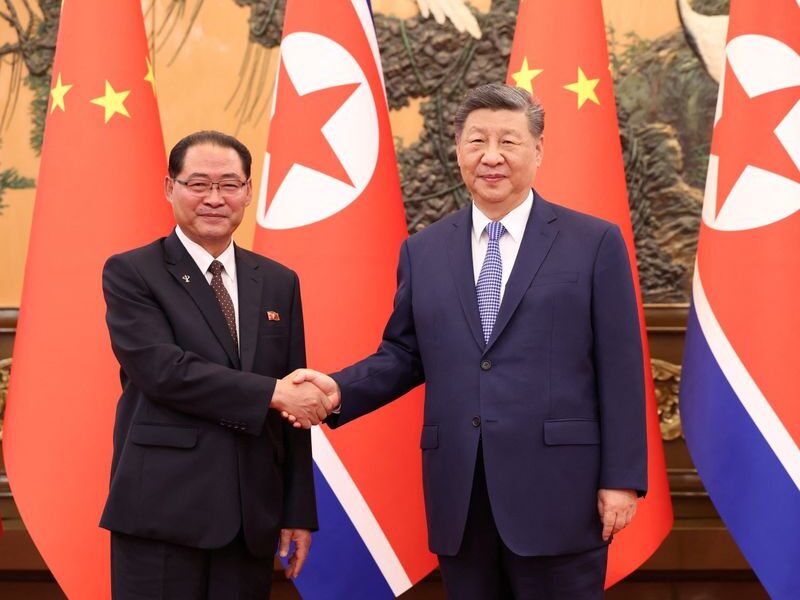
POLICY WIRE — Washington D.C., U.S. — Nobody, it seems, gets to choose their neighbors. And for China, that means an unpredictable, nuclear-armed sibling state to its immediate east, one that frequently—and often inconveniently—demands staunch ideological and economic solidarity. So when President Xi Jinping doubled down on Beijing’s “unbreakable” bond with North Korea this week, according to state-run media, it wasn’t just a boilerplate diplomatic utterance. No, this was a clear signal. A flashing red light for some, a reassuring nod for others. It told everyone Beijing is in it for the long haul, nuclear ambitions or not.
It’s an open secret that North Korea is a colossal strategic headache, but also a crucial buffer state. A thorny friend, sure, but a friend nonetheless. Xi’s message, conveyed through Pyongyang’s Korean Central News Agency (KCNA), didn’t pull any punches about enduring friendship, about weathering the storm together. He wasn’t merely sending pleasantries. He was asserting, rather loudly, China’s sphere of influence—and its tolerance, if not quiet endorsement, of an increasingly volatile regional player.
“Our two nations have always stood as brothers, united in purpose against external interference,” President Xi reportedly declared. “This commitment, forged in history and cemented by shared challenges, won’t falter, regardless of what voices from afar seek to sow discord.” It’s classic Beijing speak, isn’t it? An opaque jab at Washington, perhaps Tokyo or Seoul, cloaked in diplomatic niceties, but leaving absolutely no doubt about the alliance’s enduring nature. He’s saying, plain as day, ‘Don’t even think about it.’
But the sentiment isn’t universally adored. Not by a long shot. Across the Strait of Japan, anxieties are — let’s just say — heightened. Rear Admiral Kim Hyun-jo, a South Korean defense attaché based in Washington, didn’t mince words during an off-the-record briefing that suddenly wasn’t so off-the-record. “When Beijing affirms its unwavering support for Pyongyang, it directly empowers a regime that routinely violates international norms,” he explained, visibly frustrated. “It complicates denuclearization efforts and, frankly, destabilizes the entire peninsula. We’d like to see responsible global citizenship, not tacit approval of dangerous provocations.” His exasperation is hardly surprising. What else can you say when your most powerful neighbor openly embraces your most problematic one?
And let’s not forget the sheer economic weight underpinning this seemingly unwavering bond. China remains Pyongyang’s primary lifeline, supplying food, fuel, and whatever else the regime can’t produce or procure elsewhere. According to figures compiled by the Korea International Trade Association (KITA), bilateral trade between China and North Korea surged by nearly 200% in the first quarter of this year, reaching approximately $314 million. This, despite – or perhaps because of – international sanctions meant to cripple North Korea’s nuclear program. That’s not friendship; that’s strategic dependency, — and Beijing knows it. That cash keeps Pyongyang’s lights on, literally.
Because ultimately, China views North Korea through a strategic lens first, human rights and proliferation concerns a very distant second. An imploded North Korea on its border, a refugee crisis, or a unified Korean peninsula leaning heavily toward the US? Not on Beijing’s watch. They’d rather manage the devil they know. It’s a calculated, cold, hard calculus of regional power, no question.
📄 POLICY WIRE WHITEPAPER PUBLISHED: PAKISTAN'S NATIONAL SECURITY POLICY PRIORITIES
👉 READ BY CLICKING HEREWhat This Means
Xi’s recent pronouncement isn’t just reaffirming old allegiances; it’s a bold statement in an increasingly fractured geopolitical landscape. For Washington and its allies, it’s a sobering reminder that their attempts to isolate Pyongyang via sanctions are constantly undermined by Beijing’s continued support. It shows China’s increasing willingness to challenge the prevailing Western-led global order. This isn’t just about North Korea; it’s about China flexing its muscle as a counterweight to perceived American hegemony, carving out a multipolar world where its allies, no matter how unsavory, get protected.
The implications ripple far beyond the immediate region. Nations in South Asia and the Muslim world—many of whom maintain their own delicate balance of power between the East and West—are watching keenly. For some, China’s defiant stance could resonate, appealing to a narrative of resisting external pressures and asserting national sovereignty, even if the specifics of North Korea’s regime are unpalatable. Consider Islamabad, for instance, which balances its historical ties with China with its complex relationship with the West. The principle of steadfast alliances, defying what Beijing frames as interference, often finds an echo in such capitals. These geopolitical undercurrents shape more than just direct diplomacy. And they tell us an awful lot about who’s truly aligning with whom.
Economically, China’s unwavering support signals a readiness to absorb the costs of sanction evasion, effectively insulating Pyongyang from maximum pressure. It’s a long-term investment in maintaining a strategic buffer. This keeps North Korea as a bargaining chip, a perpetual lever in Beijing’s wider negotiations with the United States over trade, Taiwan, and everything else under the sun. Politically, it isolates Seoul further, forcing it to confront the reality that its primary geopolitical challenge is deeply intertwined with a rising superpower’s strategic objectives. Don’t expect any seismic shifts in policy soon. We’re talking about deep-seated strategic imperatives here, ones that predate our modern squabbles, and they aren’t changing with the latest headline. This situation, frankly, is a knot, not a simple string.
For more insights into global power dynamics and soft power struggles, consider reading our analysis on soft power showdowns and global audiences.