


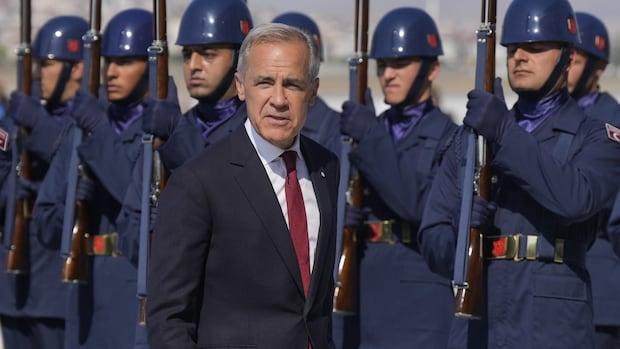
Canada Faces Defence Spending Transparency Challenge
POLICY WIRE — Canada's government is facing increasing pressure to demonstrate how it plans to finance its commitments to NATO's defence spending targets, with ...

POLICY WIRE — Canada’s government is facing increasing pressure to demonstrate how it plans to finance its commitments to NATO’s defence spending targets, with fiscal transparency emerging as a key challenge, according to analysis of recent developments. This comes as the United Kingdom recently experienced significant political upheaval related to its own defence spending plans.
NATO has set a target for member nations to invest five percent of their gross domestic product in defence by 2035. This target is divided into 3.5 percent for direct military investment and 1.5 percent for defence infrastructure, as outlined in the original content.
The United Kingdom recently encountered political turmoil over its military spending, which led to the resignation of Defence Secretary John Healey last month. This was followed by a series of departures from Prime Minister Keir Starmer’s cabinet, ultimately resulting in Starmer’s own resignation, according to the original content. The crisis was reportedly triggered by the presentation of the U.K. defence investment plan, which was intended to precede the NATO summit in Ankara.
Matthew Savill, director of military sciences at the U.K.-based Royal United Services Institute and a former British civil servant, stated that the U.K. needed to present “something credible on behalf of the U.K. so as to avoid basically getting beaten up at that summit,” as reported in the original content. Criticism of the U.K. plan primarily focused on the military investment portion, where supporting figures were described as either not adding up or being non-existent.
Savill estimated that the U.K. might reach three percent sometime in the next Parliament. He also noted that approximately £15 billion was projected to be added to the U.K. defence budget over the next four years, which would bring the total to 2.7% by the end of the decade. Savill expressed doubt about the plan’s credibility, stating, I don’t think it passes the credibility test, due to a required “fairly significant spike after 2030.” To meet the NATO target by 2035, Savill estimated the U.K. would need an additional £25 billion annually.
In Canada, the Carney government is not currently facing a similar credibility crisis, largely because it has maintained a tight control over specific financial figures and estimates, according to the original content. Last year’s federal budget proposed an $81.8-billion investment in the defence department, with $17.9 billion allocated to core military capabilities. The remaining funds were designated for areas such as pay increases, northern base construction, and cyberware infrastructure.
The government has pledged to inject $540 billion into defence over the next decade. However, the original content notes that this is the point where credibility may be tested. The federal budget last fall didn’t include a five-year defence spending projection, and the Department of National Defence hasn’t released supporting year-by-year information.
📄 POLICY WIRE WHITEPAPER PUBLISHED: PAKISTAN'S NATIONAL SECURITY POLICY PRIORITIES
👉 READ BY CLICKING HERECanada has committed to initiating negotiations with contractors for new submarines and early warning surveillance planes. Prime Minister Carney made a commitment in Ankara to enhance transparency regarding defence spending in the upcoming fall budget. Carney stated, We will lay out in the budget an update with the decisions we’re taking, where the fiscal track is, where the defence spending is, how we’re spending the one and a half percent on defence related expenditures, resilience expenditures. He added, “That’s the right time to do it.”
Carney also clarified that the commitment is to reach five percent by 2035, emphasizing that it’s nine years from now. He noted that NATO plans to review the five percent spending target in 2029, taking into account the “evolving strategic global threat environment.” In a speech announcing the submarine acquisition, the prime minister predicted Canada would achieve four percent overall (2.5 percent direct military spend and 1.5 percent defence infrastructure) by the time of the 2029 review. The final one percent, dedicated entirely to direct military spending, is projected to occur after 2030.
Last spring, the C.D. Howe Institute, a leading economic think-tank, warned that the federal government needs to develop a “credible fiscal plan” to manage the impact of significantly higher defence spending across government. The Institute suggested a modest increase in the Goods and Services Tax (GST) and restraining the growth of non-defence spending and provincial transfers as potential solutions. The government has quietly ruled out tax increases, according to the original content.
Defence Minister David McGuinty suggested that a growing economy would help cover the costs. McGuinty stated, We’re growing our economy, we’re making major investments in the defense sector to generate more wealth, create more jobs, and provide the resources we need to accomplish this goal. He added, “And we’re well on our way. We have done things in the last 12 months which I think the Canadian people are very supportive of.” The original content concludes that the next political debate in Canada may center on the transparency of defence spending, rather than the necessity of increased spending, given a broad consensus for the latter.