


Gravity’s Grudge Match: Japan’s Reusable Rocket Ignites a Shifting Space Paradigm
POLICY WIRE — Tokyo, Japan — In a world obsessed with splashy announcements and boisterous boasts, Japan’s latest foray into the cosmos felt, well, distinctly Japanese. No Muskian theatrics. No...

POLICY WIRE — Tokyo, Japan — In a world obsessed with splashy announcements and boisterous boasts, Japan’s latest foray into the cosmos felt, well, distinctly Japanese. No Muskian theatrics. No grandstanding proclamations. Just a methodical, almost understated, test flight of an experimental reusable rocket. Yet, beneath that veneer of calm scientific pursuit lies a fierce ambition—a quiet yet relentless drive to redraw the economic and strategic map of humanity’s orbital future. This isn’t merely about lofting payloads; it’s about control, cost, and the quiet assertiveness of a nation long underestimated in the increasingly competitive high frontier.
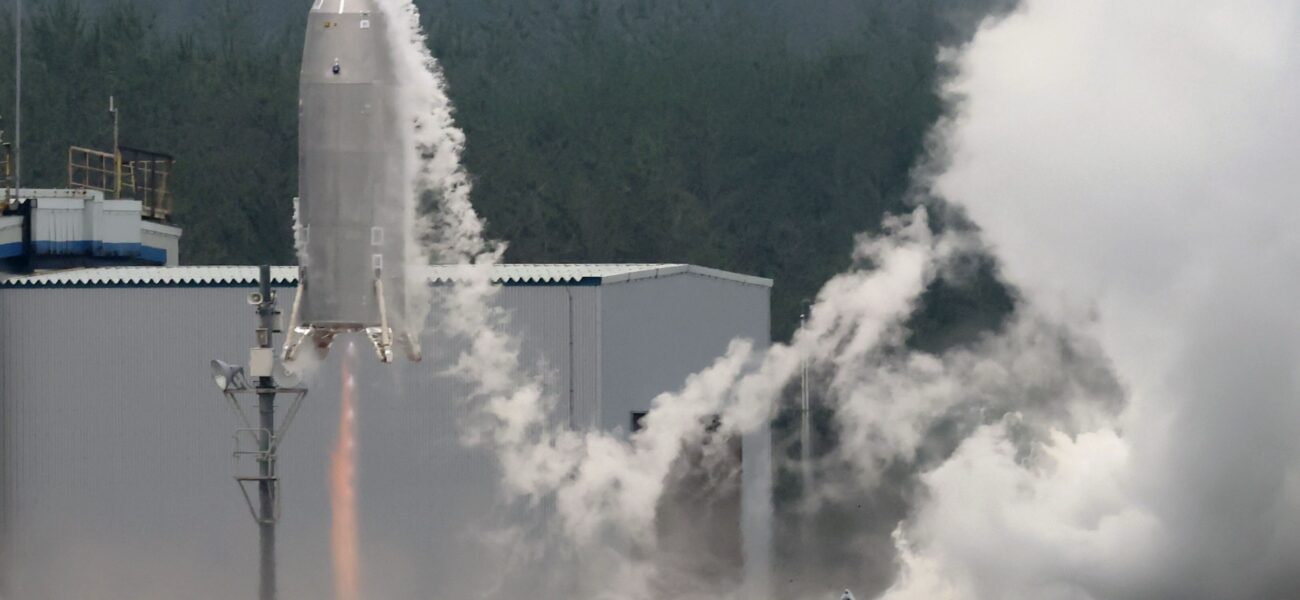
While the world often fixates on the rockstar billionaires of private space or the monolithic state-backed programs, Japan’s Aerospace Exploration Agency (JAXA) has been patiently, meticulously, carving its own path. The recent atmospheric test of their vertical take-off and landing (VTOL) demonstrator, simulating re-entry and touchdown procedures, didn’t make front-page news globally. But it should have. It marks a significant stride in reducing the prohibitively steep price tag of space access. And frankly, that’s what changes everything.
“We aren’t just sending hardware skyward; we’re meticulously building the infrastructure for a more accessible, sustainable future in space,” stated Kazuo Ishikawa, JAXA’s Director of Advanced Propulsion Systems, in a recent briefing. “The efficiencies unlocked by reusability will utterly transform the equation, making once-unthinkable missions perfectly mundane. We’re in it for the long haul—literally.” It’s a pragmatic approach, less about grand gestures, more about incremental, perfected steps.
But make no mistake; the stakes are astronomically high. The global space economy, estimated at around $546 billion in 2023, is projected to surge past $1 trillion by 2030, according to a Space Foundation report. That’s a lot of yen—or dollars or yuan—up for grabs. Cheaper, more frequent launches mean more satellites, more data, more exploration, and, inevitably, more geopolitical jostling. Every nation, big or small, sees space as the next great frontier for economic growth, national prestige, — and security. Because if you can’t get there affordably — and reliably, you’re just not playing.
“Don’t mistake Japan’s methodical pace for a lack of ambition,” cautioned Dr. Anjali Sharma, a geopolitical space strategist at the Atlantic Council, commenting on Tokyo’s trajectory. “While others chase headlines, Tokyo quietly lays the groundwork for strategic independence in orbit. This isn’t just commercial; it’s a profound statement of national capability, one that frankly, few outside the usual suspects are capable of making.” Her words resonate; Japan doesn’t just compete, it innovates to change the rules of the game.
What This Means
📄 POLICY WIRE WHITEPAPER PUBLISHED: PAKISTAN'S NATIONAL SECURITY POLICY PRIORITIES
👉 READ BY CLICKING HEREThe success of Japan’s reusable rocket initiatives doesn’t just promise cheaper satellite launches; it scrambles the established pecking order in space. For countries like Pakistan, and indeed the broader Muslim world and South Asia, this represents both an opportunity and a challenge. Increased competition among launch providers could dramatically lower the cost of deploying their own remote sensing, communication, or even defense satellites—systems that are increasingly seen as sovereign necessities. Imagine developing nations, with finite budgets, suddenly afforded easier access to Earth observation data crucial for agricultural planning, disaster management, or climate monitoring. It’s a game-changer for infrastructure development — and regional security. They could become key beneficiaries of Japan’s silent ascent, even as regional rivals like India also press forward with their own ambitious space programs.
Economically, a fully functional, cost-efficient Japanese reusable launch system introduces another major player into a market currently dominated by a few behemoths. This can spur further innovation, drive prices down, and foster entirely new industries that rely on rapid, affordable access to orbit. Politically, it grants Japan greater strategic autonomy, reducing its reliance on foreign launch capabilities for sensitive payloads. It enhances its standing as a major scientific and technological power, quietly shifting the balance of influence in an arena critical to future global dominance. For everyone involved, from defense ministries to agricultural agencies, this subtle engineering feat is sending shockwaves—silent ones, yes—but powerful nonetheless, right through the upper echelons of global policy discussions.
It’s not just a rocket. It’s an instrument of profound economic and geopolitical leverage, meticulously crafted, and now, finally, ready to show its true capabilities.