


Silent Exodus: Salah’s Next Stop Could Reshape Football’s Global Hegemony
POLICY WIRE — London, UK — For a phenomenon once anchored firmly to Europe’s most revered arenas, the global football market is getting, well, unwieldy. The anticipated departure of Mohamed Salah...

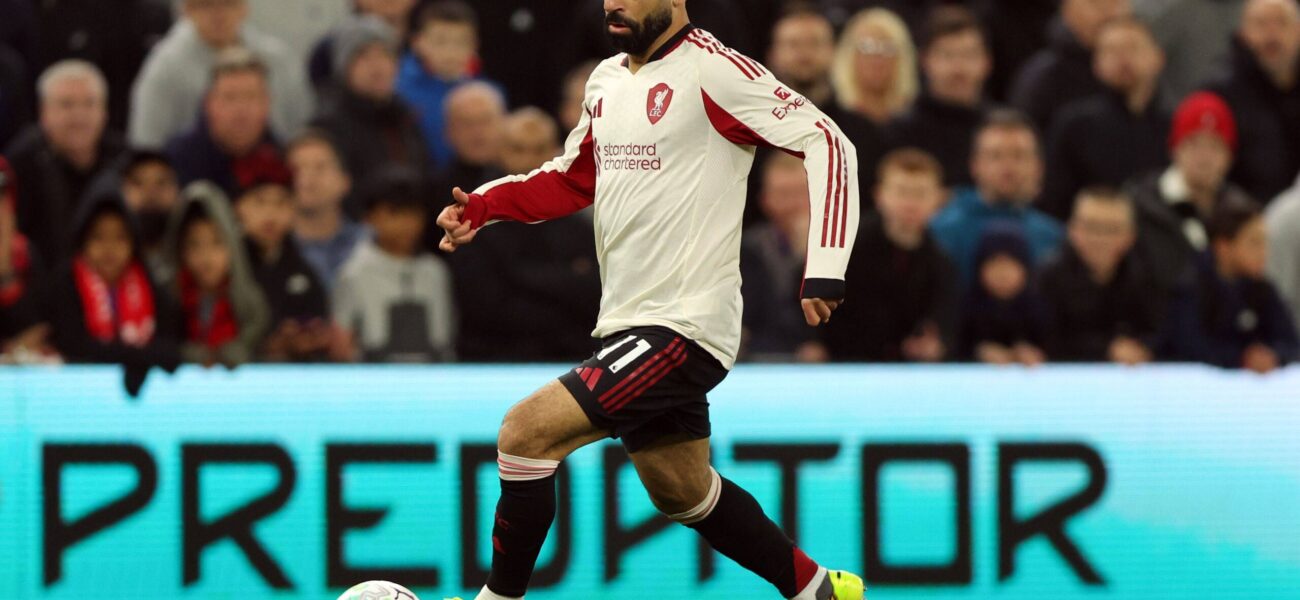
POLICY WIRE — London, UK — For a phenomenon once anchored firmly to Europe’s most revered arenas, the global football market is getting, well, unwieldy. The anticipated departure of Mohamed Salah from Liverpool isn’t just a superstar striker seeking new pastures—it’s a bellwether for where the game’s power, influence, and sheer financial heft are pooling next. Because this isn’t just about a player; it’s about sovereign wealth, burgeoning leagues, and a shifting global fan allegiance. Liverpool’s management knew this day was coming, of course, like knowing winter always follows autumn, but that doesn’t make the frostbite any less stinging.
Salah, arguably one of the most recognizable athletes on the planet and a revered icon across the Muslim world, has reportedly settled his future post-Anfield. His illustrious, nine-year tenure at Liverpool effectively concluded in March. Now, the battle for his signature rages, not solely among traditional European giants, but from the cash-rich Persian Gulf and an increasingly ambitious North American landscape. The soft power showdown is palpable, frankly. It’s football’s version of the scramble for Africa, but with much higher salaries — and more glittering sponsorships.
According to The Athletic, Sporting Kansas City has muscled their way to the front of the Major League Soccer queue. But don’t discount the Saudi Pro League; they’ve been hovering for years, a gilded shadow, and their interest hasn’t dwindled. They’ve proven they can lure top talent—look at Ronaldo, Neymar, Benzema. And let’s be real, a player of Salah’s immense stature is exactly the kind of crown jewel they covet. It’s a grand project, you see. An audacious, national branding exercise that puts mere trophies in context.
But there’s a hitch, always a hitch: Salah himself. His stated preference? To stay put in Europe, competing at the sport’s zenith. That means other European outfits, even a surprise return to Serie A, aren’t completely out of the frame. Because for all the talk of fresh challenges, some players just don’t fancy leaving the European stage.
“Mohamed Salah joining our league wouldn’t just be a marquee signing; it’d be a declaration of intent for the American game. We’re not just buying talent; we’re buying global narrative, building the spectacle,” commented Mark Abbott, former President of MLS, articulating the league’s aspirations with practiced ease. “It’s smart, you know? It brings eyes.” His comments highlight MLS’s calculated strategy to leverage global stars to expand its footprint.
The Sporting Kansas City angle, in particular, carries a curious wrinkle: new majority owner Peter Mallouk, whose Egyptian heritage reportedly fuels a personal interest. It certainly makes their confidence, bordering on brashness, more comprehensible. Still, for now, the smart money probably leans toward the Saudi League or perhaps a shock move back to a European powerhouse that hasn’t yet shown its hand. The sheer economic muscle is undeniable. According to FIFA’s Global Transfer Market Report for 2023, Saudi Arabian clubs collectively spent over $900 million on international transfers that year, placing them second only to England in global outlay.
📄 POLICY WIRE WHITEPAPER PUBLISHED: PAKISTAN'S NATIONAL SECURITY POLICY PRIORITIES
👉 READ BY CLICKING HEREFrom Liverpool’s vantage point, a mixture of profound melancholy — and a weary detachment has settled. The decision is made, the emotional goodbyes, for all intents — and purposes, have already been whispered. What unfolds next will be observed with the intensity reserved for a geological shift. Salah isn’t just a great player; he was, for an era, Liverpool’s pulsating heart. He redefined their benchmarks, reset their expectations, and routinely pulled off the impossible. Even in what many called a ‘down year’ by his stratospheric standards, delivering seven goals and seven assists in 27 Premier League appearances, the aura remained. He’s earned the right to choose his own swansong, whether it’s for glory, legacy, or simply a staggering paycheque.
“The Kingdom’s vision for sport transcends the pitch,” offered Prince Abdulaziz bin Turki Al Faisal, Saudi Arabia’s Minister of Sport, reflecting on the nation’s ambitious trajectory. “Bringing players of Salah’s caliber isn’t simply about club performance; it’s about inspiring a generation, forging connections, and showcasing a modern Saudi Arabia to the world. And we have the infrastructure to back it, for the fans at home and those watching from across the globe—from Karachi to Cairo. That connection is powerful.” His words underscore the deeply strategic nature of these moves, particularly in cultivating influence within the wider Muslim community, where Salah is an almost universally admired figure.
What This Means
Mohamed Salah’s impending transfer isn’t just fodder for sports pages; it’s a seismic event with profound political and economic repercussions. His destination will provide critical insight into the global battle for soft power. A move to the Saudi Pro League, for instance, wouldn’t just elevate that league’s profile; it would dramatically bolster Saudi Arabia’s sports washing efforts and their quest for greater international legitimacy, especially among the 1.8 billion-strong Muslim population. It speaks volumes about the shifting economic plates, too—where petrodollars increasingly dictate terms to legacy European institutions. Because let’s face it, Europe might have the history, but the Gulf has an almost bottomless pit of cash. Conversely, a sensational switch to MLS, even to a less heralded club like Sporting Kansas City, would represent a significant symbolic victory for North American football ahead of the 2026 World Cup. It demonstrates MLS’s serious ambition to rival traditional powers, proving it’s more than just a retirement league. The outcome, then, isn’t merely about a new jersey; it’s about charting the very course of global football’s future—its finances, its fan base, and its geopolitical implications. It’s an escalating sporting proxy war, and Salah is its unwitting, incredibly talented, battlefield.