


Makelele Decodes Madrid’s Midfield Paradox Amid Mourinho Echoes
PHILADELPHIA, PENNSYLVANIA — Policy Wire — Sometimes, the most brutal truths in professional sport aren’t shouted from the sidelines or screamed by a pundit, but whispered by a legend—a practitioner...

PHILADELPHIA, PENNSYLVANIA — Policy Wire — Sometimes, the most brutal truths in professional sport aren’t shouted from the sidelines or screamed by a pundit, but whispered by a legend—a practitioner who once stood precisely where the current generation now falters or thrives. Claude Makelele, that relentless engine in Real Madrid’s first Galáctico era, recently emerged from the noise, offering his candid assessments of the club he once patrolled, and in doing so, he laid bare the delicate economics and tactical demands of modern football’s high stakes game.
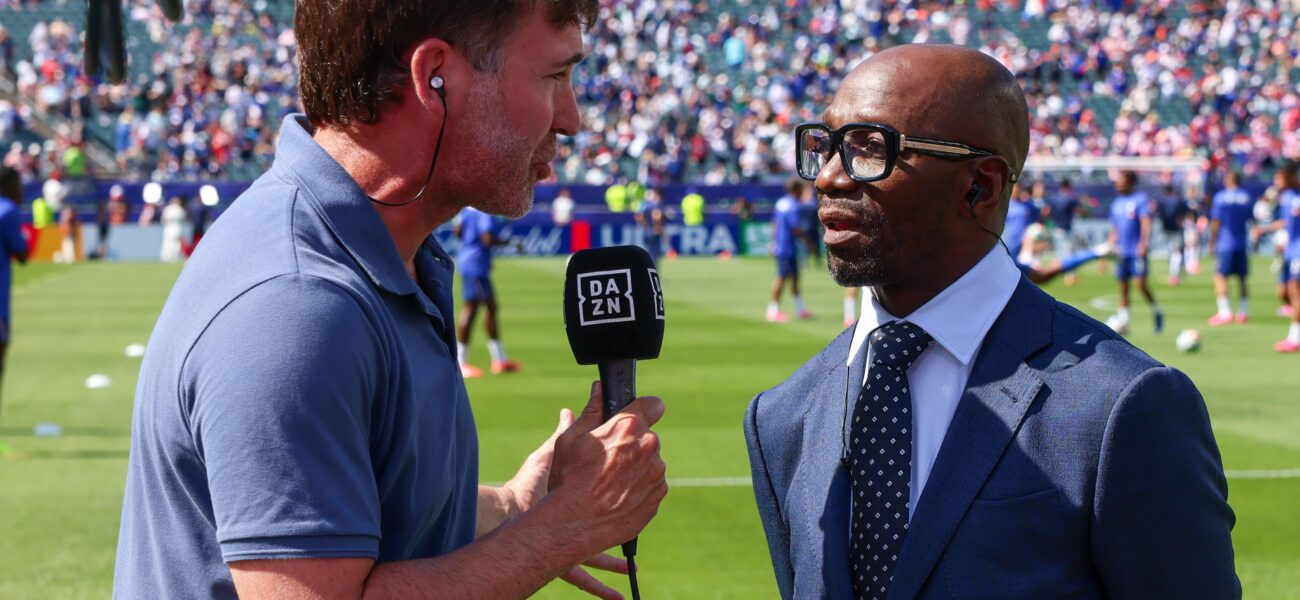
It wasn’t a diatribe; Makelele’s insights, gleaned from a pre-game interview at a 2026 World Cup qualifier in Philadelphia (July 4, 2026, to be exact—a telling snapshot of the sport’s ceaseless global machinery), carried the weight of experience. He wasn’t playing populist; he was simply assessing the battlefield. The former French international didn’t kick off with the obvious big names or the prevailing narratives, though they certainly came into focus. Instead, he started with a workhorse, midfielder Aurélien Tchouaméni, elevating him to a status few outside the manager’s office might’ve publicly acknowledged. Makelele wasn’t shy about it, stating with conviction, Tchouameni was the only consistent player from beginning to end. [QUOTE_PLACEHOLDER]
It’s a powerful endorsement, suggesting that amid the glitz and glamour—and Real Madrid is a veritable enterprise of both—the steady hand still holds the true value. And consistency, in a club generating monumental revenues—like Real Madrid’s reported €831.4 million for the 2022/23 season, per Deloitte’s Football Money League—is a priceless commodity. Because, at that level, the margin for error shrinks to near zero. A point, one might observe, equally applicable to any major global entity vying for dominance.
But the true complexity of Real Madrid, and indeed any superpower club, comes when grappling with the superstar dilemma. Kylian Mbappé, football’s most debated megastar, predictably featured in Makelele’s dissection. And here, the analysis pivoted, becoming less about individual skill and more about collective utility, an often-ignored facet in a sport obsessed with personal brand. Makelele wasn’t buying the facile criticisms leveled against the French forward. He argued, I don’t agree (with the Mbappe criticism). A lot of people are criticizing Mbappé. He’s for the team, but he’s a striker. A striker always wants to score. This isn’t a defense of ego, it’s a matter of intrinsic role, a functional truth about how goal-scorers are wired. It implies that sometimes, observers miss the forest for the individual trees, neglecting the fundamental job description.
The veteran midfielder then went right for the jugular, identifying a significant strategic hole in the squad. Real Madrid, he contended, suffers from a palpable absence in the central third of the pitch. He elaborated, At Real Madrid, there isn’t that type of midfielder who carries the ball — and breaks lines. They need a player like that, who can deliver quick passes to the attackers, to himself, to Vinicius Junior, and to the players up front. This isn’t a small ask; it’s a call for a specialist, a kind of player whose particular gait can alter the rhythm of an entire match, threading attacks like a master weaver. Makelele, in his day, perfected the art of the defensive screen; now he sees a creative gap, an inverted problem that still speaks to tactical balance.
📄 POLICY WIRE WHITEPAPER PUBLISHED: PAKISTAN'S NATIONAL SECURITY POLICY PRIORITIES
👉 READ BY CLICKING HEREThis missing link has consequences, particularly for high-value assets like Mbappé. Makelele pointed out, Mbappe often comes to collect the ball in midfield, — and who’s going to be up front? When he’s up front, he’s scoring. It’s a plain, unvarnished truth, laying bare the organizational quandary. A Ferrari’s still stuck if there’s no clear road ahead for it to truly accelerate. This mirrors debates in other major sports leagues—the balance between star power and system—and speaks volumes about how elite performance demands both specialized roles and integrated support.
Makelele also touched on the whispers surrounding José Mourinho’s potential return. Mourinho isn’t stupid, he’s a good coach, one of the best coaches. He knows he’s going to need a strong team to win La Liga. It’s a pragmatic nod, a dose of reality reminding everyone that even managerial genius has its limits if the tools aren’t sufficient. The romance of a returning manager often gets overshadowed by the brute force of transfer market realities and squad construction. It’s not about magic, it’s about metallurgy.
What This Means
Makelele’s remarks, deceptively simple, pull back the curtain on the hyper-capitalized world of elite sports. Real Madrid, like any major global enterprise, isn’t just selling sport; it’s selling narrative, identity, and the relentless pursuit of supremacy. When a club legend speaks of a specific tactical deficiency, it isn’t merely football commentary; it’s an indictment of allocation and foresight, particularly when annual budgets rival many national economies. The identification of a ‘missing’ midfielder highlights an economic opportunity cost — if the wrong players are bought, or critical gaps left unplugged, the return on colossal investments falters. It suggests that even immense spending doesn’t guarantee strategic cohesion; you’ve still got to buy the right piece of the puzzle, and often, it’s not the flashiest.
The discussion around Mbappé’s perceived struggles and his tactical positioning isn’t just about athletic performance; it’s about the management of a multi-million-euro asset, where maximizing efficiency becomes paramount. Pulling him deep reduces his brand value as a finisher and impacts team performance, an unacceptable outcome in an organization that monetizes every goal, every victory. The universal appeal of a club like Real Madrid, particularly across diverse markets like those in the Muslim world—where players of similar backgrounds or global celebrity often become cultural touchstones and unofficial ambassadors—means that on-field strategy has profound, far-reaching implications for global soft power and market penetration. Their success isn’t just trophies; it’s currency.