


Tehran’s Regional Chess Game: Is Its Favorite Piece Disappearing?
POLICY WIRE — Washington D.C., United States — It’s often the quiet, almost imperceptible shifts in power that redefine the rules of the geopolitical game. Forget the chest-thumping declarations —...

POLICY WIRE — Washington D.C., United States — It’s often the quiet, almost imperceptible shifts in power that redefine the rules of the geopolitical game. Forget the chest-thumping declarations — and flashy new armaments for a second. The real story, they say, lies in the slow, grinding erosion of strategic advantage. For decades, Iran has masterfully deployed its regional networks, cultivating a web of proxy forces stretching from Lebanon to Yemen. This wasn’t just about extending influence; it was Tehran’s cunning counterweight to American might—a way to punch above its weight, you might say, without ever firing a direct shot at Uncle Sam.
But the whispers now are getting louder. This meticulously built edifice, many observers contend, might just be starting to crumble at the edges. Not with a bang, but with a series of disconcerting, understated tremors. We’re talking about the effectiveness, the morale, and indeed, the sheer necessity of these groups in a rapidly transforming Middle East. And if the experts are right, the Islamic Republic’s biggest stick against US dominance, its preferred method of asymmetric engagement, might just be losing its bite. That’s a game-changer, plain and simple. [QUOTE_PLACEHOLDER]
See, for years, the narrative was fixed: Iran used these groups as a cheap, deniable form of deterrence. They’ve allowed Tehran to needle adversaries, disrupt shipping lanes, and even indirectly challenge Israeli security, all while maintaining plausible — though often paper-thin — deniability. Think about the Gaza strip or parts of Lebanon—these places became extensions of Tehran’s foreign policy toolkit. It wasn’t always pretty. And it certainly wasn’t cheap in terms of human lives. But it worked, mostly, creating headaches for Western powers — and regional rivals alike.
Now, however, things aren’t quite so clear. The region’s power dynamics are twisting in unexpected ways. Old animosities are softening, new alliances are being forged, and countries are prioritizing stability, or at least economic breathing room, over perpetual conflict. Look at some of the recent Saudi-Iranian diplomatic efforts, for example. These don’t extinguish rivalry, but they certainly introduce complexities to the idea of an unyielding proxy war. A certain fatigue with endless conflict is setting in, even in places long accustomed to it.
Consider the economic pressure, for one. Years of crippling sanctions haven’t just targeted Iran’s nuclear program; they’ve systematically choked off its financial arteries. Tehran’s Gross Domestic Product (GDP) contracted by an estimated 5 percent in 2022, according to the World Bank. That’s real money, folks. Money that often flowed, directly or indirectly, to those proxy networks. When the spigot tightens back home, you better believe the operational capabilities down the line take a hit. It’s simple math, really. You can’t run an endless network of well-supplied, highly motivated forces on dwindling resources.
Because the cost of maintaining this extensive architecture is astronomical. It drains resources that could otherwise be used for domestic development—a point of growing contention among Iran’s own populace. You don’t need a PhD in economics to know that prolonged economic hardship can breed internal discontent. And when the home front gets shaky, external adventures become harder to sustain. It’s just how it works.
And then there’s the rising sentiment in some parts of the Muslim world—yes, even in corners where Iranian support was once seen as a defiant stance against Western hegemony—that Iran’s meddling often complicates rather than resolves regional issues. Take Pakistan, a Muslim-majority nation grappling with its own internal instabilities — and external pressures. While historically distinct from Iran’s immediate proxy network in the Levant, shifts in Iranian influence ripple through the wider Islamic community. If Iran’s model of power projection is seen as faltering or counterproductive, it subtly alters the calculations of nations like Pakistan, potentially opening new pathways for their own strategic autonomy, or reorienting them towards other regional powers or global alliances. The prestige associated with Iran’s resistance narrative isn’t what it used to be. For some, it’s becoming a liability.
📄 POLICY WIRE WHITEPAPER PUBLISHED: PAKISTAN'S NATIONAL SECURITY POLICY PRIORITIES
👉 READ BY CLICKING HEREThis isn’t to say Iran is suddenly impotent. Far from it. Its Revolutionary Guard Corps (IRGC) remains formidable, — and its ideological commitment isn’t vanishing overnight. But the efficiency and efficacy of its long-preferred tool of statecraft—that vast network of non-state actors—seems to be entering a period of recalibration, forced by a constellation of economic pressures, shifting regional alliances, and a populace weary of perpetual sacrifice. You’ve gotta wonder, how much longer can they keep it up?
What This Means
The potential weakening of Iran’s proxy network has profound political and economic implications, reverberating well beyond the immediate Middle East. Politically, for Washington, it might signal an opportunity to recalibrate its strategy in the Persian Gulf. A less robust Iranian proxy capability could, in theory, reduce the immediacy of some regional threats, perhaps opening avenues for more conventional diplomatic engagements, or at least altering the calculus of deterrence. It doesn’t mean the US can pack up and go home; new power vacuums and emergent non-state actors could always complicate matters further. But it certainly suggests a shift in Iran’s bargaining chips.
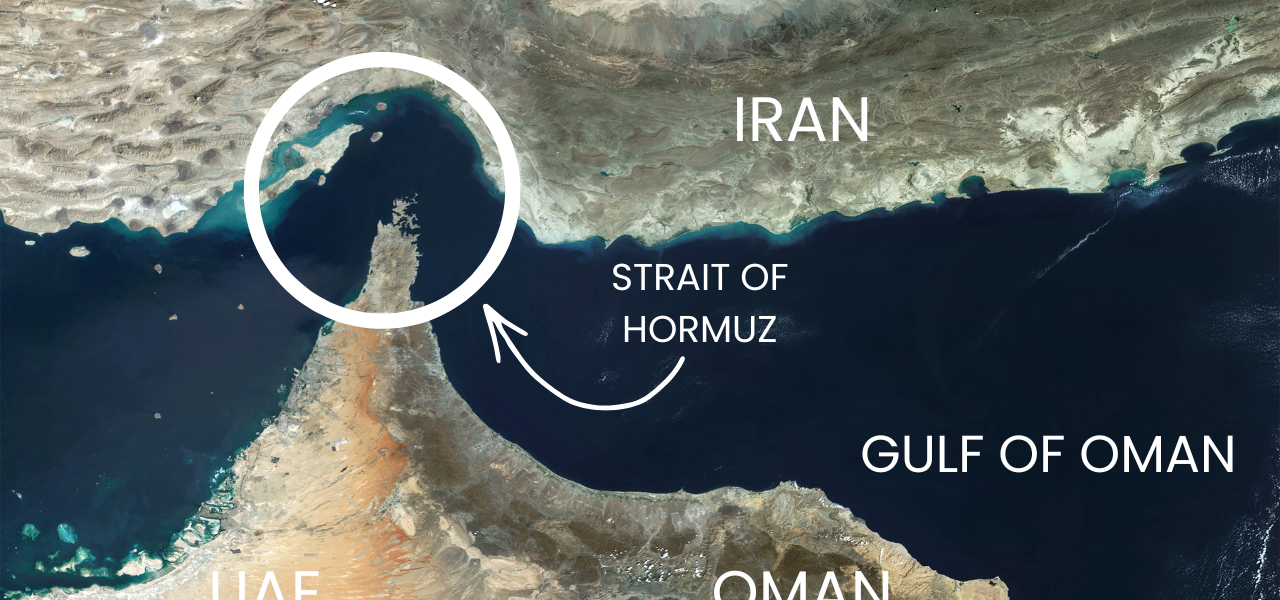
Economically, less effective proxies could translate to reduced risks in key shipping lanes—like the Strait of Hormuz—potentially stabilizing oil prices and bolstering investor confidence in energy markets. For countries in South Asia, including Pakistan, this evolution might present a strategic opening to reassess regional security architectures and align with burgeoning economic opportunities, rather than being caught in perpetual geopolitical crossfire. A quieter Persian Gulf might allow greater focus on internal development and trade, redirecting attention from proxy warfare to continental economic integration.
It also means a shake-up for regional players. Saudi Arabia and other Gulf states might see this as validation of their assertive counter-Iran policies, or it could inspire them to pursue further de-escalation, hoping to permanently sideline proxy conflicts. However, there’s also the risk that a wounded Iran might lash out in unexpected ways, or accelerate its pursuit of other forms of deterrence. A declining external influence might also intensify internal pressures within Iran, leading to greater governmental crackdowns or, conversely, sparking renewed movements for reform. The endgame here isn’t certain. And history teaches us that weakened powers can often be the most unpredictable ones.