


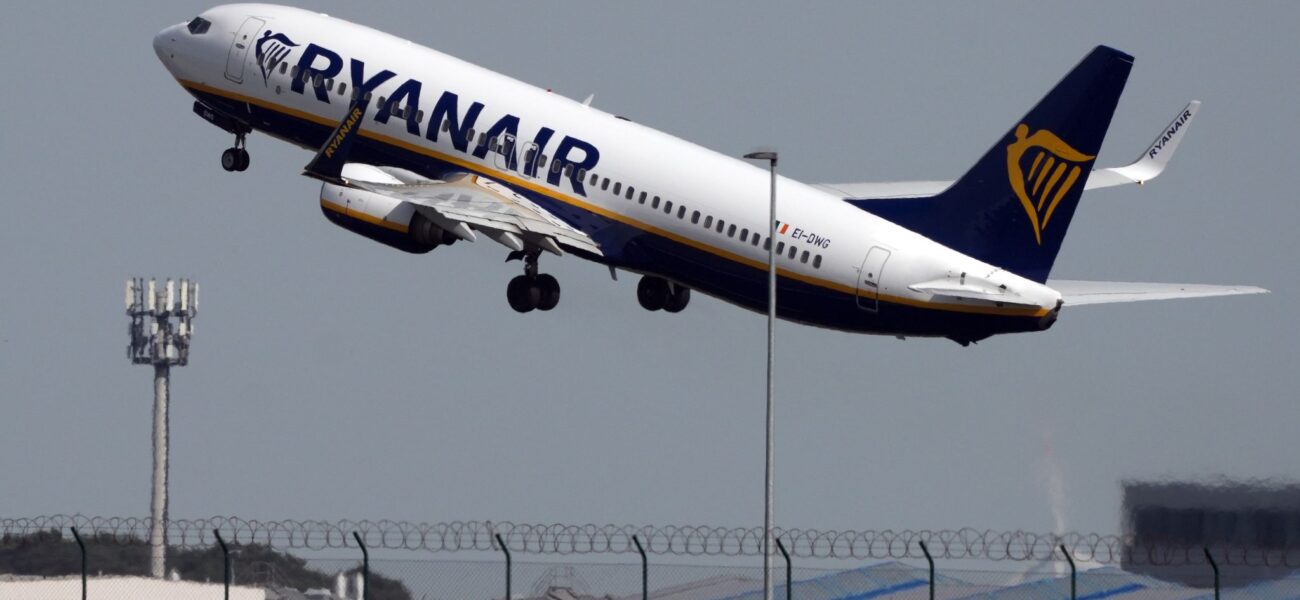
Turbulence of Trust: Greek Ryanair Incident Unveils Deeper Jitters in Discount Skies
POLICY WIRE — Athens, Greece — There’s a certain grim fatalism that settles in with budget travel, isn’t there? You trade legroom — and pleasantries for a few extra Euros in your pocket. But...

POLICY WIRE — Athens, Greece — There’s a certain grim fatalism that settles in with budget travel, isn’t there? You trade legroom — and pleasantries for a few extra Euros in your pocket. But few anticipate trading actual structural integrity. That unspoken pact between passenger and low-cost carrier, that silent assurance that at least the plane won’t, you know, fall apart mid-flight, got a rather stark reminder recently, courtesy of a Ryanair jet navigating Greek skies. It wasn’t the turbulence you felt in your stomach that day, but the one you felt in your faith in cheap airfare.
Reports filtered in last week, not of a dramatic mid-air engine failure or a terror threat, but of something altogether more unsettling in its mundanity: a passenger on a Greek Ryanair service discovered a crack in their window. Not just a minor fissure you’d shrug off as cosmetic, but one significant enough to create noticeable anxiety among fellow travelers. Before the flight could truly climb out of its domestic doldrums, the cabin crew and—rather bizarrely—fellow passengers found themselves having to keep the man’s upper body from potentially pushing further through the compromised pane. He’d become an unwitting, reluctant structural component.
The aircraft, destination undisclosed but likely one of Greece’s sun-drenched islands, was diverted. Not to its original destination, obviously, but back to Athens, a rather circuitous journey just to confirm a window was, indeed, broken. Emergency personnel greeted the returning jet with the customary gravity reserved for airborne hiccups. But what does it say about the state of affairs when such a fundamental failure is averted not by engineering redundancy, but by the physical intervention of a stranger holding another passenger in place?
Because, really, when you peel back the layers, it’s never just about a broken window. It’s about perception, about confidence in systems we rarely understand but inherently trust. We hop into these metal tubes, hundreds of us, rocketing through the stratosphere at hundreds of miles per hour, putting our lives in the hands of algorithms, engineers, and ground crews we’ll never meet. When a window, the literal boundary between comfortable cabin — and deadly vacuum, falters, that trust gets shaken. Badly. According to a 2022 survey by the International Air Transport Association (IATA), passenger confidence in airline safety remains remarkably high, with 88% expressing trust in airlines. But even one visible defect like this gnaws at that thin veneer of public belief.
Ryanair, with its notoriously no-frills reputation, found itself yet again in the uncomfortable spotlight. And, frankly, they don’t exactly revel in transparency. A representative, who preferred not to be named directly given the “ongoing internal review process,” released a carefully worded statement. “Our commitment to passenger safety is unyielding,” the official purportedly stated, sounding very much like someone reading from an approved crisis communications playbook. “We operate under stringent European safety regulations and incidents, however minor, are exhaustively investigated to maintain the highest operational standards. All passengers were re-accommodated on alternative flights with minimal disruption.” Minimal disruption, perhaps, unless you were the chap literally wedged into a deteriorating fuselage, right?
But aviation expert Dr. Farhan Saeed, speaking from Islamabad, Pakistan, offered a more candid assessment. “Such an event, while contained, highlights the increasing strains on an industry trying to maximize efficiency while managing aging fleets and escalating demand,” Saeed explained. He went on, “Especially in routes serving significant migrant populations or religious pilgrimages—think Pakistanis flying through Europe en route to the Middle East, or seasonal workers—budget carriers are a lifeline. But the economic imperative mustn’t supersede basic structural integrity. A passenger being manually ‘rescued’ from a window issue isn’t a procedural success; it’s an indictment.” Many travelers from South Asia rely heavily on affordable transit options through hubs like Athens, and the ripple effects of perceived insecurity here could deter vital economic or religious journeys for thousands. The jittery global environment doesn’t help ease these anxieties either, particularly with online disinformation swirling constantly.
What This Means
This incident, seemingly isolated, actually pulls at several significant threads within the aviation sector — and beyond. Economically, budget carriers operate on razor-thin margins. Maintenance, while regulated, often becomes a battleground between cost-cutting — and comprehensive overhaul. If incidents like this — rare but highly visible — begin to proliferate, even an airline as resilient as Ryanair might face headwinds, possibly impacting their share price and their fiercely guarded profitability model. More robust regulatory scrutiny could follow, translating to increased operational costs across the industry.
Politically, there’s an inherent risk of public confidence eroding, especially as governments increasingly face scrutiny over consumer protections and public safety standards. And in a globalized world where a huge percentage of air travel isn’t luxury tourism but essential, often life-altering, transit for labor, family, or religious observance, the implications are wider still. A cheap ticket might look appealing, but if passengers start factoring in the risk of literally becoming part of the plane mid-flight, even the deepest discounts won’t soothe their nerves. The social ramifications of compromised travel infrastructure extend far beyond immediate physical safety, impacting everything from labor markets to international diplomacy.