


Tempestuous Truce: As Bavi Looms, China and Taiwan Find Uneasy Common Ground
POLICY WIRE — Taipei, Taiwan — Another name on another meteorological map. Typhoon Bavi. It’s just a swirl of wind and water, really, but it throws an unwelcome spotlight on an old, unsettled...

POLICY WIRE — Taipei, Taiwan — Another name on another meteorological map. Typhoon Bavi. It’s just a swirl of wind and water, really, but it throws an unwelcome spotlight on an old, unsettled geopolitical saga. Beijing and Taipei, locked in their eternal standoff, suddenly find themselves squinting at the same menacing radar images, braced for the same torrents and gusts. Funny how nature doesn’t read international treaties, isn’t it? It just, well, comes.
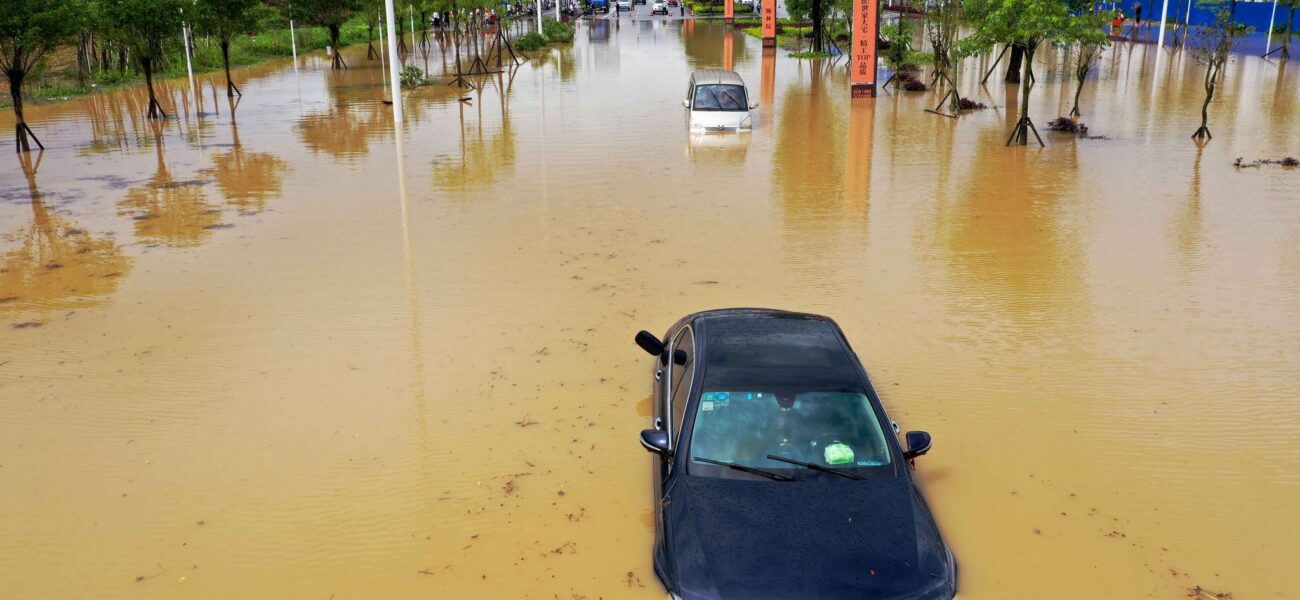
It’s not often these two capitals—constantly jostling for global recognition, endlessly debating sovereignty—share a collective shudder. But Bavi’s impending arrival has managed it. For a few frantic days, the usual diplomatic niceties, or lack thereof, are shunted aside by more pressing matters: sea surges, collapsed power lines, and the very wet reality of safeguarding millions. China, with its vast authoritarian machine, begins the Herculean task of evacuating coastal areas, activating what it calls its “all-of-society” disaster response. Across the Taiwan Strait, Taiwan’s democratic government mobilizes, its own, arguably more nimble, agencies springing into action.
And let’s be frank, the stakes couldn’t be higher. Beijing, keen to project stability and strength, sees every disaster response as a demonstration of its governance legitimacy—a concept its leadership rarely lets slide, even for a moment. But then again, a botched response? That’s an optic no state wants, particularly one eyeing Taiwan with an increasingly proprietary gaze. Meanwhile, Taipei knows its mettle, honed by years of quakes and typhoons, gets scrutinized too, albeit by different criteria. It’s about how efficiently their system—decentralized and accountable—protects its 23 million citizens.
Because these aren’t just squalls. Climate change has turned up the dial on everything, — and this region feels it. The World Meteorological Organization reports a staggering 89% increase in reported disaster events in Asia and the Pacific over the past two decades compared to the two prior, with an average of 422 reported disaster events per year. That’s a lot of floods, droughts, and, yes, typhoons.
“Our priority, always, is keeping our people safe. It reflects how we govern, squarely focused on their well-being, and demonstrating the socialist system’s superior capacity for mobilization,” stated China’s Minister of Emergency Management, Wang Guoxun, through official channels. A textbook quote, if there ever was one, prioritizing people while reinforcing ideology. But across the waters, a different refrain entirely. “Taiwan’s democracy has built a resilient society. We’re prepared for whatever nature throws our way, and our systems ensure transparent, swift action for our citizens,” offered Dr. Hsiao Bi-khim, Taiwan’s representative to the United States (and a voice often amplified by Taipei), emphasizing national unity and self-reliance without the top-down rhetoric.
One can’t help but notice the quiet contrast here. Beijing’s grand proclamations of its ‘people-centric’ approach exist alongside a state that can launch reusable rockets into orbit and enforce stringent national security policies. Taiwan, on the other hand, deals with the daily drumbeat of actual threats while navigating its unique global position, forever under the looming shadow of the mainland, and now, under a natural, swirling menace too. They’re both staring down the same storm, just from incredibly different vantage points.
And it makes you wonder about the broader picture, doesn’t it? This dance with environmental volatility isn’t confined to East Asia. From the searing heatwaves gripping Europe to the catastrophic floods that submerged vast swathes of Pakistan just last year—displacing millions and wiping out homes—the shared vulnerability is striking. Islamabad’s capacity for rapid response, hamstrung by economic woes and infrastructure deficits, paints a grim comparison to the highly sophisticated, if ideologically divergent, disaster mechanisms deployed by China and Taiwan. They’re all in the same climate-challenged boat, but some nations have far better life rafts, or rather, more robust systems of command and control—or democracy—to deploy them.
But back to the storm. As residents board up windows and secure boats, the usual headlines about military drills or diplomatic barbs have momentarily receded. The human element, that fragile core of daily life, comes roaring to the forefront. And for all the political theatre, the only true mandate now is survival. It’s a sobering reset, a reminder that the world’s most enduring conflicts can be overshadowed, if only temporarily, by something far older, far more indifferent to human grandstanding.
What This Means
This incoming typhoon isn’t just a weather event; it’s a litmus test, a mirror. For Beijing, a highly effective and centralized disaster response burnishes its image both domestically and on the global stage. Failure, even localized, could spark public dissatisfaction and fuel narratives (particularly from Western observers) about the system’s brittleness when pushed hard. For Taiwan, successful management of the typhoon validates its democratic governance model—showcasing transparency, public trust, and efficient resource allocation without authoritarian dictates. Economically, major damage in either region could further strain already delicate supply chains, especially in electronics manufacturing, a sector heavily concentrated in Taiwan. Any significant disruption will send ripple effects far beyond these shores. It’s a reminder that global geopolitics, for all its complexities, sometimes gets knocked off its axis by plain old wind and rain.