


Faltered Dreams: Pulisic’s Fracture Shatters US World Cup Hopes, Exposing Deeper American Soccer Fault Lines
POLICY WIRE — Washington D.C. — The final whistle screamed, silencing millions. It wasn’t just a 4-1 thumping by Belgium, a grim arithmetic of defeat. It was the collective gasp across a nation that...

POLICY WIRE — Washington D.C. — The final whistle screamed, silencing millions. It wasn’t just a 4-1 thumping by Belgium, a grim arithmetic of defeat. It was the collective gasp across a nation that had, for a fleeting moment, allowed itself to dream—only for that dream to splinter, much like Christian Pulisic’s right leg. But beneath the surface-level agony of a lost World Cup run lies a deeper pathology, a familiar narrative in American soccer’s relentless, often quixotic, pursuit of global legitimacy.
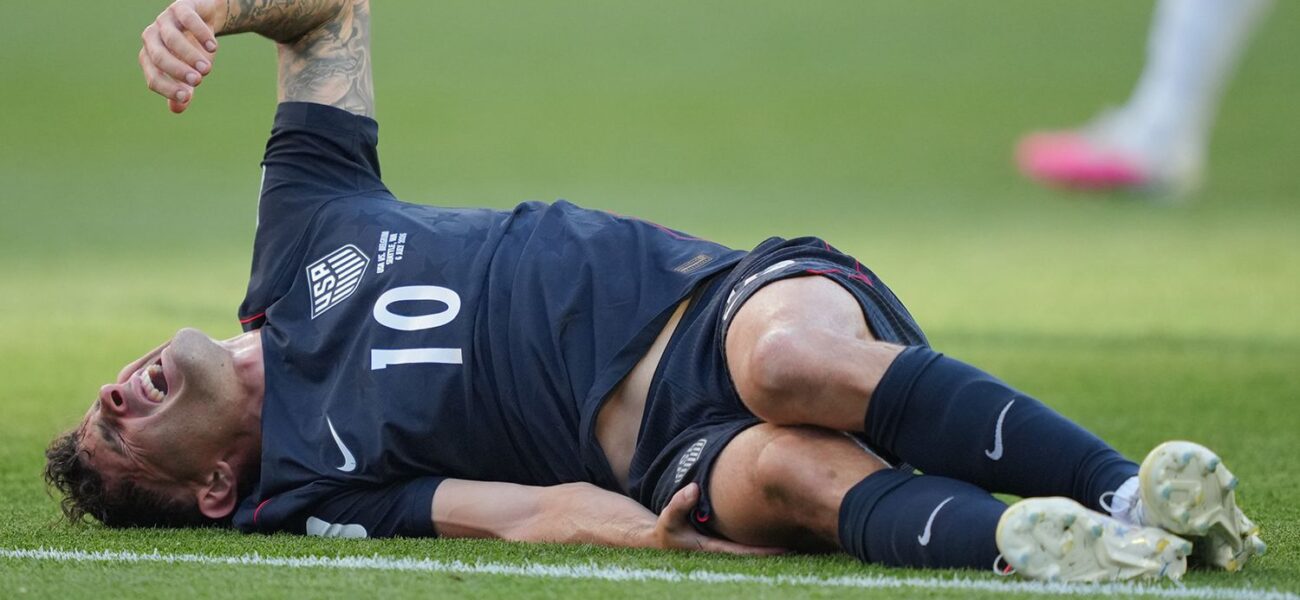
It was revealed late last week, after the echoes of Seattle’s 4-1 shellacking had barely faded, that the talismanic midfielder had suffered a microfracture and bone bruise to his tibia/fibula. The official U.S. Soccer statement on X (formerly Twitter) was terse: “Christian Pulisic has been diagnosed with a microfracture and bone bruise of the tibia/fibula in his right leg suffered during the match against Belgium. U.S. Soccer — and AC Milan will be collaborating on his recovery plan.” Clinical. Impassive. Because that’s how the machine moves.
Pulisic, the face of a new, supposedly golden generation, limped off the field in the 59th minute, Belgium having just scored their third goal. It seemed almost poetic, a metaphor for the entire American campaign, if one were inclined to a touch of the melodramatic. And he didn’t mince words on Instagram later, the raw disappointment clear: “Tough to find the words. I want to start by saying thank you to everyone who believed. The support carried us all the way through.” He also said, “It simply wasn’t good enough from us in the end and I wanted to deliver so much more.. I still feel blessed to be a part of this team.” Heartbreaking, really. It always is.
Striker Folarin Balogun, another young hopeful, echoed that sentiment, posting, “My debut World Cup. It hurts to wait 4 years to compete at the highest level our sport has to offer.” He publicly apologized to fans—something that rarely goes down well in hyper-nationalist sports circles. But, you know, they really did let a lot of people down. Especially those who shelled out good money for those exorbitantly priced jerseys. “Soccer in America will only become bigger,” Balogun optimistically concluded, perhaps as much for his own reassurance as for the fans.
This kind of outcome, however, inevitably sparks recrimination. Former USWNT star Carli Lloyd, a woman who knows a thing or two about winning on the global stage, pulled no punches. Speaking on Fox Sports, she expressed palpable frustration. “I’m not sure why, and I don’t know the reasons, but just from the beginning, just chasing, tentative, scared, just not confident on the ball,” Lloyd lamented. “And I think big-time players—you wanted some of those big-time players to step up in big moments.” Harsh, but perhaps accurate.
The fracture in Pulisic’s leg, a literal break, reflects the psychological cracks within a program desperate to elevate itself beyond the ‘sleeping giant’ cliché. The perception of American football on the global stage is still largely one of potential, not dominance. This setback only deepens that particular rut. But for the average football fan in say, Karachi, whose entire national sporting narrative might revolve around cricket, the constant US struggle for soccer legitimacy can sometimes feel like a strange, expensive hobby rather than a global endeavor.
📄 POLICY WIRE WHITEPAPER PUBLISHED: PAKISTAN'S NATIONAL SECURITY POLICY PRIORITIES
👉 READ BY CLICKING HERE“We understand the collective disappointment, both in the result and in Christian’s injury,” stated John Harding, a senior communications director for the U.S. Soccer Federation. “Our focus now shifts to his full recovery — and a thorough evaluation of our program’s performance. These moments, as painful as they’re, offer critical opportunities for growth.” A bland, almost bureaucratic, boilerplate. Exactly what you’d expect.
What This Means
Pulisic’s injury and the USMNT’s premature World Cup exit aren’t just about athletic performance; they carry significant political and economic undertones. Financially, an early exit means a significant loss in potential FIFA prize money (for context, the champion pockets north of $40 million, while even reaching the quarterfinals is worth over $18 million) and diminished commercial opportunities for the U.S. Soccer Federation. This impacts development programs, grassroots initiatives, — and future infrastructure investment. Because money talks, even in the ‘beautiful game.’ It’s about more than just patriotic pride; it’s about balance sheets and broadcast rights, especially for a nation still trying to cement soccer’s commercial footprint against titans like American football and basketball.
And then there’s the soft power dimension. Nations leverage sporting success to enhance their global standing, something countries from Brazil to Spain—even the increasingly influential powers like Qatar—understand intrinsically. For the US, consistently falling short undermines a broader narrative of American exceptionalism and global competitiveness, particularly in a sport that holds such universal sway. Consider, too, the burgeoning interest in global football transfer markets, where player valuations and team success intertwine with national pride and investment from disparate corners of the world, often involving money flows and geopolitical jockeying far removed from the stadium pitch. The USMNT’s narrative is, at heart, a complex interplay of sports diplomacy, commercial viability, and the endless pursuit of an elusive golden era that just never quite materializes. Perhaps it never will. The next four years, after all, start now.