


The Ghost of World Cups Past: Gaza Mourns Architect of Brief Joy
POLICY WIRE — Gaza City, Palestine — The collective groan was almost audible that November evening, even over the intermittent distant rumble of unseen skirmishes. Argentina had just netted another...

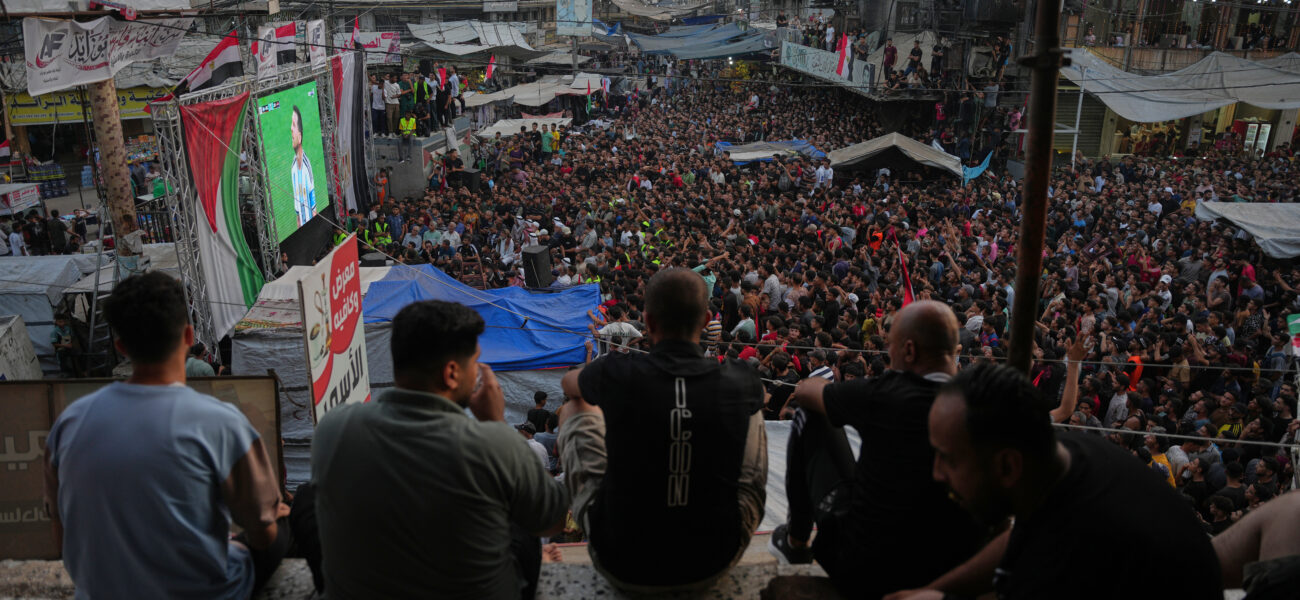
POLICY WIRE — Gaza City, Palestine — The collective groan was almost audible that November evening, even over the intermittent distant rumble of unseen skirmishes. Argentina had just netted another against Saudi Arabia—a shocking upset—and the makeshift outdoor cinema in a dusty Gaza alley erupted. Kids, their faces usually etched with a weary resignation far too old for their years, cheered. Adults, hardened by siege — and scarcity, permitted themselves a moment of genuine, unbridled excitement. This fragile, almost illicit joy, they say, was a gift from Yousef al-Jamal, the aid worker whose body now lies beneath fresh earth.
It’s a peculiar thing, remembering joy in a place defined by its absence. But Yousef, a name now spoken in hushed, sorrowful tones, made it happen. He secured a projector, fashioned a screen from old tarpaulins, and broadcast World Cup matches across a zone that, for many, hadn’t seen a stable electricity supply for hours, sometimes days, at a stretch. A small, radical act of normalcy, of reminding a populace that the wider world still spins, still offers spectacles. He’d often say, [QUOTE_PLACEHOLDER], — and folks knew he meant it. He didn’t just provide sustenance; he provided solace, a brief, technicolor reprieve.
Now, his work is done. Felled, as many are, not by direct conflict with the enemy on a battlefield, but by the relentless, indiscriminate grind of the war machine. Details remain frustratingly scarce, caught in the fog of ongoing operations. But the fact stands: another humanitarian worker, committed to easing suffering, is gone. It’s an all too familiar narrative, yet each loss—this one especially—leaves a fresh, searing scar on the collective psyche. You can’t simply forget the person who gave you those few hours of distraction when nothing else made sense.
Aid organizations operate under a pall of increasing danger. Last year alone, global data suggests a horrifying surge. A staggering 60% of all aid worker deaths worldwide occurred in the Middle East and North Africa region, according to Aid Worker Security Report data from 2023. Yousef was just one more grim tally in that awful ledger. For the locals, it’s not just a statistic; it’s Yousef, the guy who argued passionately for Brazil during penalty shootouts. It’s personal.
His quiet resilience reflected a larger spirit in this land. He wasn’t a politician or a pundit; he was just someone trying to mend fractured lives, one soccer match or hot meal at a time. And because he chose that path, he ended up another casualty. His work, the simple act of trying to make life bearable, was an inherently political act in this context, wasn’t it?
This tragic trajectory, repeated with numbing frequency, reverberates far beyond the confines of Gaza. In places like Karachi, where residents understand the precariousness of peace, or in refugee camps stretching across Lebanon and Jordan, Yousef’s story isn’t an anomaly; it’s a terrifying echo. Folks there will read about this, they’ll see the implications. His death isn’t just a loss for his family, but a sobering reminder of the impossible tightrope humanitarian operations walk across the Muslim world—a reminder that the line between compassion and catastrophe is thinner than fine.
Even small acts of global connection—like tuning into a sporting event that unites billions—become dangerous when performed in the wrong place, at the wrong time. The silent death of a sporting dream in Afghanistan might not seem connected, but the vulnerability of everyday joys in conflict zones binds them tighter than one might think. The international community, so quick to issue condemnations, often seems far too slow to protect those actually on the ground, patching things up, day in and day out.
What This Means
Yousef al-Jamal’s death, rather than being an isolated incident, serves as a sharp, painful crystallization of several converging political and economic realities. First, it underscores the near-impossible conditions under which humanitarian aid functions in active conflict zones. The supposed protective umbrellas of international law and humanitarian principles often feel like mere aspirations when actual boots are on the ground and actual bombs are falling. This isn’t an aberration; it’s becoming the brutal standard.
Second, this specific casualty—an aid worker providing a semblance of cultural normalcy, not just basic needs—highlights a deepening despair within affected populations. When even a temporary distraction like the World Cup costs a life, it strips away another layer of human dignity and hope. This psychological impact, often overlooked by economic models and political communiques, creates an even more volatile future. But what happens when the very acts meant to ease suffering become deadly in themselves?
And third, the ripple effect across the broader Muslim world is significant. Each such incident fuels a growing sense of disenfranchisement and anger, perceiving it not as an accident of war but as an indicator of systemic disregard. Governments in countries like Pakistan, already navigating complex domestic and regional pressures, face increased public pressure to react. This translates into more rigid diplomatic stances, complicates already fraught international relations, and makes de-escalation exponentially harder. It’s a tragic, self-perpetuating cycle where small-scale tragedies feed large-scale political turbulence, proving that in conflict zones, even the simplest acts of human kindness carry unforeseen, and often deadly, weight.