


Fentanyl’s Fatal Footprint: The DEA’s Silent War of Attrition — Or Just Plain Ego?
POLICY WIRE — ALBUQUERQUE, N.M. — Down in the gritty trenches of America’s fentanyl crisis, a curious internal struggle is playing out. It’s not just about cartel muscle versus federal might, or...

POLICY WIRE — ALBUQUERQUE, N.M. — Down in the gritty trenches of America’s fentanyl crisis, a curious internal struggle is playing out. It’s not just about cartel muscle versus federal might, or street dealers against local narcotics units. No, this often boils down to something far more insidious: ambition versus accountability within the very agencies sworn to protect us. Call it the silent war, waged not with bullets, but with policy documents — and perceived prestige.
It’s a bizarre ethical quagmire. On the sun-baked streets of Albuquerque, folks aren’t imagining things. Pills are changing hands, foil’s being lit up, all in broad daylight. What’s less visible are the backroom battles, the philosophical chasms—and the stark ethical questions—shaping federal drug enforcement tactics. They’re letting street-level problems fester, it seems, all in the name of bigger game.
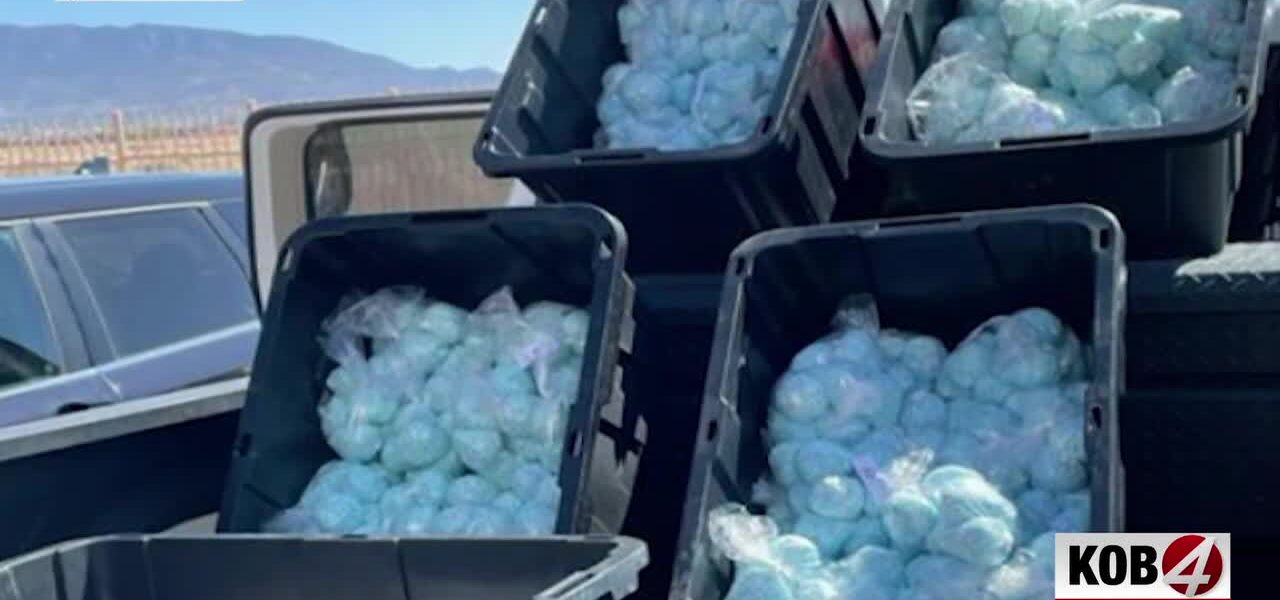
This strategy, or lack thereof, has blown up into whistleblower allegations against the Drug Enforcement Administration. Former DEA Special Agent David Howell claims—and let’s be clear, these are serious claims—that his higher-ups practically allowed staggering amounts of fentanyl to saturate New Mexico’s streets. They allegedly told agents to stand down, or at least deprioritize immediate seizures, while they tried to build these grand, sweeping investigations against the bigger players. It doesn’t always work like that. It creates a vacuum of trust. And sometimes, it simply breeds cynicism.
But veteran cop Jerry Koppman, a retired Bernalillo County Sheriff’s Office narcotics detective with years chasing kingpins, he’s not shocked. “Not surprised,” he told us, cutting through the usual law enforcement platitudes. “I already knew it.” Koppman’s seen it all: the institutional politics, the clashing egos, the sheer unpredictability of narcotics work. You can meticulously plan a raid, cross every T, — and come up empty. Or you can find the motherlode.
The core of the issue, Koppman explains, is a profound philosophical split. Local cops? They’re after immediate results. Busts. Arrests. Getting the poison off the street, today. Federal agents, particularly at the DEA, well, they often operate on a different timeline. They’re geared for marathon surveillance, wiretaps, cross-jurisdictional coordination – the stuff that looks good on an annual report, perhaps, but sometimes leaves local police exasperated.
“It honestly annoys me that they turn everything into a wire when we can take law enforcement action,” Koppman vented. He recalled offering federal colleagues a straightforward 10-pound buy-bust. Their response? A dismissive, “We watch 10 pounds walk out of here daily.” A staggering statement, if you ask us. And a clear indicator of differing priorities.
Carlos Briano, a DEA spokesman, naturally defended the agency’s long-game focus, even if it skirts the smaller wins. “We have to identify the larger networks — and disrupt them,” Briano stated, reiterating the federal mission. He was careful, though, not to explicitly confirm whether leaving street-level fentanyl in circulation could ever be justified as part of a larger strategy. “We do work differently than a local or a state police officer. That’s simply how it goes,” he added, leaving little room for granular discussion about tactics, even as the body count climbs. This divergence isn’t just bureaucratic red tape, it’s folks, a matter of life — and death on the streets.
Critics suggest there’s a strong incentive system at play, rewarding complex, lengthy operations. Tristan Leavitt, the attorney representing Howell, didn’t mince words. “Wiretap cases are absolutely one of the criteria by which federal agents in law enforcement are judged on whether they’ve promotion potential,” Leavitt asserted. It’s a system that incentivizes career progression over — what, exactly? Saving lives?
Consider the international dimension: much of the illicit fentanyl supply relies on precursor chemicals, many of which originate from labs in East Asia. These chemicals often traverse complex global supply chains, sometimes passing through opaque shipping routes in South Asia before reaching North American drug producers. This necessitates a strategic focus on those networks, but at what cost if the drug continues to flood domestic streets? This larger, almost ghost-like supply chain underscores the DEA’s stated rationale, even as questions about their domestic execution remain.
Meanwhile, the human toll remains grim. According to CDC data, New Mexico, sadly, consistently ranks among states with the most overdose deaths per 100,000 people. While many parts of the country saw decreases, New Mexico’s figures rose steadily from 2019, plateaued, dropped in 2024, and have since crept up again in 2025. It’s a sobering statistic that haunts the ongoing debate about effective drug enforcement.
What This Means
The chasm between federal and local drug enforcement philosophies isn’t just an administrative headache; it carries profound political and economic consequences. Politically, it erodes public trust. When ordinary citizens see drugs flowing freely on their streets, and hear allegations that federal agents stood by, it fuels cynicism about government effectiveness and breeds anger at bureaucratic inertia. It gives fodder to calls for increased oversight—or even the defunding of agencies perceived as prioritizing ego over public welfare.
Economically, the implications are just as severe. An unchecked influx of fentanyl drives up healthcare costs related to overdose treatment — and addiction services. It strains social support systems — and impacts worker productivity in affected communities. For regions like New Mexico, which struggle with high overdose rates, this dynamic represents a systemic drain on resources, making it harder for cities to rebuild and thrive. It suggests a federal approach that, by design, could inadvertently prolong the very crisis it aims to solve, by allowing low-level distribution to continue as an unavoidable, strategic collateral. This puts intense pressure on state and local governments, leaving them to manage the fallout of federal strategy. One could almost say it’s an exercise in diplomatic pragmatism, where the global game is prioritized over immediate domestic impact, an echo of discussions sometimes found concerning efforts against global terrorism or illicit finance in places like Pakistan, where large-scale operations might seem to overlook localized devastation.
The bigger question facing policymakers and citizens isn’t just how to get drugs off the street, but how to ensure that those tasked with enforcement are truly incentivized to act in the immediate public interest, and not just climb a bureaucratic ladder. It’s a debate that’s going to rattle around our institutions for a long, long time. After all, the stakes couldn’t be higher. And it seems we’re still looking for answers to truly tackle these complex supply chain problems, from precursors to street-level pushers, both domestically and internationally.