

The Art of Contraband: Pineapples, Smokes, and Gaza’s Unseen Hustle
POLICY WIRE — Tel Aviv, Israel — It wasn’t the sound of warheads or the drone of surveillance aircraft that punctuated the relative quiet at the Kerem Shalom commercial crossing last week. No,...

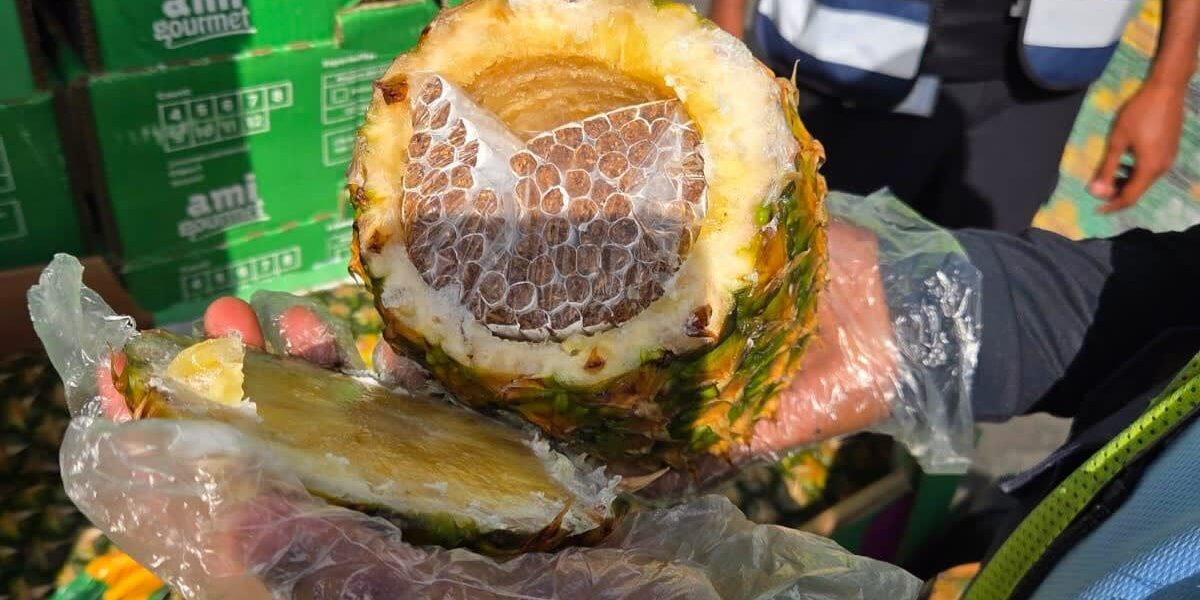
POLICY WIRE — Tel Aviv, Israel — It wasn’t the sound of warheads or the drone of surveillance aircraft that punctuated the relative quiet at the Kerem Shalom commercial crossing last week. No, this particular friction point in a perennially tense region instead hosted a moment of low-key absurdity, almost comical if its underlying desperation wasn’t so stark. Israeli military inspectors—the Israel Defense Forces, or IDF, if you prefer—didn’t discover explosives. They found fruit. Not just any fruit, mind you, but perfectly normal-looking pineapples, each hollowed out and jam-packed with thousands of cigarettes.
It’s the sort of clandestine enterprise that belongs more in a B-movie plot than a geopolitical hotspot. Yet, here we’re: an estimated 10,000 cigarettes, meticulously stashed inside a tropical fruit, aiming to cross into the Gaza Strip. Think about the effort, the patience, the sheer innovative grit that goes into something like that. This wasn’t some haphazard job; it required delicate surgical precision, extracting the edible flesh and leaving just enough to masquerade as the real deal, before replacing it with illicit tobacco. And then, sealing it all back up to look untouched. That’s a master craftsman, one thinks, in a profoundly messed-up economic environment.
“We don’t just patrol borders for rockets; we intercept anything that fuels the engines of terror or illicit profiteering. Sometimes that looks like arms, other times, it’s just really fancy fruit,” explained IDF spokesperson Lt. Col. Richard Hecht, offering a dry assessment that belied the situation’s underlying gravity. He wasn’t joking. Every intercepted item, however mundane, represents either a financial loss for those attempting to bypass official channels or a thwarted effort to destabilize a fragile system. It’s a cat-and-mouse game played with both high-tech sensors — and basic, albeit creative, ingenuity.
Because, make no mistake, this isn’t just about cigarettes. It’s about an economy, or perhaps an anti-economy, shaped by blockades — and deprivation. For the entrepreneurs orchestrating such schemes, it’s often about making a buck — sometimes a big buck — where traditional routes are choked off. For ordinary Gazans, where unemployment frequently hovers near 50 percent, and youth unemployment is even higher—reaching 69 percent among young people as of late 2023, according to OCHA—a cheap smoke isn’t just a vice; it’s a tiny, desperate luxury, paid for in inflated black-market prices. This smuggled haul, if successful, would’ve meant big profits for those at the top, a small measure of escapism for those at the bottom.
“When the normal pathways for commerce are effectively shut down or made extraordinarily difficult, people will, quite naturally, find alternatives. These aren’t just smugglers; they’re symptoms of a systemic failure, an economy suffocated into corners,” remarked Adnan Abu Hasna, a spokesperson for UNRWA (the UN agency for Palestinian refugees) in Gaza, highlighting the dire consequences of economic restrictions. He’s right, of course. Desperation breeds innovation, whether for good or ill, — and here, it’s mostly ill.
This little pineapple saga reflects similar struggles many regions face under extreme economic duress or political isolation. Think about the intricate smuggling networks in Balochistan, where contraband from Iran or Afghanistan flows across porous borders, fueling parallel economies and local conflict. That’s another context where desperation, border controls, and inventive—if often illegal—enterprise clash. It underscores a persistent theme across South Asia and the broader Muslim world: state control rarely extinguishes market demand; it just redirects it into darker, more ingenious channels. It creates a wild west where profits are high — and risks are higher.
And so, one must ponder what else is hiding in plain sight. What mundane object is next pressed into service for the illicit trade? Laundry detergent? Children’s toys? You can’t help but get a little cynical when even fruit gets conscripted into the ongoing, low-stakes skirmishes of the global black market.
What This Means
This incident isn’t a headline-grabber for international security analysts, but it’s a telling snapshot of Gaza’s absurd economic reality. It signifies the immense pressure under which Palestinian traders operate, constantly seeking new—and often illegal—avenues to circumvent the long-standing Israeli blockade. Economically, these illicit pathways represent not only significant lost revenue for legitimate government agencies (on both sides, mind you) but also contribute to a shadow economy that’s harder to track and regulate. It bolsters criminal networks and, controversially, can sometimes provide revenue for armed groups. But it also, ironically, acts as a sort of pressure valve for populations starved of conventional economic opportunities.
Politically, the constant flow of contraband, no matter how trivial it seems, points to a broader failure of diplomacy. Both Israel’s security apparatus — and Hamas’s governing structures wrestle with these underground currents. One’s trying to stop them, the other often facilitating or benefiting from them. The simple act of hollowing out a pineapple becomes a micro-narrative in the intractable conflict—a symptom, rather than a cause, of the region’s persistent instability. And this small-time drama plays out against a backdrop of global calls for aid and relief, reminding us that even the simplest goods, when withheld, become sources of tension and illicit trade.