
Stop Exploiting Pakistan’s Diplomacy for Drama
It has become a minor internet ritual that whenever Pakistan’s foreign policy comes up online, someone posts a meme reducing the country’s diplomacy to a punchline, a stubborn donkey...

It has become a minor internet ritual that whenever Pakistan’s foreign policy comes up online, someone posts a meme reducing the country’s diplomacy to a punchline, a stubborn donkey refusing sensible advice, a nation supposedly shouting into the void for attention while the region moves on without it. The formula is familiar. Cite one diplomatic event, strip out its context, pair it with a dramatic image and declare the matter settled. It works as entertainment. It fails as analysis.
The claim, in its most common form, is that Pakistan’s commentary on regional affairs is theatre for social media rather than substantive statecraft and that its neighbors and partners are quietly moving past it. The trouble is that this claim can be checked against the public record and the public record tells a different story.
Start with the most consequential test of any country’s diplomatic weight, whether other states actually rely on it when the stakes are real. In 2026, Pakistan brokered the ceasefire that ended more than three months of war between the United States and Iran, after its field marshal made a flurry of direct calls to Washington in the hours before a deadline to strike Iran expired. Islamabad went on to host the first direct, high-level talks between American and Iranian officials since 1979 and by June, Pakistan’s prime minister announced that Washington and Tehran had reached a final, agreed text. This was not a Pakistani press release taken at face value. The Council on Foreign Relations, Al Jazeera, and the Stimson Center all independently reported it and Saudi Arabia’s foreign minister publicly credited Islamabad’s “consistent and sustained efforts” in the process. Countries dismissed as irrelevant do not get handed the role of shuttle diplomat between Washington and Tehran.
None of this means the mediation was flawless. American critics, including Senator Lindsey Graham, questioned Pakistan’s role and analysts have noted that Islamabad’s leverage over the outcome was limited. That is a fair and useful critique. It is also a critique of a country doing consequential diplomatic work, not of a country doing none.
The pattern holds beyond the Iran file. Pakistan is currently serving its eighth term as a non-permanent member of the United Nations Security Council, elected in 2024 with 182 of 190 votes cast, comfortably clearing the two-thirds threshold. It remains one of the largest contributors of troops and police to UN peacekeeping operations, a role sustained for more than six decades across dozens of missions, at a cost of more than 170 Pakistani lives lost in UN service. These are the kind of sustained institutional commitments that states unable to secure anyone’s confidence simply do not get entrusted with.
What the meme format tends to miss entirely is that diplomacy is not zero-sum. For instance, some tweets tried to showcase that a meeting between an Iranian official and India’s National Security Adviser proved Iran had abandoned Pakistan. But that meeting took place on the sidelines of a multilateral BRICS security conclave in New Delhi, the kind of forum where dozens of countries hold parallel bilateral meetings as a matter of routine, not realignment. During the very same period, Iran’s foreign minister and the parliamentary speaker who led its negotiating team were making repeated visits to Islamabad, because they needed Pakistani channels to reach Washington. A country cannot plausibly be read as losing Iran’s confidence while Iran’s own negotiators are relying on it to talk to the United States.
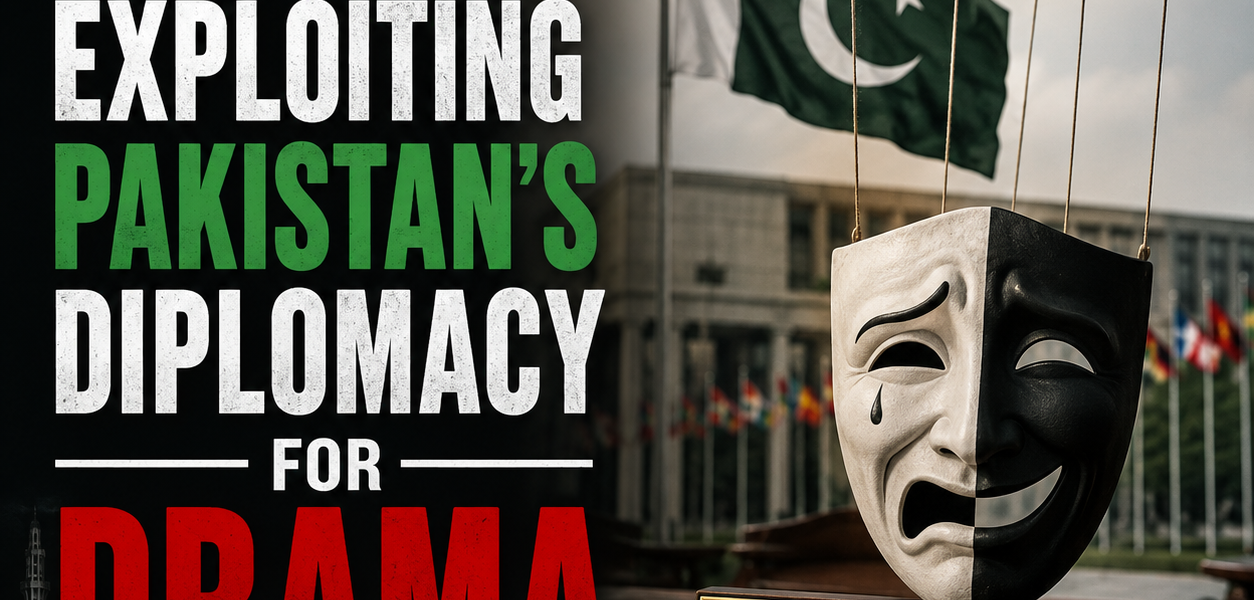
This is the deeper problem with exploiting Pakistan’s diplomacy for drama, it requires ignoring the parts of the record that do not fit the punchline. A single meeting, stripped of context and paired with a synthetic image of animals, is not evidence. A Security Council seat, six decades of peacekeeping sacrifice and a documented, internationally verified mediating role between two states at war are.
None of this is an argument that Pakistan’s foreign policy is beyond criticism, or that its regional rivalries have been resolved, or that its mediation guarantees lasting peace between Washington and Tehran. It is an argument that the specific claim being circulated, that Pakistan’s diplomatic engagement is empty performance, does not survive contact with the facts. The next time these memes resurface, the correct response is not a counter-meme. It is to ask what the cited event actually was and to check.
Author