


Europe’s Quiet Corners: Vienna Killing Unmasks a Nomad’s Trail, Tests Trans-Border Justice
POLICY WIRE — PARIS, France — The quiet dissolution of an elderly life, violently interrupted in a serene Viennese apartment, rarely captures international headlines. But when the suspected...

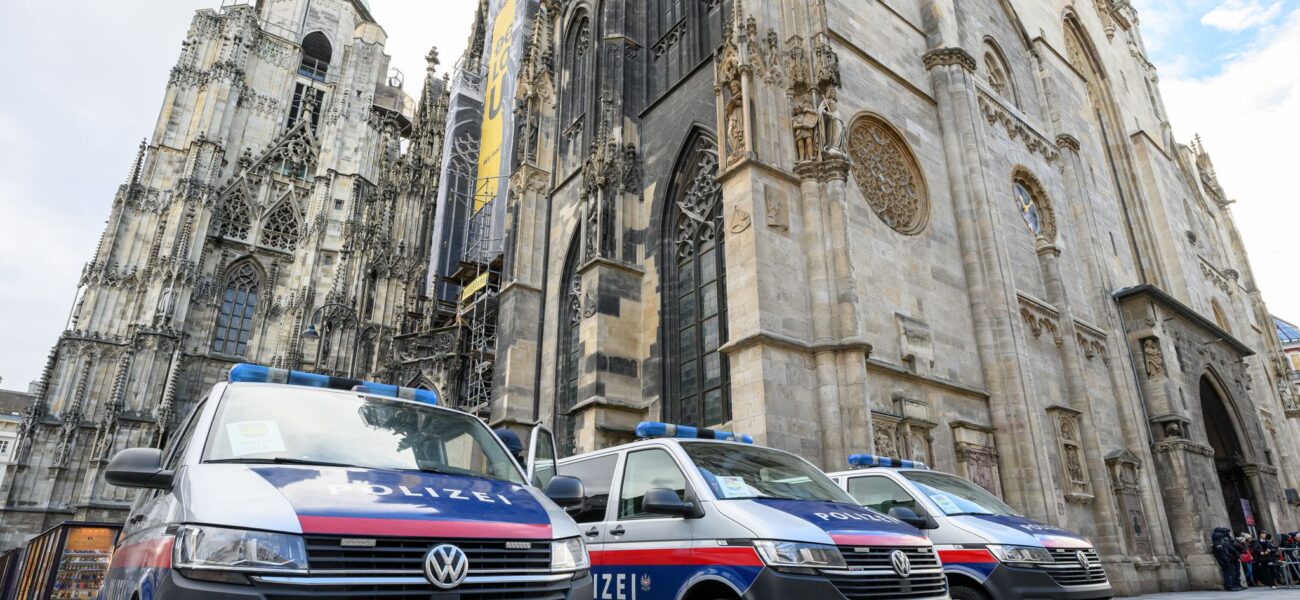
POLICY WIRE — PARIS, France — The quiet dissolution of an elderly life, violently interrupted in a serene Viennese apartment, rarely captures international headlines. But when the suspected perpetrator of that violence turns out to be a foreign national, tracked across continents and apprehended unexpectedly in France, it isn’t just a crime story anymore. It’s a snapshot of contemporary Europe’s complex, porous borders and the increasingly intricate dance of international policing. Police here in France, working on a European Arrest Warrant, picked up a Russian man—call him Oleg Petrov for now; authorities are keeping identities under tight wraps—in connection with the grim discovery of his 70-year-old flatmate back in Austria. He’d allegedly been missing since the incident, a phantom until a sharp-eyed officer made the connection.
It was a shock to those who knew the deceased, a septuagenarian whose quiet existence in Vienna’s historic district seemed a world away from violent ends. He was known, informally, for his robust interest in Eastern European cultures and often hosted foreign students or academics for extended stays. And now this. The discovery in his flat — not pretty, I’m told — sent shockwaves through the neighborhood. Neighbors talk about an uncharacteristic quiet from the apartment, then the smell. Always the smell.
“We acted swiftly upon receiving the warrant,” stated Lieutenant Isabelle Dubois, a spokesperson for the French Gendarmerie Nationale, her voice clipped, professional. “International cooperation is paramount in an age where individuals can cross borders faster than paperwork. This isn’t a matter of geography; it’s a matter of justice.” Her words echo a growing sentiment among law enforcement agencies across the EU, grappling with both the benefits and inherent challenges of free movement. They’ve certainly got their hands full.
The alleged killer’s trail, though, stretched beyond European horizons, touching on unexpected geographies before his apprehension. Preliminary investigations hint at a previous stint working for a non-governmental organization involved in cultural exchange programs—something like an initiative supporting historical preservation in Peshawar, Pakistan. But then, details remain sketchy, deliberately so. These are the kinds of transnational echoes that highlight how interconnected, and perhaps vulnerable, seemingly disparate communities really are. Because, when a European capital is shaken, the ripples can actually be felt far afield.
Investigators in Vienna haven’t elaborated on the specific circumstances of the victim’s death, merely confirming a “homicide investigation of extreme brutality.” But one official, speaking off the record from Vienna’s Bundeskriminalamt, offered a grim assessment: “He clearly didn’t care about leaving a mess. The suspect’s abrupt flight speaks volumes about his intentions. We’re eager to get him back to Vienna to face questions.”
The ease with which individuals—especially those without deep, traceable roots in any one place—can navigate various legal systems adds layers to every investigation. According to Eurostat data from 2022, nearly 16% of the EU population comprises non-citizens, a figure that includes both other EU nationals and those from outside the bloc. That’s a lot of potential human movement. These are the complexities that police forces now navigate daily. It’s no longer simply about local policing; it’s a multi-lingual, multi-jurisdictional chess game.
What This Means
This incident, far from being an isolated tragic domestic dispute, pulls back the curtain on a bigger picture: the ongoing calibration between individual liberty, national sovereignty, and collective security within a globalized Europe. The arrest in France of a Russian national implicated in a murder in Austria—well, it demonstrates the surprising efficiency of the European Arrest Warrant system. It’s far from perfect, don’t get me wrong. But it prevents most suspects from simply disappearing into another Schengen country without a trace. However, the transient nature of the suspect’s alleged history, hinting at travels even to places like Pakistan, presents a different set of challenges. It suggests a potential informal network or mobility that often bypasses conventional surveillance, presenting thorny questions for cross-cultural law enforcement dialogues—especially in an age where the definition of ‘expat’ or ‘migrant’ is increasingly fluid and often opaque. It means governments can’t just cordon off issues; they’ve got to cooperate. Or watch things fall apart. Such incidents also subtly reinforce stereotypes, unfairly painting broader communities, say, the Russian diaspora or those with connections to the Muslim world, with a negative brush. That’s a separate, persistent policy challenge for countries like Austria — and France. Justice, it turns out, travels just as much as criminals do. But usually at a slower pace, — and often with more paperwork. This case, and others like it, often serve as an unsettling reminder of the societal fractures beneath Europe’s polished surface.